Leonardo flies helicopter-aircraft hybrid in 1st test of NGCTR tiltrotor

December 22, 2025
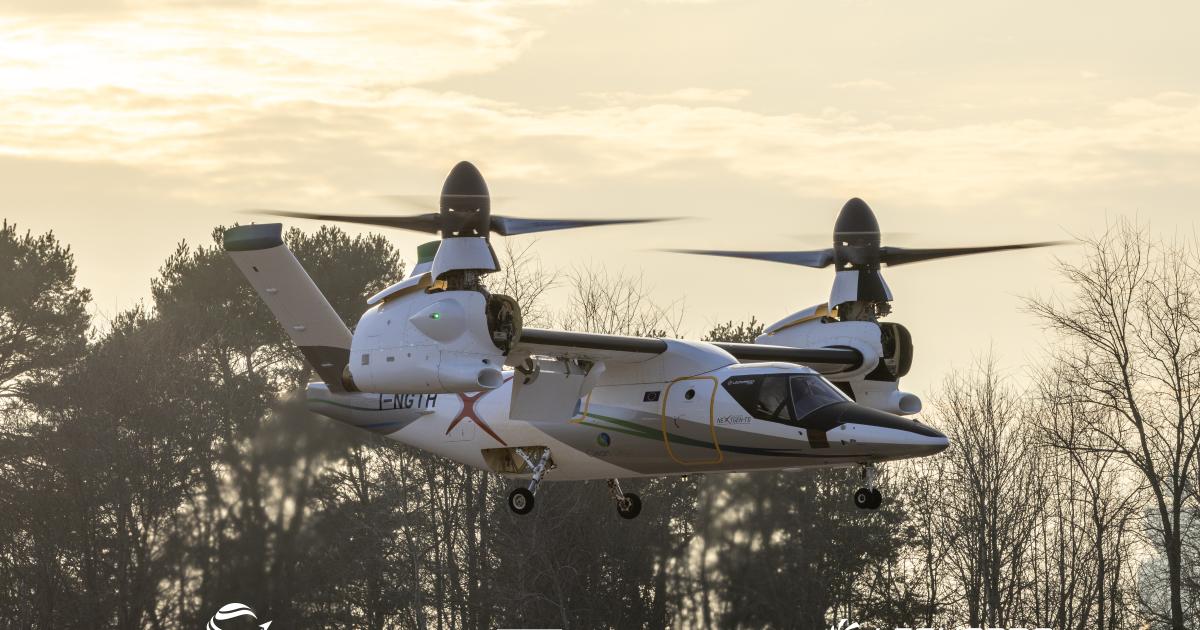
The future of European civil vertical lift moved from concept to cockpit last week, as Leonardo flew its Next Generation Civil Tiltrotor (NGCTR) technology demonstrator for the first time at the company’s Cascina Costa facility in northern Italy.
The milestone marks the start of flight testing for the NGCTR-TD programme, one of the most technically ambitious civil rotorcraft initiatives undertaken in Europe in recent years and a central pillar of the European Union’s Clean Sky 2 research effort.
Derived from Leonardo’s AW609 tiltrotor platform, the demonstrator is not intended as a pre-production aircraft, but as a flying laboratory. Its role is to validate a suite of technologies that could reshape how civil rotorcraft are designed, operated and certified in the decades ahead.
Leonardo’s civil tiltrotor: Closing the gap between helicopters and fixed-wing aircraft
At the heart of the NGCTR programme lies a long-standing challenge in vertical lift aviation, retaining the access and flexibility of a helicopter while delivering the speed, range and efficiency more commonly associated with turboprop aircraft.
The NGCTR architecture is designed to cruise at around 280 knots and cover distances approaching 1,000 nautical miles, performance that places it well beyond the practical reach of conventional helicopters.
For operators, this translates into faster response times, wider coverage and fewer intermediate stops for missions ranging from medical evacuation and search and rescue to regional passenger transport and freight operations.
The programme was developed under Clean Sky 2, the EU’s flagship aeronautics research initiative within the Horizon 2020 framework, and is now being carried forward under the Clean Aviation Joint Undertaking.
Since its launch in 2015, more than 85 organisations from 15 countries have contributed to the effort, spanning industry, research centres and academia.
NGCTR moves into flight testing after nearly a decade of development
The first flight follows a methodical development path. Ground runs and systems testing were completed in mid-2024, clearing the aircraft for initial airborne trials.
With the demonstrator now flying, attention shifts to validating five key technology areas aimed at reducing emissions, noise and operating costs while improving aerodynamic efficiency and controllability.
One of the most significant departures from earlier tiltrotor designs is the adoption of a fixed engine installation paired with a tilting gearbox that transmits power to the proprotors.
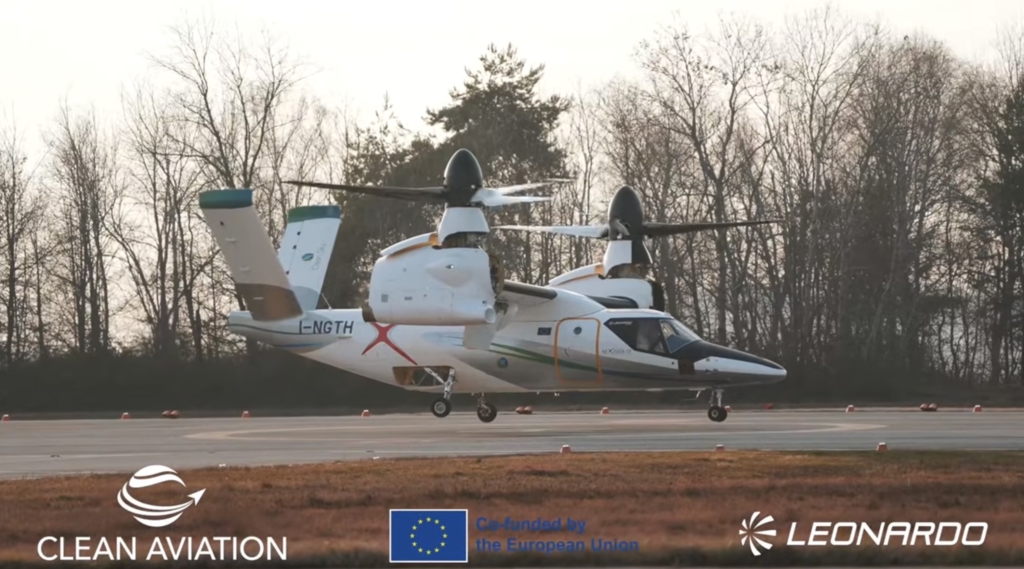
By eliminating the need to tilt the engine itself, Leonardo aims to reduce mechanical complexity, simplify certification and broaden the range of potential powerplants available for future aircraft.
The NGCTR-TD is powered by GE Aerospace CT7 turboshaft engines, replacing the Pratt & Whitney Canada PT6 units used on the AW609. The engine choice reflects both performance requirements and the programme’s emphasis on emissions and noise reduction.
Aerodynamic and flight-control innovations tested on Leonardo’s NGCTR tiltrotor
The demonstrator also introduces a new wing architecture featuring a large trailing-edge flap, designed to reduce the downwash from the proprotors while increasing internal fuel volume.
A revised tail layout, closer in concept to a V-tail, is intended to reduce drag and improve stability at higher cruise speeds.
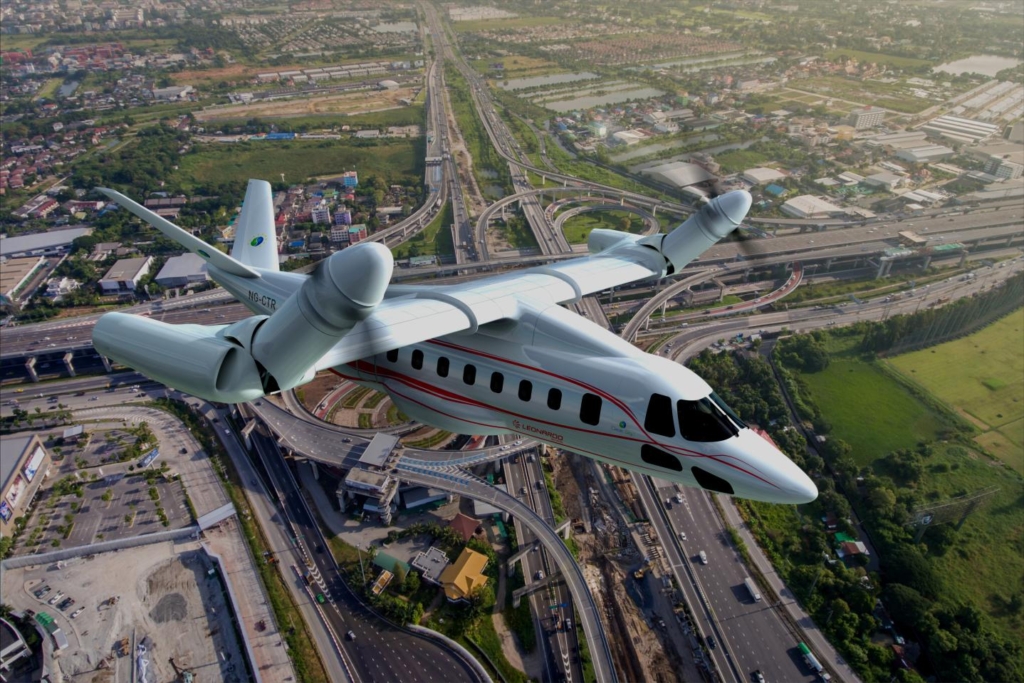
Equally significant is the aircraft’s flight-control philosophy. Leonardo is testing a move away from the federated fly-by-wire architecture used on the AW609 toward a more modular, distributed system. In this configuration, control and verification electronics are positioned closer to individual actuators, reducing wiring weight and system complexity while improving scalability.
Unlike earlier civil tiltrotors, the NGCTR demonstrator has been designed for single-pilot operation, reflecting the operational realities of many civil missions and the need to control lifecycle costs.
Reducing emissions and noise in next-generation civil tiltrotor operations
Reducing the environmental footprint of vertical lift aviation is a central objective of the NGCTR effort.
The technologies being tested are intended to cut CO₂ and NOx emissions while lowering noise levels, particularly during take-off and landing in urban or densely populated areas.
Emergency services and medical operators face increasing constraints when operating from confined sites or flying prescribed corridors in cities. A faster aircraft with improved climb performance and lower noise signatures offers a practical way to extend coverage without increasing the operational burden on surrounding communities.
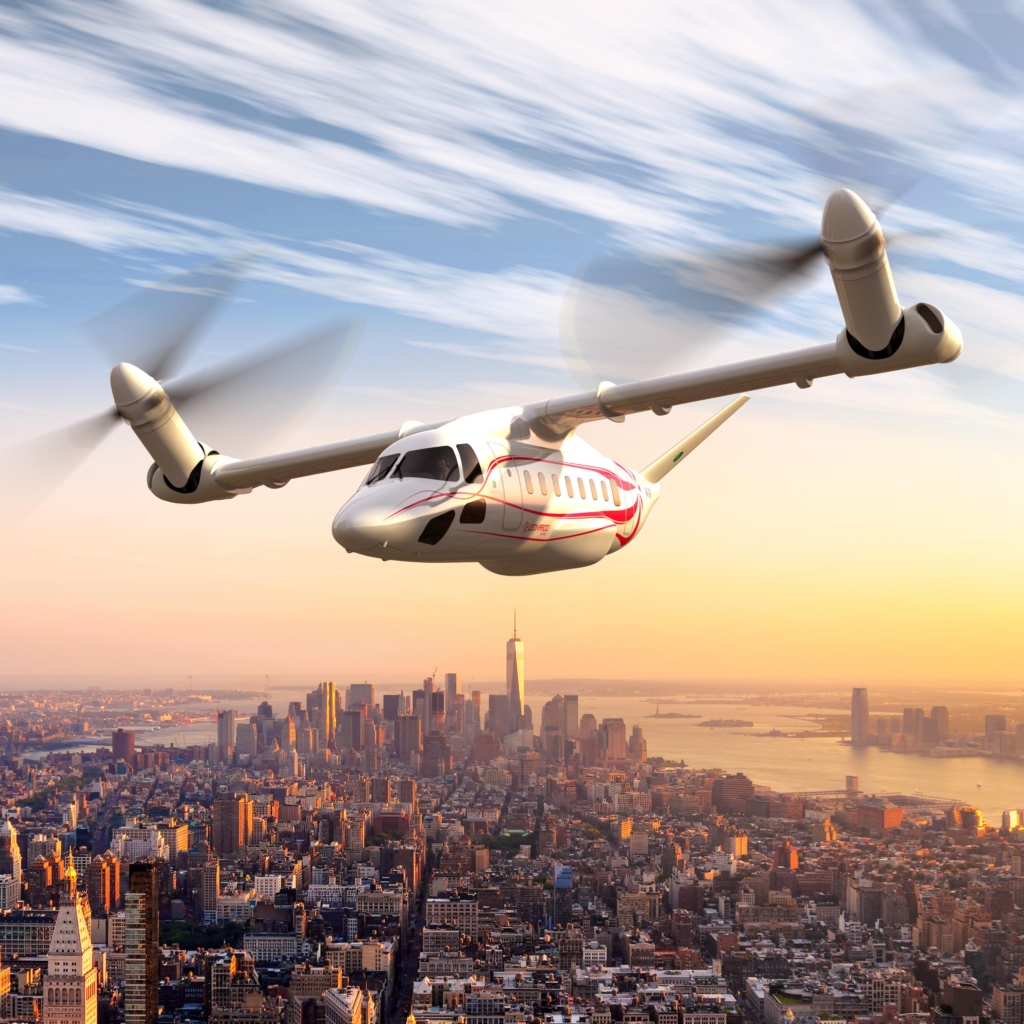
According to Leonardo Helicopters managing director Gian Piero Cutillo, the first flight represents a step toward a more sustainable future for rotorcraft operations rather than a single aircraft programme.
“Building on our established expertise in the tiltrotor domain, bringing this Technology Demonstrator to the air for the first time sets a major milestone on our path to provide a key contribution towards an even more advanced, effective and sustainable use of rotorcraft technologies in Europe,” Cutillo said.
“Vertical lift continues to provide invaluable advantages to operators and communities for multiple tasks globally. We are therefore committed to developing solutions that uniquely combine the best of both worlds, rotary and fixed-wing architectures, enabling all-new capabilities.”
Why the NGCTR matters for Europe’s aerospace supply chain
For the Clean Aviation Joint Undertaking, NGCTR is as much about industrial capability as it is about aircraft performance.
The programme has generated more than 20 patents and supported the development of new supply chains and specialist skills across Europe.
Axel Krein, executive director of Clean Aviation JU, has described the demonstrator as an example of how EU-funded research can translate long-term ambition into operational hardware, strengthening Europe’s position in sustainable air transport.
The NGCTR-TD is also the first civil tiltrotor to fly under a European civil registration, a symbolic step for a continent seeking greater autonomy in advanced rotorcraft development.
How NGCTR technologies could shape future civil and military tiltrotor aircraft
While the NGCTR-TD itself is not destined for commercial service, many of its features are expected to inform future civil and potentially military designs.
Several of the technologies being tested are already visible in Leonardo and Bell’s conceptual work for NATO’s Next Generation Rotorcraft Capability programme.
For now, the focus remains firmly on flight testing. Over the coming months, engineers will expand the envelope to assess performance, handling qualities and system behaviour in both hover and wing-borne flight.