It’s official: Leonardo’s AW149 wins £1bn UK new medium helicopter contract

March 2, 2026
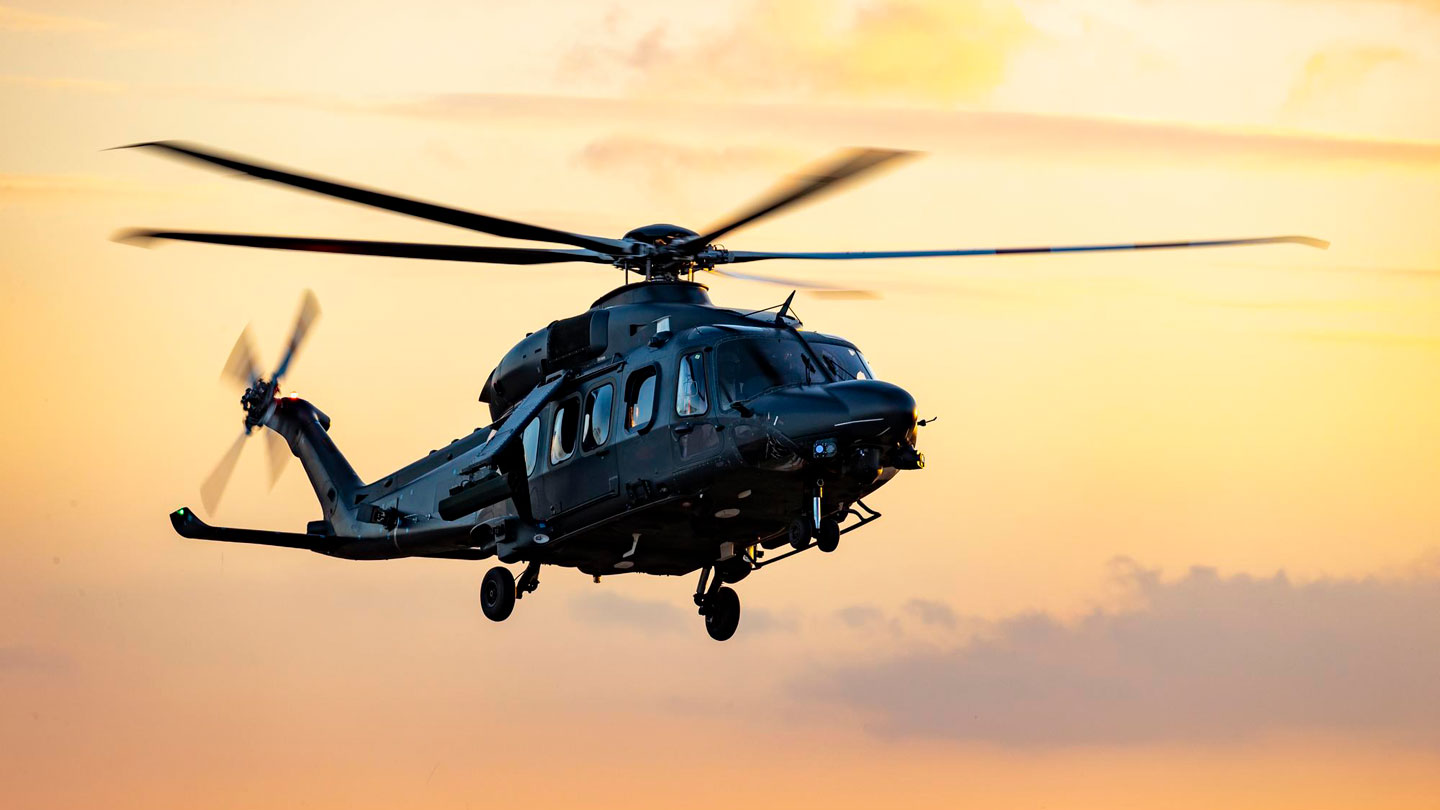
After days of speculation and a pointed hint from the company’s chief executive that a decision was imminent, the UK Government has formally awarded the £1 billion ($1.34 billion) New Medium Helicopter contract to Leonardo.
The deal will see 23 AW149 helicopters built for the British armed forces, replacing ageing rotorcraft and securing production work for Leonardo’s historic helicopter facility in Yeovil, Somerset, a site often described as the home of British military helicopter manufacturing.
“We welcome the UK Government’s decision to award the NMH contract to supply advanced medium lift helicopters to the UK Armed Forces, as well as the continued investments in our autonomous technology,” said Roberto Cingolani, CEO and General Manager of Leonardo.
“Our industrial base in the UK is core to our international strategy and competitiveness, now and in the future. This new programme will translate into significant benefits for the country; preserving and expanding defence and security capabilities, high-quality industrial and technology expertise, professional skills and export opportunities, while also guaranteeing the UK remains a credible global player by preparing for future high-tech endeavours in aerospace, defence, security and space.”
For the Ministry of Defence, the programme is intended to restore a crucial capability gap that opened after the retirement of the Royal Air Force’s Puma fleet, while also simplifying Britain’s rotary wing fleet by replacing several different helicopter types with a single modern platform.
And for Leonardo, the contract carries equal strategic weight. It not only secures the future of its UK rotorcraft operations but positions Yeovil as a global hub for manufacturing and exporting military helicopters over the coming decade.
The AW149 helicopters will be assembled in the UK and delivered under the NMH programme, which aims to streamline support, reduce operating costs and modernise Britain’s medium lift helicopter capability.
“This defence investment works for Britain on every level,” said UK Defence Secretary John Healey. “It strengthens our Armed Forces, secures thousands of skilled British jobs and sets up big export opportunities.”
How the New Medium Helicopter programme fills the RAF Puma capability gap
The New Medium Helicopter programme was first announced in 2021 as part of a wider attempt by the UK Ministry of Defence to rationalise its complex rotary wing fleet.
For decades, British forces operated several different medium-lift helicopters across different services. These included the Royal Air Force’s Airbus Puma Mk2 fleet and the British Army’s AS365 Dauphin aircraft.
Many of these aircraft were introduced in the 1970s and 1980s and have remained in service through extensive upgrades. While still operational, their age and rising maintenance burden made long-term sustainment increasingly difficult.
The retirement of the Puma fleet in particular created a visible gap in the RAF’s medium lift capability.
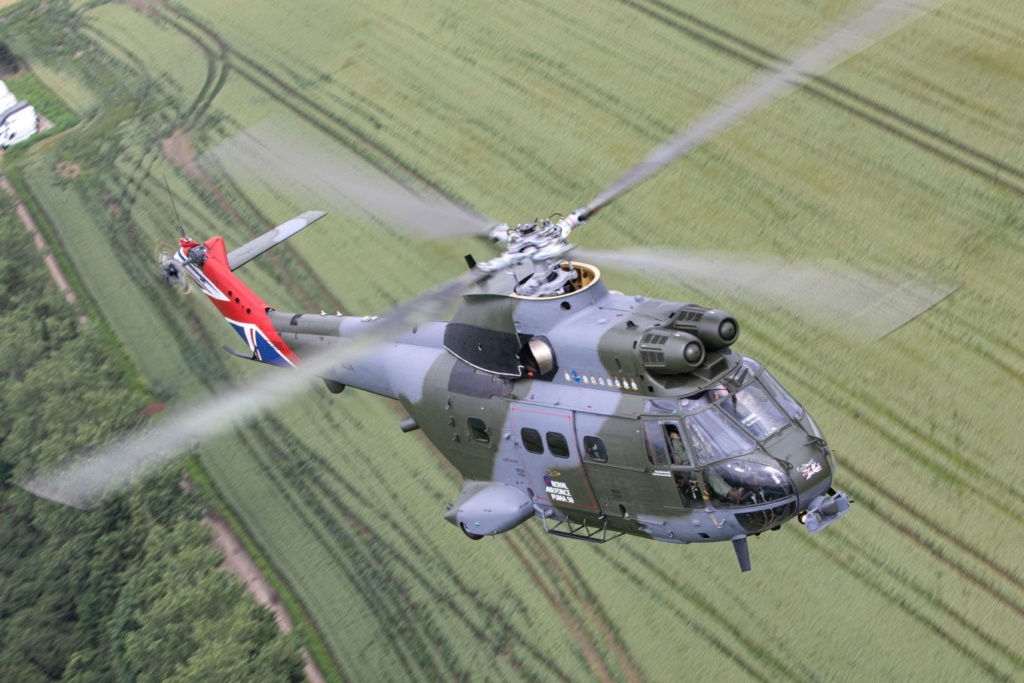
Puma helicopters had been deployed across a wide range of missions, including troop transport, disaster relief, casualty evacuation and special operations support. They also operated from overseas bases such as Brunei and Cyprus.
When the aircraft were withdrawn earlier than initially planned, Britain temporarily lost part of its medium lift helicopter capacity.
The NMH programme was therefore conceived not simply as a replacement purchase but as part of a broader restructuring of the UK’s helicopter fleet. Instead of maintaining several specialised aircraft types, the MoD decided to move towards a single modern platform capable of carrying out multiple missions. The AW149 was selected to fill that role.
Leonardo’s AW149 became the sole bidder in the NMH competition
The NMH competition initially involved several major helicopter manufacturers. Leonardo entered the programme with its AW149 twin-engine military helicopter. Airbus Helicopters was expected to offer the H175M, a militarised version of its offshore transport helicopter. Lockheed Martin Sikorsky was also believed to be preparing a variant of the UH-60 Black Hawk.
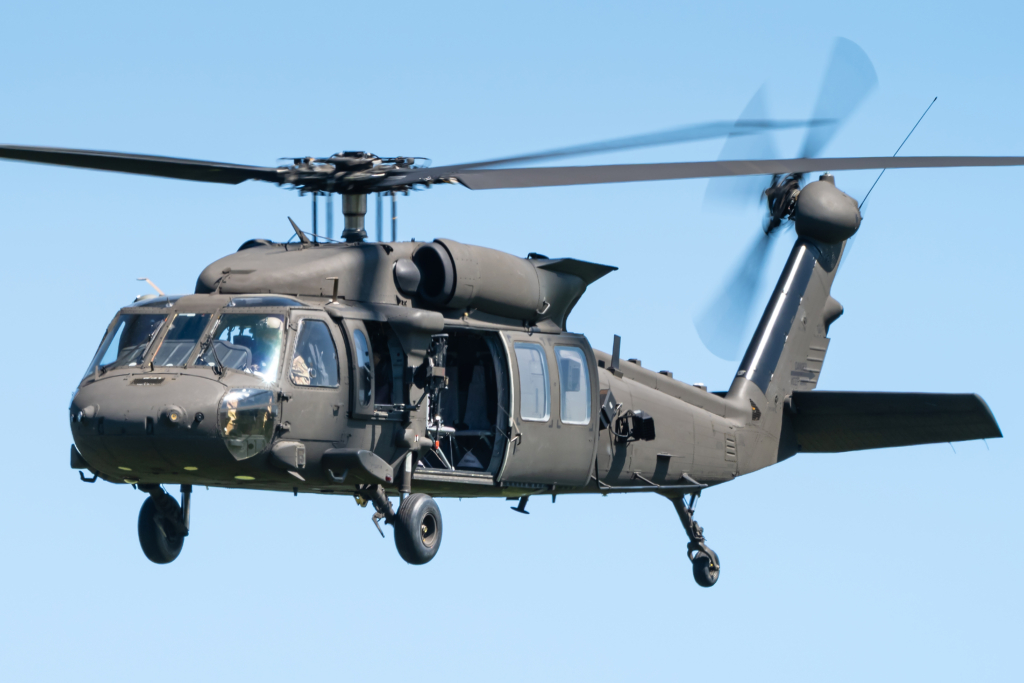
However, the competition began to unravel in 2024. Both Airbus and Lockheed Martin withdrew from the programme before final bids were submitted, citing concerns over budget levels and the structure of the requirement. Their departure effectively left Leonardo as the sole remaining bidder.
Even with a single compliant proposal on the table, the government still took months to finalise its decision as officials reviewed pricing, industrial commitments and long-term support arrangements.
Why the AW149 was selected to replace the RAF’s ageing Puma fleet
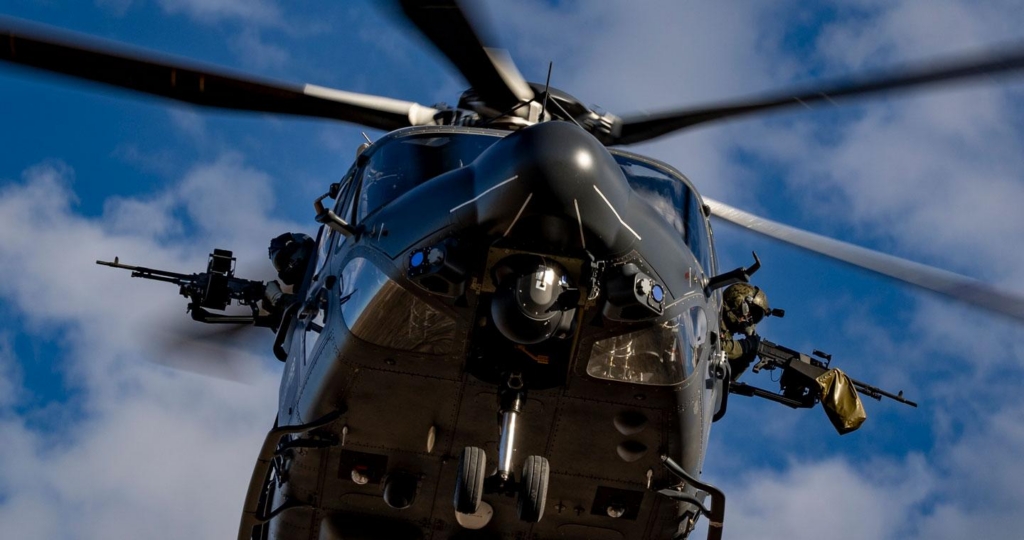
Leonardo’s AW149 is a twin-engine medium lift military helicopter designed for a wide range of battlefield and support roles.
The aircraft can carry troops, equipment and supplies while also performing casualty evacuation, logistics and humanitarian missions.
Its modular architecture allows mission equipment, communications systems and defensive aids to be integrated depending on operational requirements.
The helicopter is already in service with several international operators, including Poland, Egypt and Thailand.
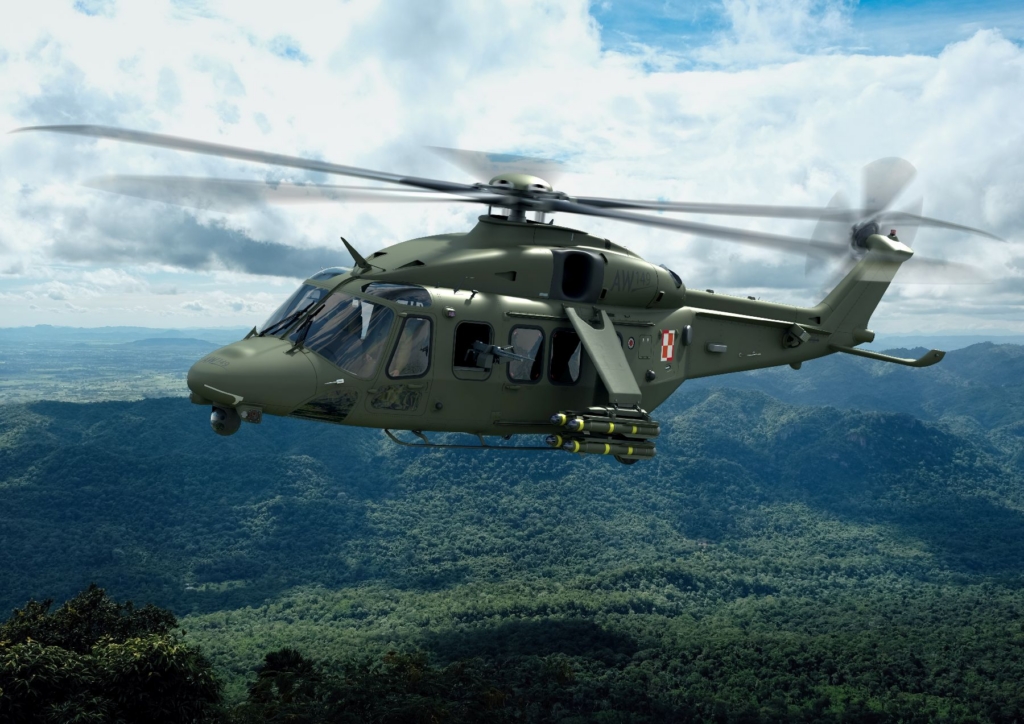
British officials believe the platform provides a relatively low-risk option compared with developing an entirely new aircraft.
The AW149’s open systems architecture also allows upgrades to be integrated as technology evolves, something seen as increasingly important as military aviation systems become more networked.
Leonardo Helicopters managing director Gian Piero Cutillo said the aircraft would bring modern operational capabilities to the UK armed forces.
“The AW149’s modern design, advanced technology and high performance will deliver outstanding capabilities allowing the operator to enter a new era in terms of mission effectiveness, interoperability and supportability,” he said.
Leonardo’s Yeovil factory confirmed as centre of UK military helicopter production
Beyond the aircraft itself, the industrial implications of the NMH decision are significant.
Leonardo’s Yeovil facility is currently the only site in the United Kingdom capable of designing, assembling and supporting military helicopters.
The factory traces its roots back more than a century and has produced aircraft for British forces since 1915.
Over the decades, it has built helicopters including the Lynx, Wildcat and Merlin, platforms that have become mainstays of British military aviation.
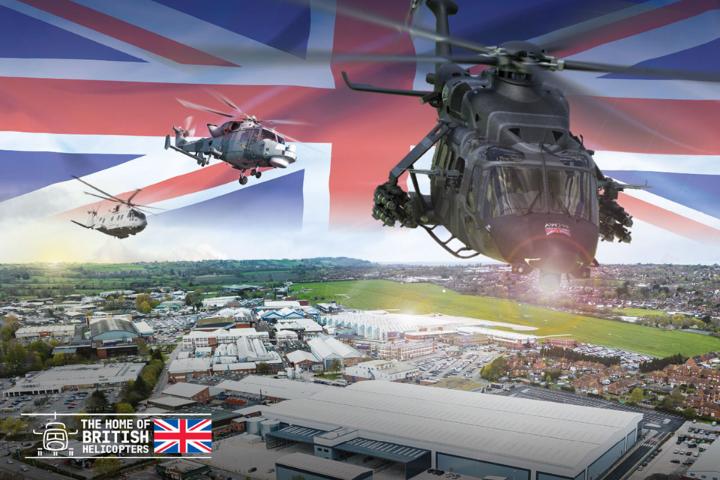
Without a new production programme, the future of the site had become increasingly uncertain. The AW149 contract ensures continued work for thousands of employees at the facility.
According to government estimates, the programme will support more than 3,300 jobs at Yeovil and across the supply chain.
Around 650 workers will be directly involved in the NMH programme, with many more supporting manufacturing, maintenance and engineering activities.
The wider supply chain involves nearly 70 British companies providing components and services.
Leonardo targets £15 billion in global AW149 exports from Yeovil
British officials hope the programme will extend beyond the domestic order.
The government believes global demand for medium lift helicopters remains strong, with roughly 20 countries expected to replace older fleets over the next decade.
By anchoring AW149 production in the UK, Yeovil could become the centre for international manufacturing and exports.
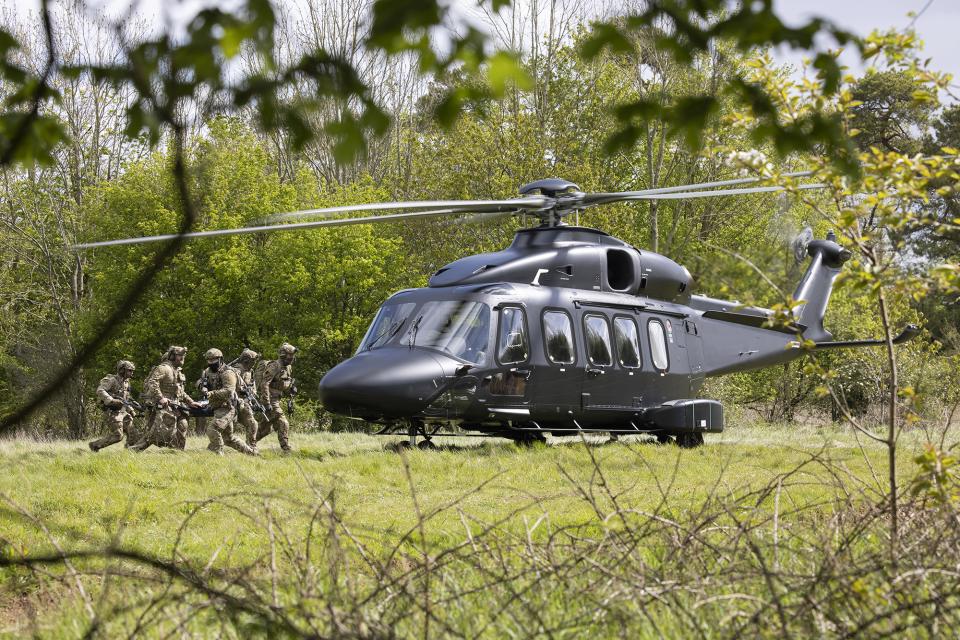
Officials estimate that foreign sales could generate up to £15 billion ($20 billion) in export revenue over the next ten years.
Chancellor Rachel Reeves said the programme highlights the economic value of defence investment.
“In an uncertain world we are backing Britain’s world-class defence sector to both keep Britain safe and drive economic growth,” Reeves said. “This historic partnership supports British jobs and security today while positioning the UK at the forefront of the next generation of defence and autonomous systems.”
Proteus autonomous helicopter project gains boost alongside AW149 deal
Alongside the helicopter order, the Ministry of Defence also confirmed additional funding for Proteus, Leonardo’s experimental autonomous helicopter project.
Proteus is an uncrewed rotary wing aircraft developed with the Royal Navy and conducted its first flight earlier this year.
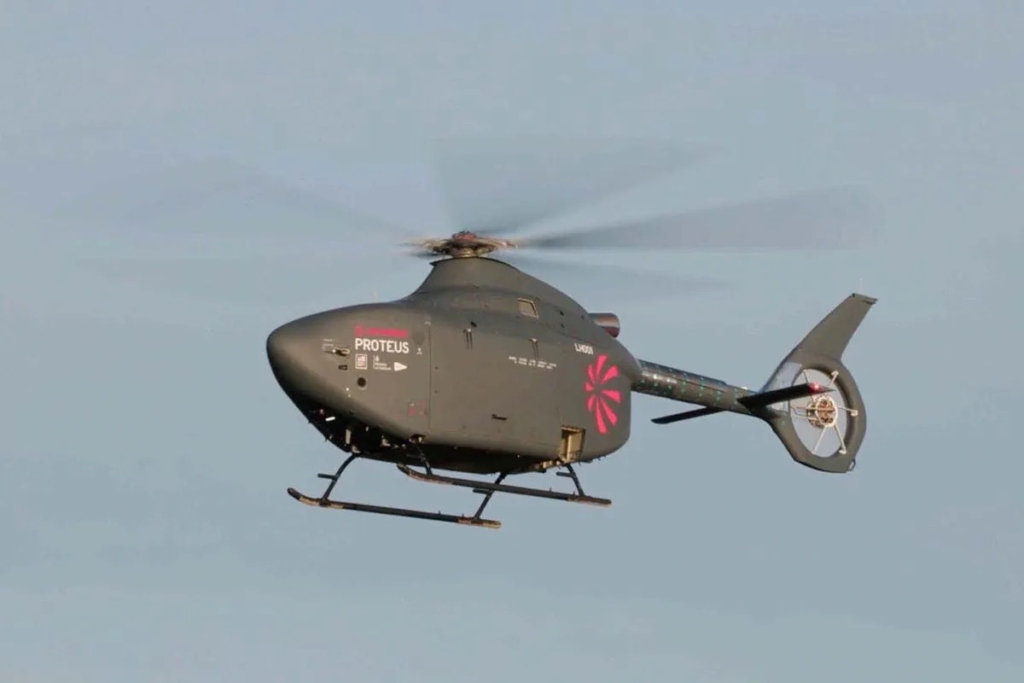
The programme is exploring the possibility of autonomous or optionally crewed helicopters capable of carrying out surveillance, logistics or anti-submarine warfare missions.
Technologies developed under Proteus could eventually be integrated into future helicopter platforms.
British officials say the work forms part of the country’s broader Defence Industrial Strategy, which seeks to expand domestic capabilities in autonomous systems and advanced aerospace technology.
Ukraine war underscores continued battlefield role of military helicopters
The decision to move forward with the NMH programme also reflects lessons drawn from recent conflicts.
The war in Ukraine has highlighted the continued importance of helicopters in modern warfare.
Rotary-wing aircraft remain vital for moving troops and equipment quickly across difficult terrain, supporting special operations forces and evacuating casualties from the battlefield.
They also play a key role in humanitarian relief missions following natural disasters.
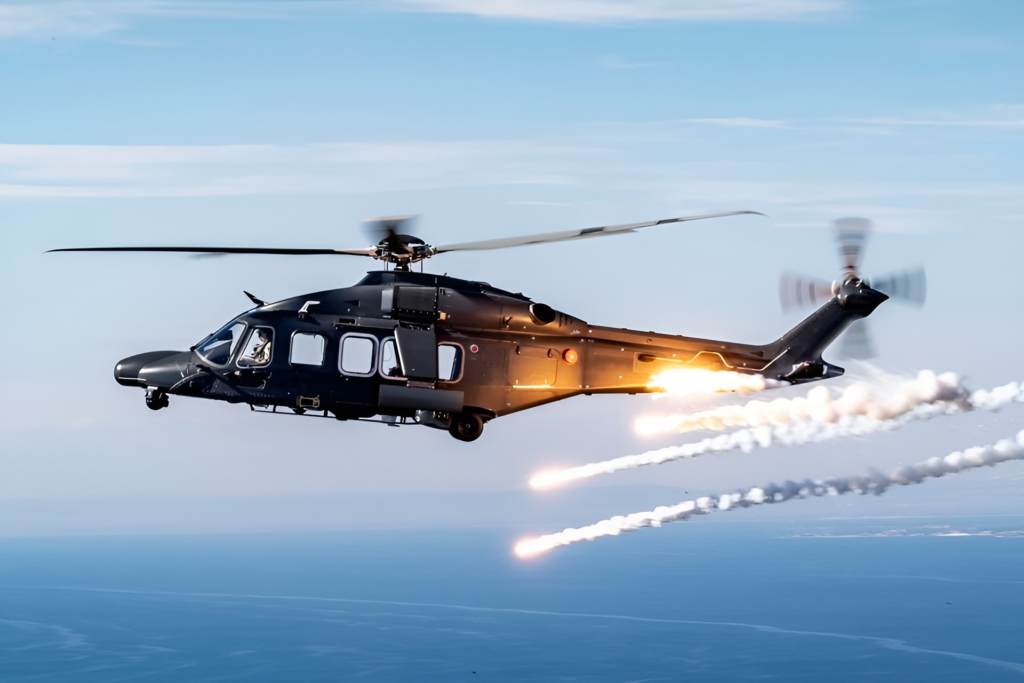
The AW149 is designed to operate in harsh environments and austere locations where fixed-wing aircraft cannot easily operate.
Its ability to carry out multiple mission types using a single aircraft is intended to simplify logistics and reduce operating costs for the armed forces.
After years of delay, NMH decision reshapes Britain’s helicopter fleet
The NMH decision has been one of the most closely watched defence procurement programmes in the UK in recent years.
Budget pressure, competing military priorities and debates over industrial policy repeatedly delayed the announcement.
Trade unions and regional leaders had warned that failure to move ahead with the programme could threaten the future of Britain’s helicopter manufacturing sector.
Unite union general secretary Sharon Graham described the contract award as a major victory for aerospace workers.
“The Leonardo contract is a tremendous victory for Unite members in Yeovil and across the aerospace sector,” she said.
The programme represents a long-term investment in both military capability and domestic industry.