JEKTA brings electric amphibious aircraft to the Middle East in new Open Skies partnership

December 12, 2025

JEKTA, the Switzerland-based designer of a zero-emissions flying boat, has announced it has teamed up with Open Skies Network to examine bringing amphibious electric aircraft flights to the Middle East.
The agreement between the parties will see a collaborative effort to bring electric amphibious air travel to the Arabian Peninsula, potentially as early as 2031.
Open Skies Network is a leading developer of infrastructure and ecosystems that support a variety of drone and eVTOL applications and has already delivered drone-based projects for clients such as Royal Mail and the NHS in the UK.
In addition, the company has already partnered with 20 UK sea port locations, agreeing on a phased adoption roadmap that will see investment in infrastructure and regulatory compliance to support JEKTA’s UK market entry.
JEKTA and Open Skies Network to collaborate in the Gulf region
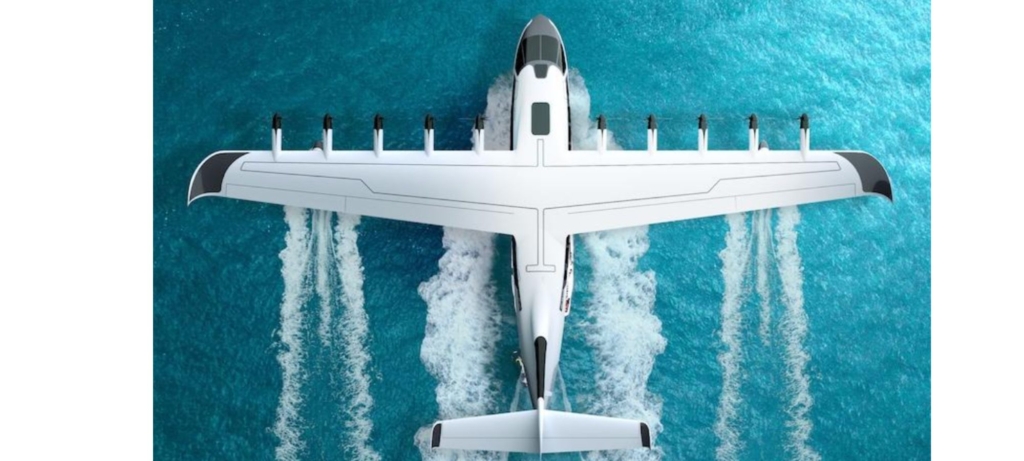
Under the terms of the agreement, the companies will work together to define a network of locations where Regional Air Mobility (RAM) can be established using JEKTA’s Passenger Hydro Aircraft – Zero Emissions 100 (PHA-ZE 100) amphibious aircraft.
The partners say they will be examining potential routes which will be the quickest, most economically and environmentally advantageous way to connect remote regions of the Gulf region with urban hubs, to open up “a raft of luxury, leisure, civil and business opportunities.”
The announcement comes as Open Skies Network confirmed a team will visit the United Arab Emirates in January 2026 to meet key partners and identify suitable locations where amphibious operations could be integrated into broader, related RAM and eVTOL aircraft infrastructure.
This preliminary visit should pave the way for further work with JEKTA to establish the feasibility of PHA-ZE 100 operations around the region from 2031 onwards.
Open Skies Network CEO Gareth Whatmore said the UAE’s track record in delivering major infrastructure projects makes it an ideal early market for new forms of Advanced Air Mobility.
With the first sub-30-mile eVTOL flights expected in the region before 2027, he described the timing as an opportunity to look ahead to the “next phase of Advanced Air Mobility”.
Whatmore said integrating electric amphibious aircraft alongside eVTOL systems would enable new regional connections while easing surface transport congestion.
“By integrating sustainable aircraft and mobility solutions across water and land, such as JEKTA’s aircraft, we can seamlessly connect the peninsula’s touristic gems,” he noted, adding that the aim is to maintain the high-quality passenger experience associated with the region.

He also highlighted the alignment between the two companies, saying JEKTA’s amphibious design “enjoys a unique market position” that fits with Open Skies Network’s vision for “future-proofed, decarbonised regional flight”.
According to a statement from Open Skies Network, the global market for existing regional aviation and rail exceeds $0.5 trillion. It adds that, with the introduction of larger, sustainable electric aircraft such as the PHA-ZE 100, there is potential to “significantly disrupt the industry, connecting people, places and cargo more quickly, greenly and efficiently.”
JEKTA is looking towards the Gulf region
JEKTA’s Chief Innovation Officer, Wouter du Preez, said the partnership with Open Skies Network will help shape the infrastructure needed for the company’s market entry in the Gulf.
He described the UAE and wider GCC as “rich with potential for JEKTA”, noting that the manufacturer has already secured forward-sale agreements from operators and lessors interested in expanding into the region.

Du Preez said the PHA-ZE 100’s versatility will allow it to serve a wide range of missions. Its “multiple operating parameters, attractive per-seat economics and versatile interior configurations” would, he said, introduce a new mode of regional transport that bridges gaps left by mobility assets restricted to either land or water.
He added that the aircraft’s ability to operate from paved, unpaved and water runways will enable route expansion not only in the UAE and GCC, but also into Southern Europe and North Africa.
JEKTA and its PHA-ZE 100 amphibious flying boat
Swiss-based JETKA is in the process of developing a high-wing aircraft that features a boat-shaped hull, ideal for water-based operations, known as the PHA-ZE 100.
Four electrically driven power plants are mounted along the leading edge of each wing, where the hydrogen batteries are also stored, combined with a high-T-tail design, boat-shaped hull and retractable undercarriage for land-based operations.
The PHA-ZE 100 has been designed for sustainable regional, VVIP, corporate shuttle, medevac, or cargo transportation. The company claims that the aircraft will feature low operating costs, unprecedented comfort, and flexible configurations, enabling operations in diverse environments.
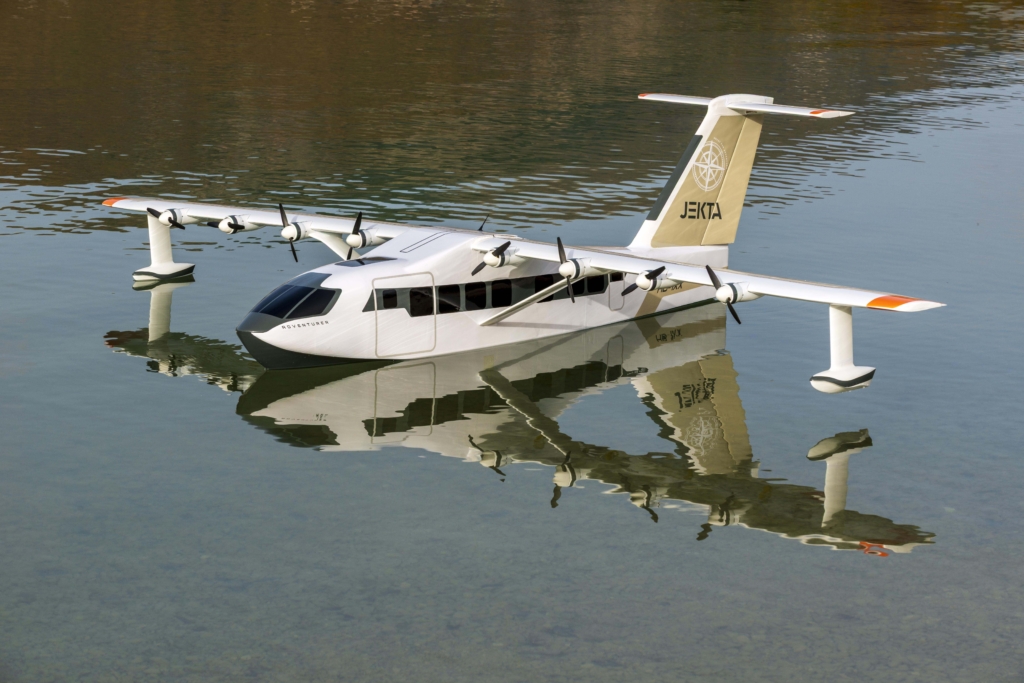
The PHA-ZE 100 will operate in coastal waters with waves up to 1.2m high, as well as in lakes, waterways, and on paved and unpaved runways, utilising its standard retractable wheeled landing gear.
The company has recently begun testing a 1:9 scale model of the PHA-ZE 100 aircraft, which will be used to test concepts and adjust the design of the final aircraft through the gathering of vital performance data.
Open Skies Network’s previous experience in coastal air operations
UK-based Open Skies Network has already accumulated some experience in assessing the feasibility of introducing electric seaplane, amphibian and cargo drone services using the UK’s Southwest coastline as a model.
As reported by ZAG Daily, the company’s ‘HarbourLift’ project has already been testing drone infrastructure, airspace management and logistics in and around Cornwall.
Specifically, the programme has been studying how zero-emission aircraft could operate between key harbour towns and cities in Dorset, Somerset, Devon, Cornwall and the Isles of Scilly, offering faster and cleaner connections for passengers, goods and public services.
The company says that, with the knowledge it has accumulated to date in the UK, conventional seaplane routes could begin in the Gulf region once all the feasibility work has been completed.
The partners are targeting a potential start of PHA-ZE 100 operations by 2031 when the type enters into commercial passenger service.
Featured image: JEKTA