Meet the EC-2: Japans new standoff jammer aircraft breaks cover

March 13, 2026
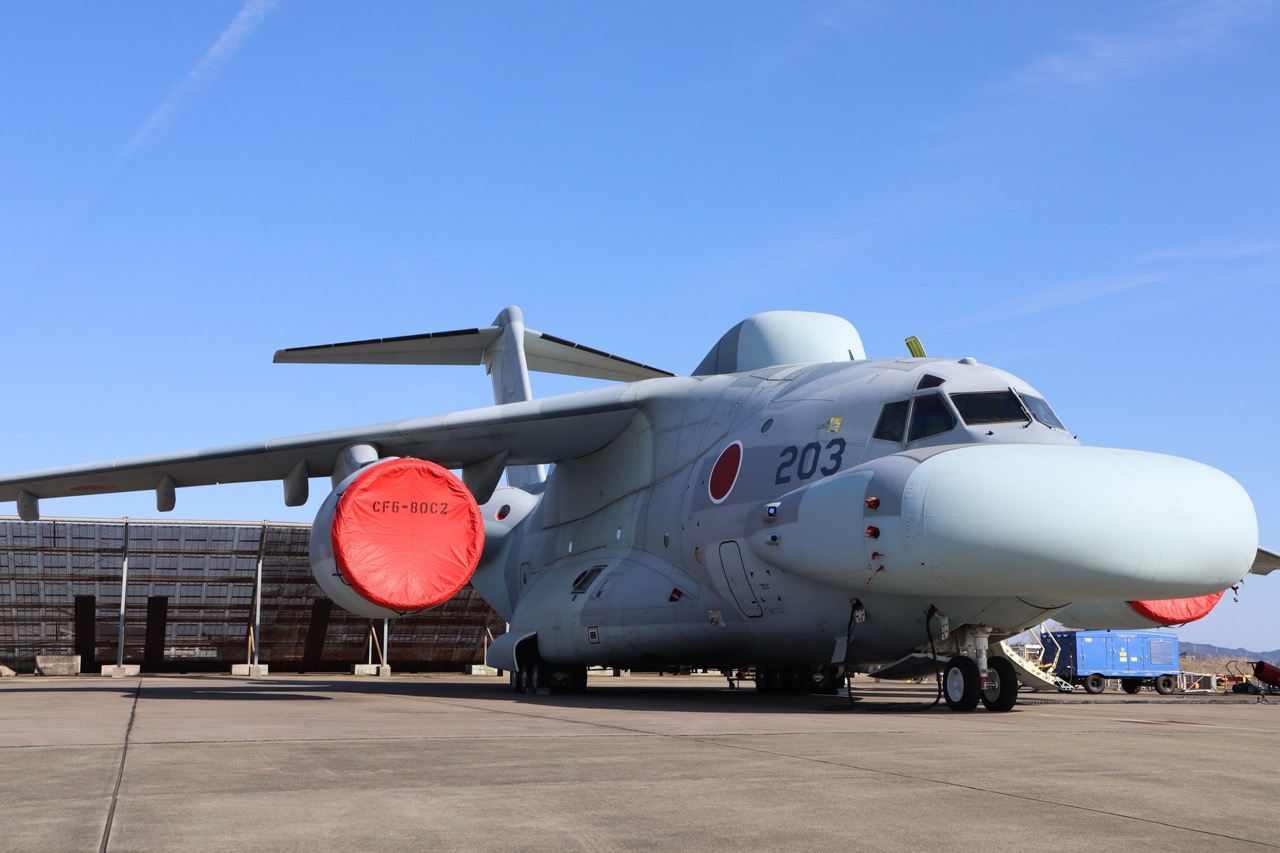
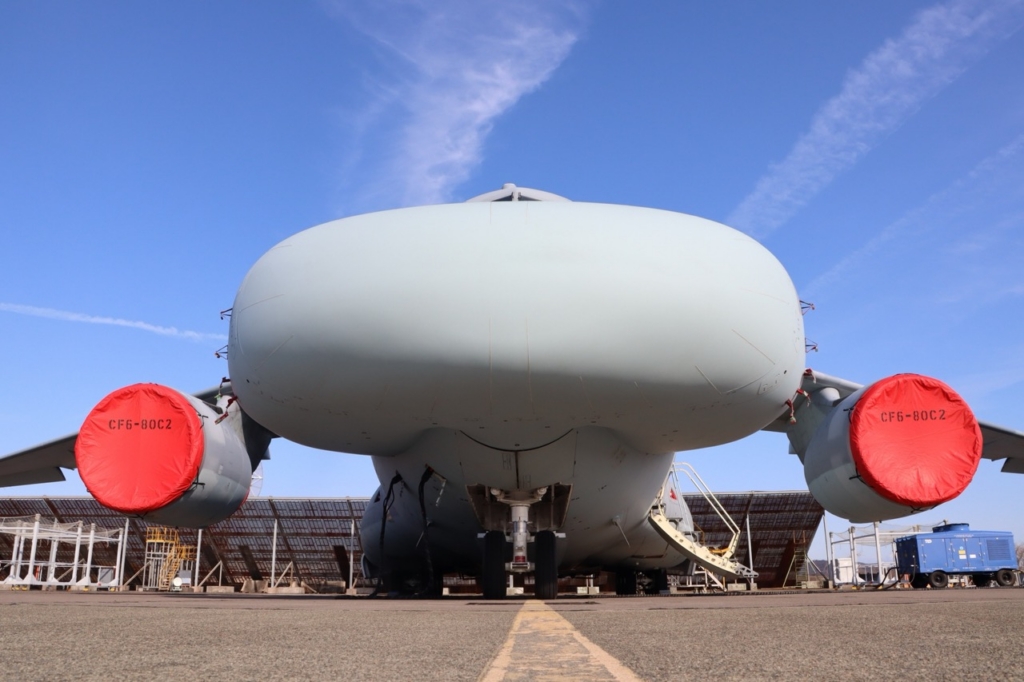
Japan has released the first official images of its new EC-2 stand-off jammer, a specialised electronic warfare aircraft designed to disrupt enemy radar and communications from long distances.
The aircraft is a major upgrade to the country’s airborne electronic warfare capabilities and will play a key role in future air combat operations across the Indo-Pacific.
Japan’s new electronic warfare platform
The EC-2 is a variant of the Kawasaki C‑2 tactical transport aircraft operated by the Japan Air Self-Defence Force (JASDF).
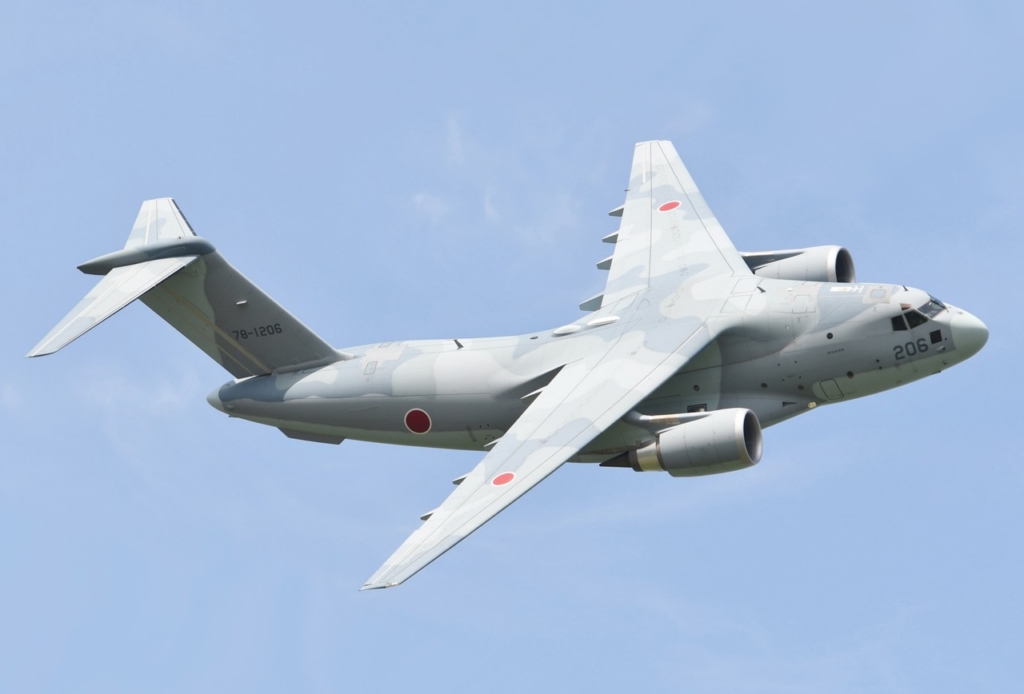
Originally introduced in 2016 as a modern airlifter, the C-2 platform provides the size, electrical power, and endurance required to carry advanced electronic warfare systems.
未確認地上物体#岐阜基地#飛行開発実験団 pic.twitter.com/ZrwkmWeAUx
— 航空自衛隊 航空開発実験集団 (@jasdf_adtc) March 12, 2026
The EC-2 variant is heavily modified with multiple antennas and fairings across the fuselage, including a large bulbous radome at the front of the aircraft and additional bulges along the top and sides. These structures house sensors and jamming equipment used to interfere with hostile radar, communications networks and other electronic systems.
How stand-off jamming protects strike aircraft and suppresses enemy air defences
The aircraft’s main role is stand-off electronic attack. Rather than flying directly over enemy territory, the EC-2 will operate at a distance, using high-powered electronic systems to disrupt adversary sensors and communications while remaining outside the range of air-defence systems.
In practice, this capability could allow the aircraft to:
- Jam enemy air-defence radars, reducing the effectiveness of surface-to-air missile systems
- Disrupt military communications networks
- Interfere with navigation and targeting sensors
- Support fighter aircraft during counter-air or suppression-of-enemy-air-defence missions
Electronic warfare aircraft like the EC-2 “blinds” enemy systems in the electromagnetic spectrum, before strike aircraft or missiles enter contested airspace.
EC-2 replaces a unique Cold War-era aircraft
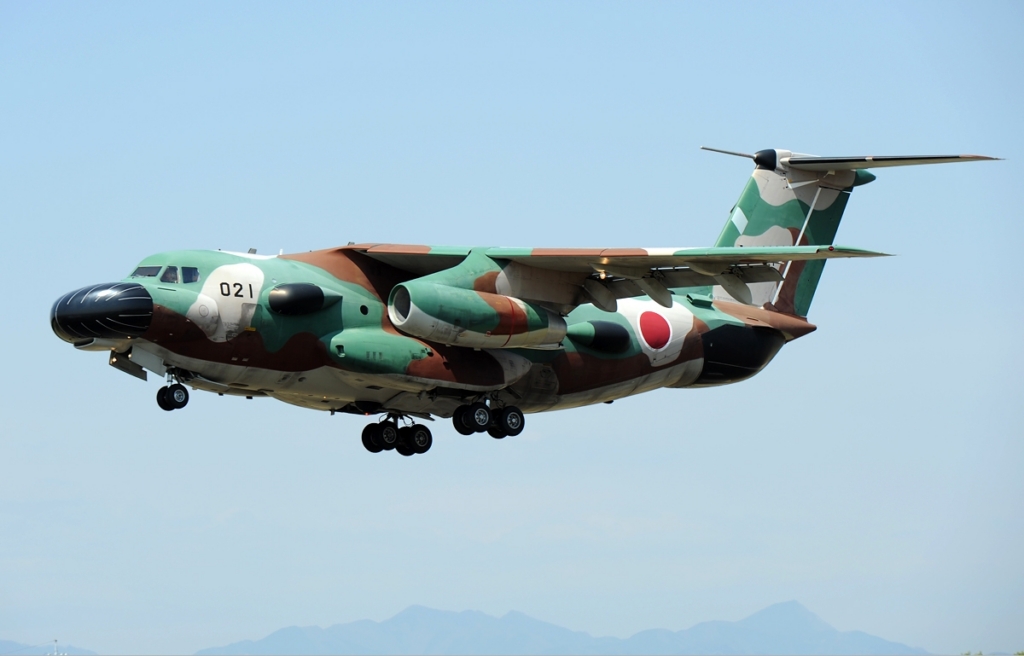
The EC-2 will replace the EC-1, an earlier electronic warfare aircraft that entered Japanese service in 1986. Japan currently has a single EC-1 aircraft in operation, and plans to field four EC-2 platforms, multiplying its airborne jamming capacity.
The development program began around 2020 and is being carried out in phases through the early 2030s, with work focusing on data-link jamming technologies and integrated electronic warfare systems.
Japan’s FY2025 MoD budget earmarks ¥41.4 billion ($260 million) for electronic warfare aircraft development, as part of a ¥508.6 billion ($3.2 billion) investment to boost intelligence collection and analysis.
Electronic warfare in the Indo-Pacific
The unveiling comes as Japan and its allies place increasing emphasis on electronic warfare capabilities. A focus on electronic warfare capabilities in the Indo-Pacific is intensifying in response to China’s A2/AD (Anti-Access/Area Denial) strategies.
Modern air operations rely heavily on radar, data links, and networked sensors. Control of the electromagnetic spectrum can be a decisive factor in combat, countering drone threats, securing communications, and providing a first line of defence.
Key initiatives include technology exchange as part of the AUKUS Trilateral Security Partnership between the US, UK, and Australia to counter Indo-Pacific threats, and the 3rd Marine Littoral Regiment operations for jamming and deception.

For Japan, the EC-2 could support operations alongside fighter aircraft like the F‑35 Lightning II and other regional assets, degrading enemy detection systems in contested airspace.
The aircraft is also part of a broader trend toward large, long-range electronic warfare platforms, similar in concept to the US Air Force’s EC‑37B Compass Call, to provide persistent jamming and electronic attack capabilities during high-intensity conflicts.
A growing family of special-mission C-2 aircraft
The EC-2 is not the only specialised version of the C-2 platform. Japan has also developed variants for electronic intelligence collection and signals intelligence missions to build an airborne intelligence and electronic warfare ecosystem. The MoD budget also sets aside ¥49.6 billion ($311 million) to acquire the RC-2 signals intelligence aircraft variant of the Kawasaki C‑2.
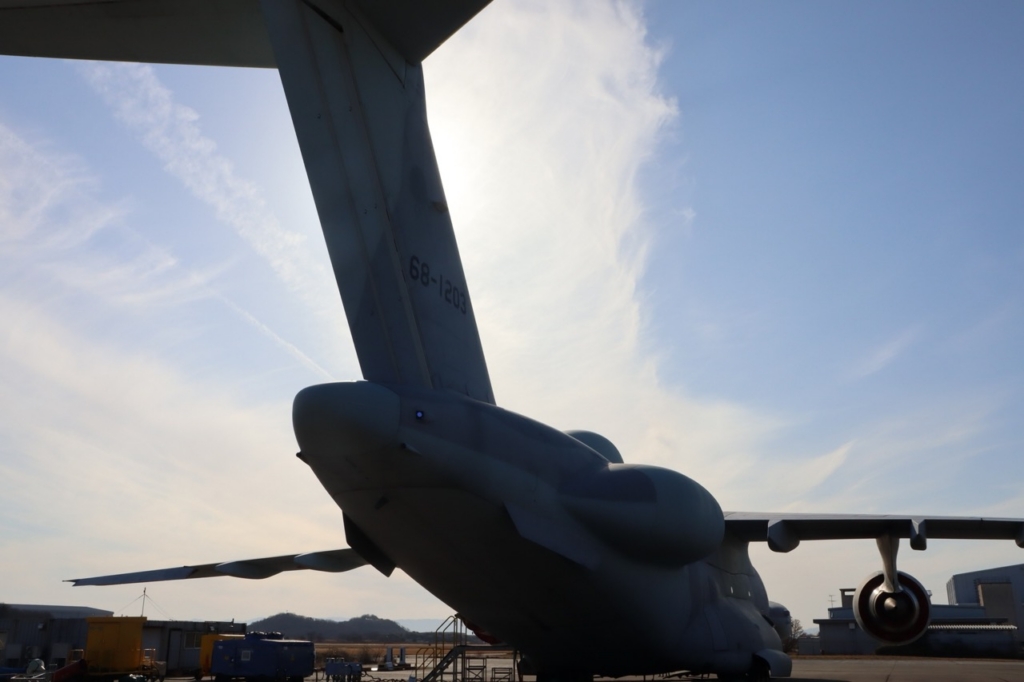
With the official release of images of the EC-2, Japan’s next-generation stand-off jammer has moved one step closer to operational service as electronic warfare plays an increasingly important role in modern air power.
Featured Image: JASDF Aviation Development Experiment Group