Despite weeks of US and Israeli strikes, Iran still has 50% of its attack drones

April 3, 2026
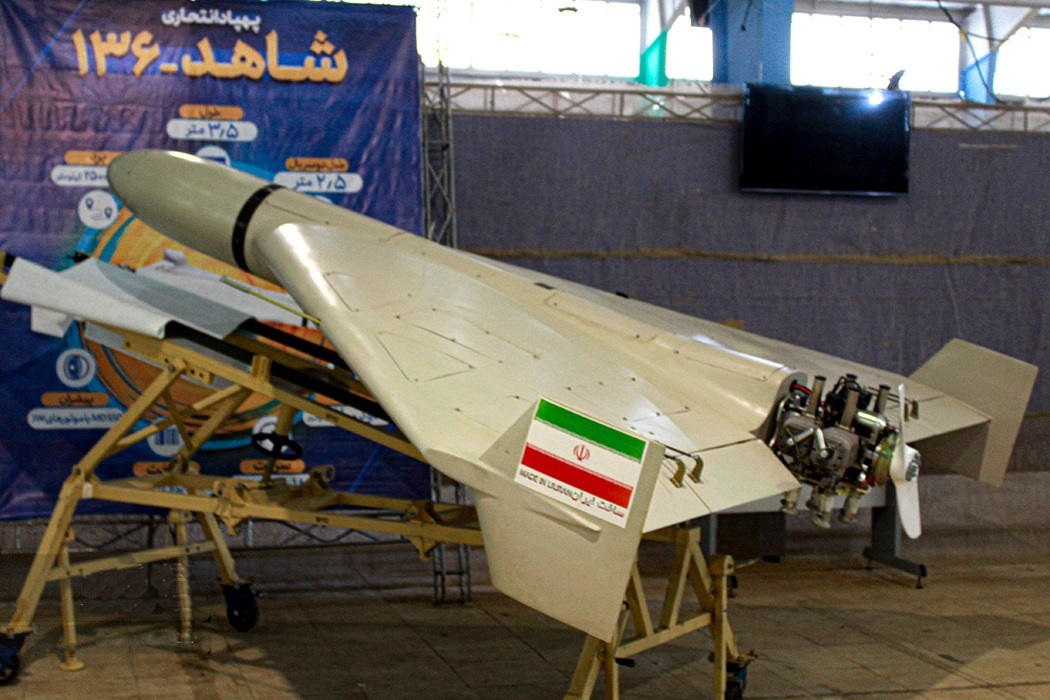
CNN has reported that roughly half of Iran’s missile launchers remain intact, alongside around 50% of its one-way attack drone capability, despite weeks of sustained US and Israeli strikes.
If accurate, the assessment highlights a critical challenge. While missile launch infrastructure can be progressively degraded, drone capability, particularly when tied to scalable production, is far harder to eliminate entirely.
Half of Iran’s missile launchers may remain, raising questions over strike effectiveness
According to CNN, citing US intelligence assessments and multiple sources familiar with the matter, “roughly half of Iran’s missile launchers are still intact, and thousands of one-way attack drones remain in Iran’s arsenal despite the daily pounding by US and Israeli strikes against military targets over the past five weeks.”
Day 33 https://t.co/9gATRpBUmY pic.twitter.com/6PMxHP1o16
— Dmitri Alperovitch (@DAlperovitch) April 1, 2026
However, estimates differ. Israeli assessments suggest that only 20–25% of Iran’s launchers remain operational, pointing to significant degradation of its firing capability.
This distinction is crucial. Even if Iran retains substantial missile stockpiles, those weapons are only useful if compatible launch systems remain available. The loss of specialised launchers, or the infrastructure required to operate them, can sharply limit the ability to employ certain missile types.
Operation Epic Fury: April 1st Update pic.twitter.com/HfMcpjU2mZ
— U.S. Central Command (@CENTCOM) April 2, 2026
Iran’s missile inventory is also diverse, ranging from shorter-range systems to more advanced, longer-range and higher-precision weapons. It remains unclear whether attrition has been evenly distributed across these categories or concentrated among specific systems, a factor that could significantly shape Iran’s remaining strike capability.
The US assessment may include launchers that are damaged or buried but not destroyed, highlighting the challenge of verifying true capability degradation.
Thousands of Iranian drones highlight shift towards mass, low-cost warfare
According to the same intelligence assessment, roughly 50% of Iran’s drone capability remains intact, suggesting that despite sustained strikes, a significant portion of its one-way attack UAV capacity has survived.
The presence of “thousands” of one-way attack drones is no longer exceptional in modern conflict. In Ukraine, similar volumes can represent only weeks, or even days, of sustained operations.
Yesterday, the Kyiv Independent reported that Russia launched over 54,000 Shahed-type drones and decoys in 2025, averaging around 4,500 per month, a pace that has already been exceeded in early 2026. At the same time, Ukrainian producers claim rapidly scaling output, with one manufacturer stating it can produce around 200 long-range strike drones per day, with the capacity to increase that significantly.
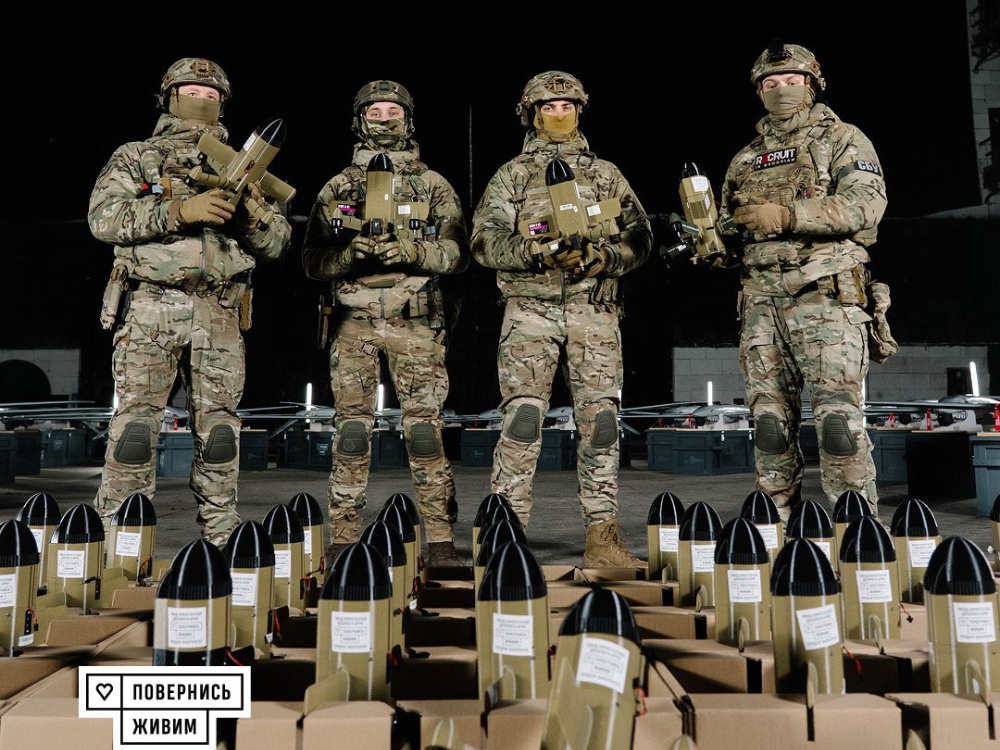
In this context, Iran’s remaining drone inventory may be less important than its ability to replenish it. The key variable is not stockpile size alone, but production capacity under sustained attack.
Ukraine’s FirePoint’s co-founder Denys Shtilerman is now claiming to be producing around 200 long-range strike drones (including FP-1 and FP-2 drones) daily and says it has the capacity to increase that threefold.
Army TV cited Shtilerman as saying, “We can calmly produce about 200 aircraft a day right now. And we can very quickly double or triple these capabilities.”
It seems a country having thousands of kamikaze drones is now a fact of war. A more important question is how many thousands or tens of thousands they can produce in a week.
That said, one major difference is that the US and Israel enjoy air superiority over Iran. This allows them to target and destroy Iranian drone production facilities with plentiful and cheap JDAMs and other munitions.
Ukraine and Russia are unable to secure air superiority over one another, limiting their ability to target factories. The US may be able to stop Iran from scaling up drone production, but eliminating its drones is a very tall order.
Drop in Iranian drone attacks may reflect strategy, not depletion
US officials have pointed to a sharp decline in Iranian attacks. US Secretary of Defense Pete Hegseth recently stated that ballistic missile and one-way drone attacks are down by around 90% compared to the opening phase of the conflict.
However, this reflects a reduction in launch rate rather than a confirmed depletion of inventory.
After an initial surge, Iranian launch activity dropped sharply but has since stabilised at lower, consistent levels. Current estimates suggest Iran continues to launch approximately 60 to 80 drones per day, alongside 25 to 40 missiles.
This sustained pattern may indicate operational constraints imposed by air strikes, limiting Iran’s ability to conduct large-scale salvos. Alternatively, it could reflect a deliberate strategy of conservation, preserving capability for a longer conflict.
"Now in our 5th week of the campaign, it is my operational assessment that we are making undeniable progress. We don't see their navy sailing. We don't see their aircraft flying, and their air and missile defense systems have largely been destroyed." – Adm. Brad Cooper, CENTCOM… pic.twitter.com/cTHgYJDxCF
— U.S. Central Command (@CENTCOM) April 2, 2026
The result is a more nuanced picture than headline figures suggest. While US and Israeli strikes appear to have significantly degraded Iran’s ability to launch large-scale attacks, they have not eliminated its capacity to sustain ongoing operations.
Featured Image: Wikimedia Commons