The Impossible Airplane: World’s 1st foot-controlled aircraft readies for maiden flight in 2026

December 19, 2025
When aviator Jessica Cox climbs into the cockpit of her next aeroplane, she won’t reach for a yoke or rudder pedals with her hands — she’ll do it with her feet. Cox is building The Impossible Airplane, a truly foot-controlled aircraft designed from the ground up for pilots without arms. The project aims to expand what’s considered possible in flight and redefine inclusivity in aerospace.
Armless pilot aims for more inclusive skies
Jessica Cox was born in 1983 in Sierra Vista, Arizona, without arms due to a rare congenital disability. From early childhood, she learned to use her feet for daily tasks most people do with their hands, developing extraordinary dexterity and adaptability.
Cox became the world’s first licensed armless pilot on October 10, 2008. She flew a light-sport ERCO Ercoupe, an aircraft whose unique design interlinks ailerons and rudder controls, enabling pitch, roll, and yaw coordination that allowed Cox to fly using her feet alone.

She is also a fourth-degree black belt in Taekwondo, a certified scuba diver, the author of Disarm Your Limits, and a motivational speaker who spreads the message that “disability does not mean inability.”
Cox has been featured in documentaries, spoken in more than 25 countries, and holds a Guinness World Record for flying without arms.
Cox aims for a new Impossible Airplane
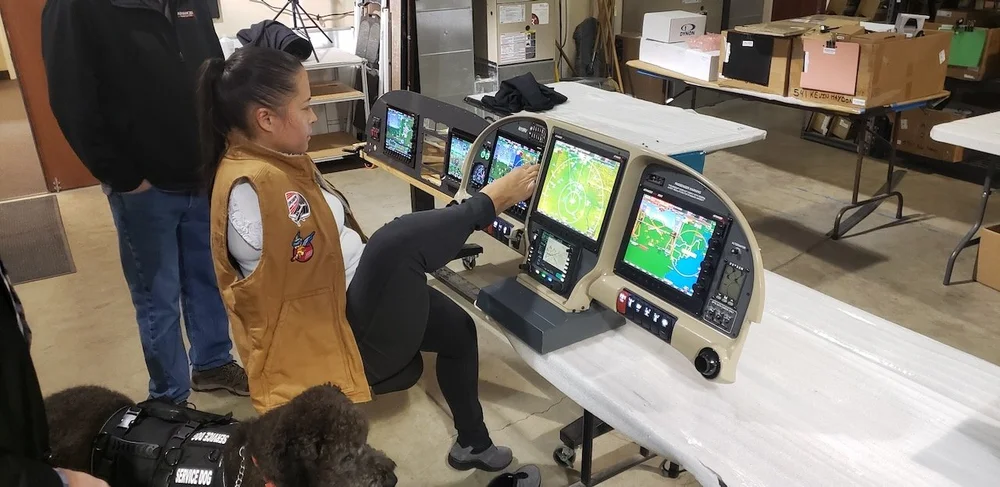
Despite her remarkable achievements flying the Ercoupe, Cox has long recognised the limitations of that aircraft. The Ercoupe’s cockpit requires her to sit in an uncomfortable position — legs raised and crossed so her feet can reach the controls — restricting flights to around 30–45 minutes at a time and making long trips impractical.
In 2020, she envisioned the solution through The Impossible Airplane — a homebuilt, four-seat aircraft designed to allow the pilot to operate every primary control (pitch, roll, yaw, and throttle) by foot input. Rather than an adaptation of an existing control scheme, it’s an aircraft re-engineered around how Cox pilots.
Her nonprofit, Rightfooted Foundation International (RFI), which manages the aircraft’s development, champions inclusion and empowers people with disabilities through advocacy, mentorship, and initiatives including The Impossible Airplane.
The Impossible Airplane comes together
The platform selected for The Impossible Aeroplane is a Van’s Aircraft RV-10 — a four-seat, high-performance kit plane known for its versatility, range, and strong builder community.
The project has the backing of partners supplying parts and expertise, including Van’s Aircraft, Lycoming Engines, Hartzell, Advanced Flight Systems, and AeroLEDs.
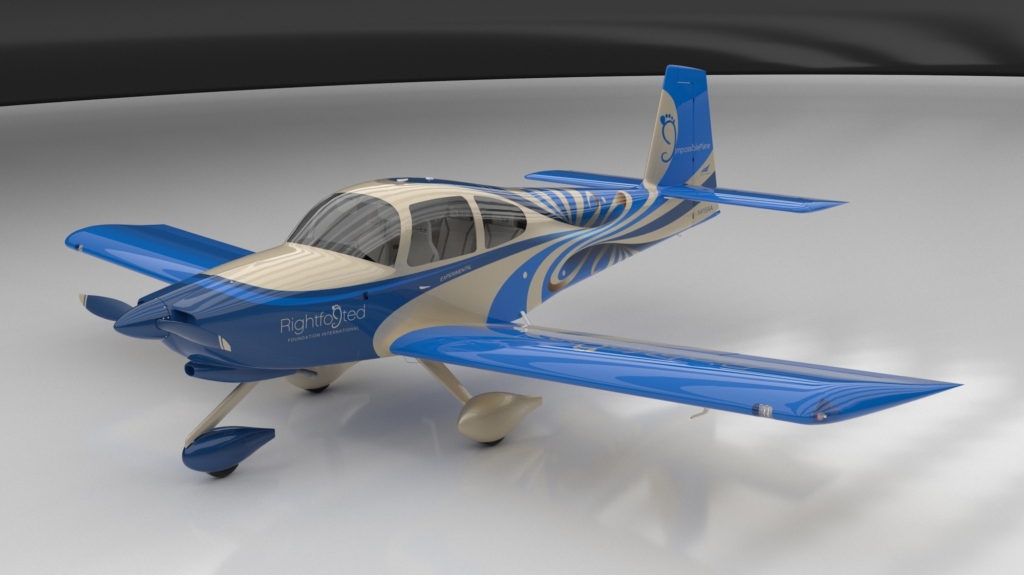
The team working on the aircraft selected the RV-10 because it expands mission capability beyond short local flights, enabling cross-country journeys. The aircraft will be significantly faster and more capable than Cox’s Ercoupe, with typical RV-10 cruise speeds of 180–200 mph and the ability to carry up to four passengers.
Unlike certified aircraft, experimental builds allow extensive modification of control systems with fewer regulatory barriers. Van’s Air Force — the informal name for the RV-10 builder community — provides technical support essential to a custom build.
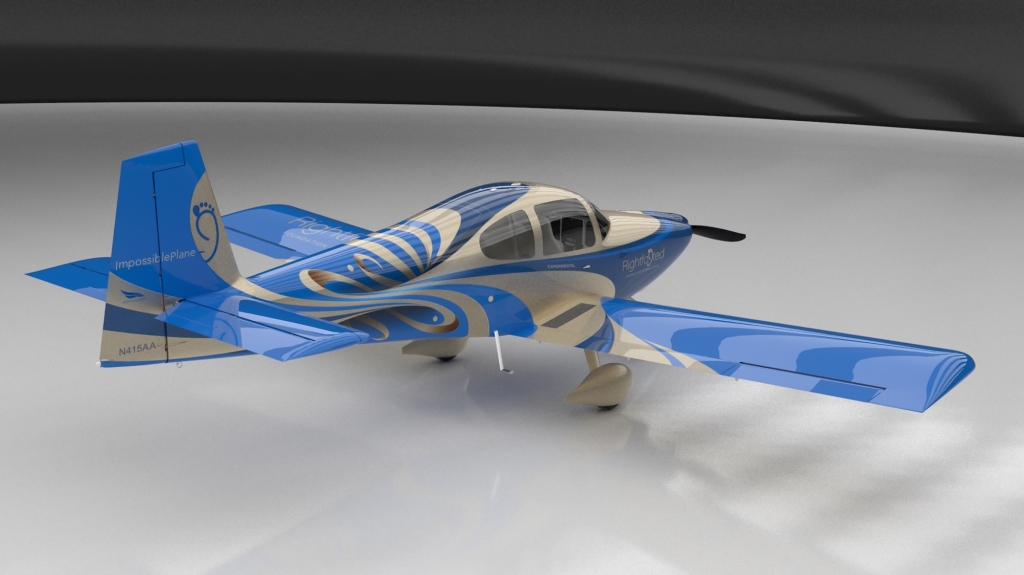
Engineering students and volunteers have contributed designs for modifying flight controls, creating custom doors, and updating the fuel system. Professionals ensure that modifications remain safe, effective, and reliable.
“As of December 2025, all major components are on site: airframe, Lycoming IO-540 engine, Hartzell composite propeller, avionics from Advanced Flight Systems, and more,” the organisation states in a recent news update. “The airframe is assembled thanks to over 2,000 volunteer hours from EAA Chapter 898.”
A symbolic livery for a foot-controlled aircraft
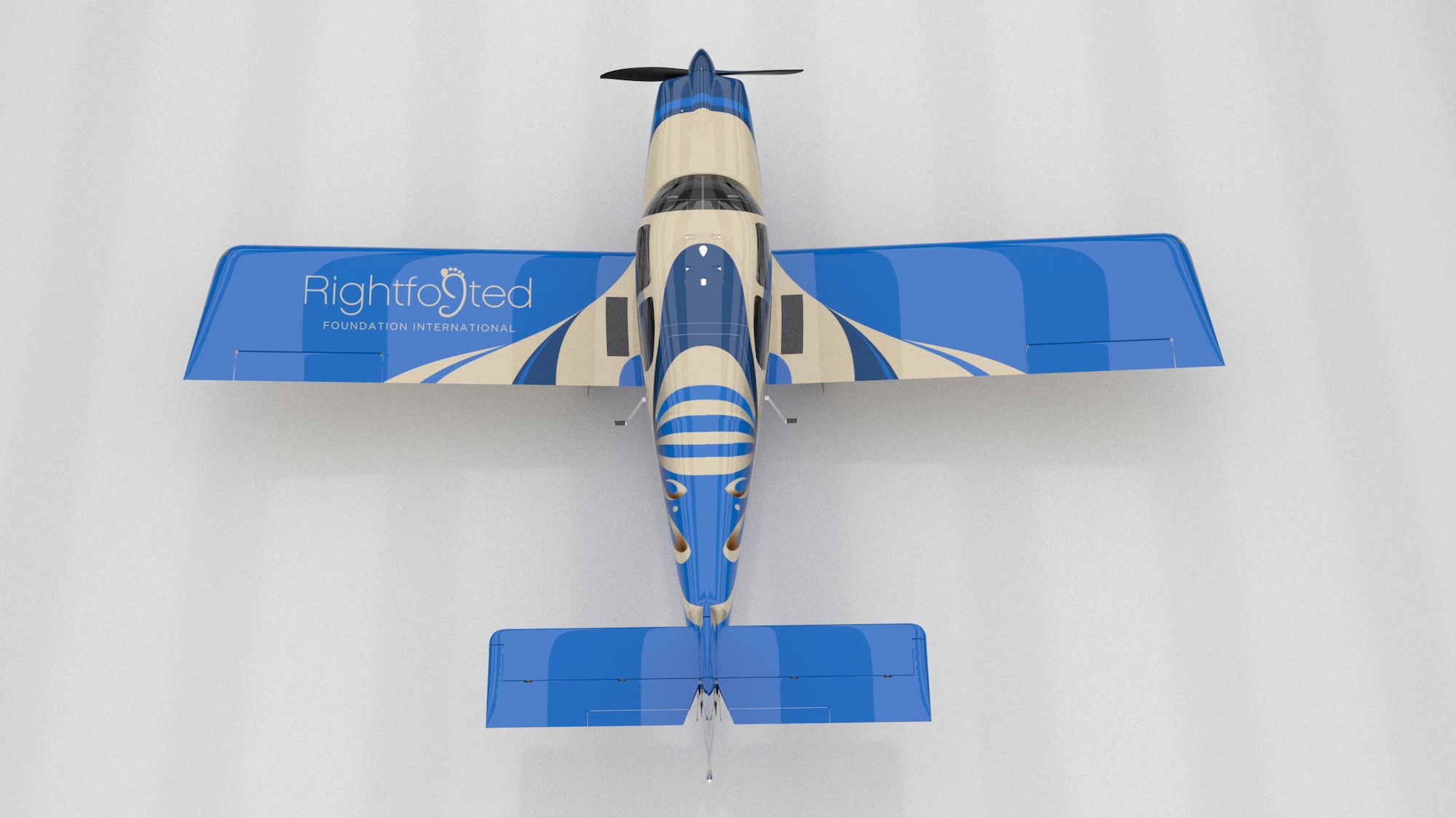
The team recently revealed its unique livery, designed by Mirco Pecorari of AircraftStudioDesign, which combines symbolism and function. The Möbius twist in the tail represents transformation and an ancient Filipino script reflects Cox’s heritage. The RFI graphic footprint logo reflects the organisation’s purpose.
The reveal of the livery reflects the team’s momentum and optimism as they progress toward flight-ready status. First flight is planned for June 2026, with a public debut at AirVenture in July.
“Revealing the paint scheme now means we believe in the timeline, we believe in the mission, and we’re inviting people to follow the final stretch to AirVenture,” said Patrick Chamberlain, Inclusive Engineering Director at RFI.
The FAA MOSAIC framework supports aircraft innovations
Regulatory changes support these advancements in general aviation. With the new MOSAIC (Modernisation of Special Airworthiness Certification) framework, the FAA addresses evolving aviation needs by increasing the availability of safe, affordable, modern aircraft for recreational aviation, flight training, and aerial work.
MOSAIC amends 14 CFR part 21 and adds part 22 to:
- Increase flexibility in the types of aircraft that may be certified in the light-sport category by adopting more performance-based rules, including emerging aircraft types.
- Allow light-sport category aircraft manufacturers to design and build a broader range of aircraft, including rotorcraft and powered lift.
- Eliminate prescriptive weight limits that inhibit the incorporation of safety-enhancing designs and equipment.
- Increase maximum stalling speeds of light sport aircraft (61 knots VS0) and gliders (45 knots VS0).
- Allow faster, higher-performance aircraft for personal travel.
- Ensure that more capable, robust aircraft are available for pilot training.
- Increase passenger, fuel, and cargo capacities.
- Accept new types of propulsion systems (like electric), as well as new engines, propellers, and retractable landing gears.
- Allow simplified flight controls to enable pilot certification to be completed more quickly.
“The Sport Pilot pathway has opened doors for people with disabilities,” said Chamberlain. “MOSAIC makes this the right moment to ask who else belongs in the sky.”
Moving to a flight deck without limitations
Cox hopes that The Impossible Airplane will serve as a tangible example for future pilots with disabilities and a catalyst for broader discussions about inclusive design in aviation.
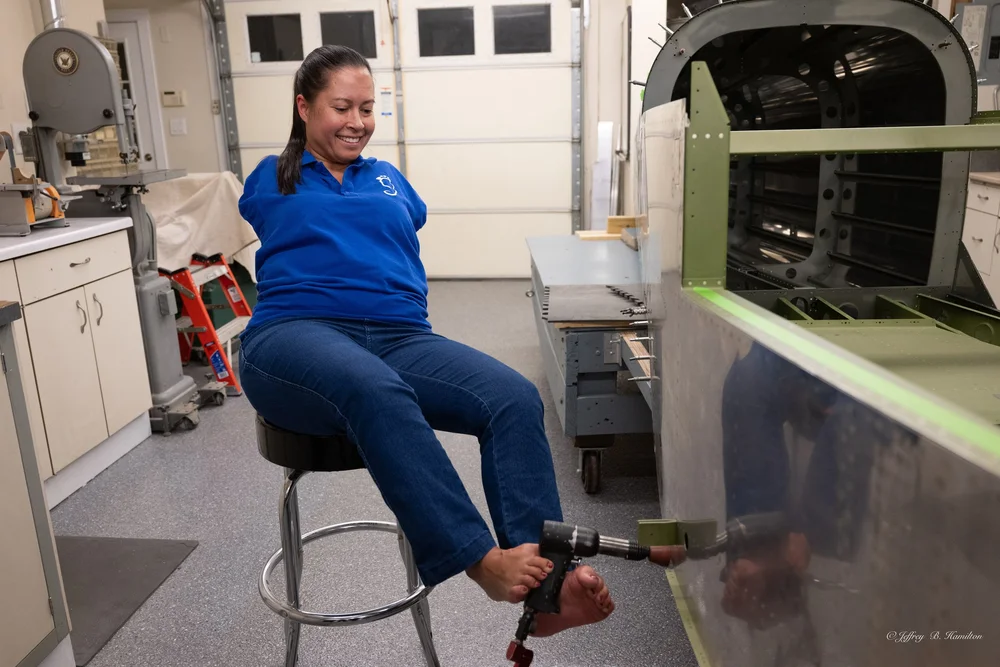
She plans to use the platform to connect with children and communities worldwide and offer flights to kids with special needs. She also plans to fly the aircraft during the 2028 Los Angeles Olympics opening ceremonies.
The first flight of the Impossible Aeroplane will demonstrate what is possible when assumptions are challenged and innovation is inclusive.
Featured Image: RFI