Four years of war: How many aircraft have Russia and Ukraine lost?

February 25, 2026

Four years after Russia’s full-scale invasion, the air war over Ukraine remains finely balanced.
Russia entered the conflict with a vastly larger fleet, yet hundreds of confirmed and unconfirmed aircraft losses, ageing legacy jets and limited replacement capacity have steadily narrowed its effective strength.
Ukraine, despite heavy attrition, has survived through dispersal, adaptation and Western fighter donations.
As the war moves into its fifth year, the real question is no longer who has the bigger air force on paper, but which side can sustain and regenerate combat air power for the long haul.
Russia vs Ukraine air power in 2026: How the balance has shifted
On paper, Russia began the war with one of the world’s largest tactical air arms, often cited at around 1,300 to 1,400 combat aircraft. Ukraine entered 2022 with roughly 120 to 130 operational fighters and ground-attack jets, many of them ageing Soviet-era platforms. The disparity looked overwhelming.
Four years on, that headline imbalance has proved misleading.
Open-source analysts compiling visually confirmed losses assess that Russia has lost well over 150 fixed-wing aircraft, including dozens from its most modern frontline fleet. While Moscow continues to deliver new-build fighters each year, attrition has steadily eroded its effective combat mass.
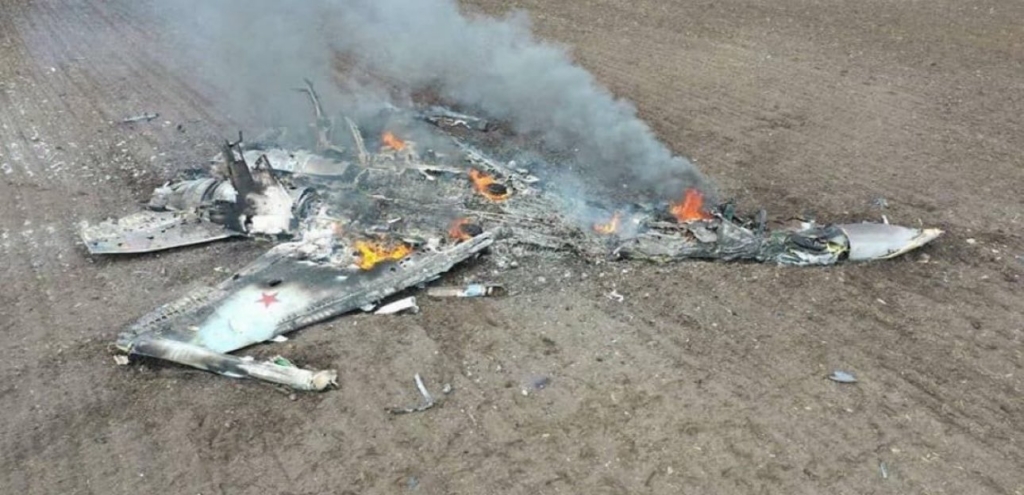
Much of Russia’s nominal strength is tied up in legacy platforms such as the MiG-29, Su-24, Su-25 and Su-27, aircraft that offer limited survivability against modern air defences.
Its genuinely modern core fleet is concentrated in MiG-31BM/BSM variants and Su-30, Su-34, Su-35 and Su-57 fighters, numbering roughly 500 to 550 aircraft. Losses within that modern cohort are harder to absorb and more expensive to replace.
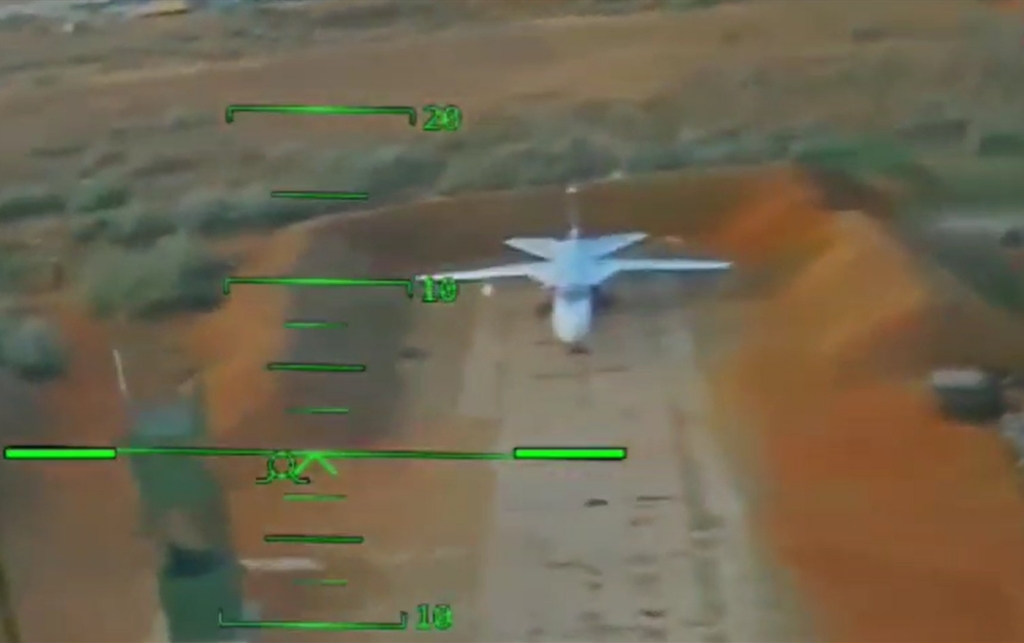
Just as significant has been the loss of high-value enablers. The destruction of airborne early warning aircraft and elements of the strategic bomber fleet has constrained Russia’s ability to generate coordinated, large-scale air operations, reinforcing a pattern of stand-off strikes rather than sustained air superiority campaigns.
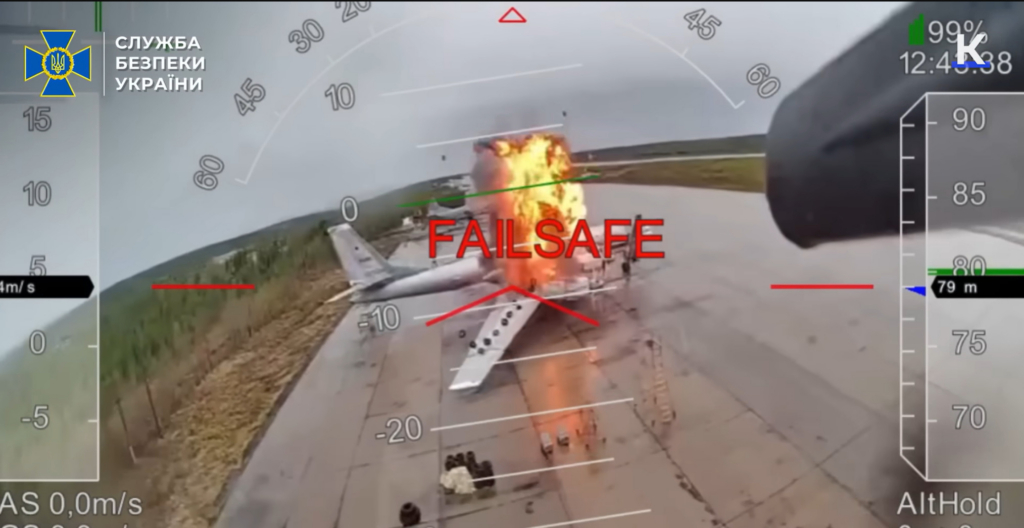
💥 Russia: Ukrainian SBU Alfa drone operation destroyed an estimated $1 billion in Russian aircraft, munitions arsenals, and fuel depots across 5 air bases.
— Igor Sushko (@igorsushko) January 28, 2026
▪️ 11 jets: Su-30, Su-34, Su-27, Su-24, MiG-31
▪️ 3 helicopters: Mi-28, Mi-26, Mi-8
▪️ 1 transport aircraft: An-26 pic.twitter.com/gmEp2XNpNC
Ukraine, meanwhile, has also suffered heavy attrition, losing more than 100 fixed-wing aircraft by visually confirmed counts. Yet the Ukrainian Air Force has avoided collapse.
Through dispersal, adaptation and the gradual introduction of Western-supplied fighters and trained pilots, Kyiv has stabilised its air arm and begun a slow transition away from its pre-war Soviet-era backbone.
The result is not a dominant Russian air force, nor a defeated Ukrainian one, but a prolonged contest in which sustainability and regeneration matter more than starting numbers.
How many aircraft has Russia lost in the Ukraine war?
Open-source intelligence provides the most widely cited public estimates of Russian aircraft losses, although figures vary depending on methodology. From visual reports and intel sources, the list of Russian aircraft losses looks something like this:
| Category | Aircraft type | Losses (from–to) | Notes |
|---|---|---|---|
| Modern fighter/strike | Su-30SM | 15–20 | Multirole fighter (range reflects differing OSINT tallies). |
| Su-34 | 35–42 | Strike aircraft, heavy attrition among frontline squadrons. | |
| Su-35S | 6–8 | Air superiority fighter, losses concentrated in high-risk sorties. | |
| MiG-31 (variants) | 3–5 | Interceptor family (incl. upgraded variants in some tallies). | |
| Su-57 | 0–1 | Fifth-generation fighter, loss claims vary by methodology. | |
| Legacy combat aircraft | Su-25 | 35–41 | Ground-attack aircraft, exposed to short-range air defences. |
| Su-24 | 10–15 | Strike aircraft, includes losses from standoff and low-level missions. | |
| Su-27 | 2–3 | Legacy fighter, relatively small losses versus overall inventory. | |
| Strategic bombers | Tu-22M3 | 8–11 | Long-range bomber, difficult to replace at scale. |
| Tu-95MS | 8–10 | Strategic bomber, losses carry disproportionate force-structure impact. | |
| High-value enablers | A-50 AEW&C | 1–2 | Airborne early warning aircraft, rare and operationally significant. |
| Il-22 (airborne C2) | 1–2 | Airborne command-and-control / relay aircraft. | |
| Transports | An-26 / Il-76 / other | 3–6 | Range reflects mixed-type tallies and confirmation thresholds. |
| Helicopters | Ka-52 | 55–66 | Attack helicopter, high losses during close-support operations. |
| Mi-8 | 40–48 | Utility helicopter, losses spread across transport and MEDEVAC roles. | |
| Other types (Mi-28 / Mi-24 etc.) | 30–40 | Grouped estimate covering multiple airframes with divergent tallies. | |
| Total fixed-wing aircraft (all types) | 105–181 | Broad range reflecting different inclusion rules (destroyed vs damaged, combat vs non-combat). | |
| Total helicopters (incl. damaged, all types) | 150–170 | Approximate range based on visually confirmed tallies including damaged. | |
Method: ranges reflect differing OSINT tallies (e.g., Oryx vs Warspotting) and their confirmation thresholds.
The OSINT project Oryx, which tracks visually confirmed losses using photo and video evidence, lists 181 Russian fixed-wing aircraft destroyed or damaged, including 29 recorded as damaged rather than destroyed.
A more conservative tracker, Warspotting, lists 105 aircraft destroyed and a further 19 damaged. The discrepancy stems from differing evidentiary standards.
Oryx may count corroborating indicators such as confirmed pilot deaths or non-combat accidents under its principle that “a loss is a loss”, while Warspotting requires direct visual confirmation of the aircraft itself.
Orxy lists Russia’s losses as including 20 Su-30SMs, 42 Su-34s, eight Su-35Ss, one Su-57, and five MiG-31s from its core fleet. This is 76 losses from Russia’s modern fleet. Russia is believed to have largely replaced these losses as it is delivering new fighters at a rate of 2 to 3 dozen a year.
There are also 41 recorded Su-25 ground attack losses, 15 Su-24 losses, three Su-27 losses, and three unknown fighter jet losses. In total, there are 135 frontline-fighter losses (inc. Su-25s).
Painfully for Russia, it has lost at least 11 Tu-22M3s and 10 Tu-95MS, representing around 20% of its operational strategic bomber fleet that can’t be easily replaced.
Russia has also lost two A-50 airborne early warning and control aircraft, rare and high-value enablers critical for airspace coordination. The destruction of these platforms has a disproportionate operational impact compared with tactical fighter losses.
Additional fixed-wing losses include Su-25 ground-attack aircraft, Su-24 strike jets, Su-27 fighters, Il-22 command aircraft and various transports.
Rotary-wing losses have also been heavy. Oryx lists 168 helicopters destroyed or damaged, including 48 Mi-8 utility helicopters and 66 Ka-52 attack helicopters. The loss of Ka-52s is particularly notable given their role in close air support and anti-armour missions during the early phases of the war.
How many aircraft has Ukraine lost?
Ukraine entered the full-scale invasion with a relatively small and ageing combat fleet, having already suffered aviation losses during Russia’s 2014 annexation of Crimea and subsequent fighting in the Donbas.
Without sustained Western military assistance, attrition during the past four years would likely have rendered the Ukrainian Air Force non-viable.
| Category | Aircraft type | Confirmed losses | Notes |
|---|---|---|---|
| Combat aircraft | MiG-29 | 35 | Primary frontline fighter at start of invasion. |
| Su-27 | 19 | Air superiority fighter. | |
| Su-24 | 20 | Strike aircraft used for deep and tactical missions. | |
| Su-25 | 22 | Ground-attack aircraft operating in high-risk environments. | |
| F-16 | 4 | Western-supplied multirole fighter. | |
| Mirage 2000 | 1 | Western-supplied fighter aircraft. | |
| Unidentified fighter | 1 | Visually confirmed loss without clear type identification. | |
| Transport aircraft | An-26 / others | Few (est.) | Limited number of confirmed transport losses. |
| Training aircraft | L-39 / others | Few (est.) | Includes training platforms lost in combat-related incidents. |
| Helicopters | Mi-8 and other types | ~55 | More than half Mi-8 utility helicopters. |
| Total fixed-wing aircraft (incl. captured) | 113 | Based on Oryx visually confirmed losses. | |
Method: figures reflect visually confirmed losses compiled by open-source intelligence sources. Actual losses may be higher due to verification limits.

According to Oryx, Ukraine has lost 113 fixed-wing aircraft, including four captured. Unlike Russia, there is no widely cited alternative tally using a more conservative methodology, meaning this figure represents the primary publicly referenced estimate based on visually confirmed losses.
The recorded losses include 35 MiG-29 fighters, 19 Su-27 fighters, 20 Su-24 strike aircraft, 22 Su-25 ground-attack aircraft, 4 F-16 fighters, 1 Mirage 2000 and 1 unidentified fighter.
In addition, Ukraine has lost a small number of transport and training aircraft.
Rotary-wing attrition has also been significant. Oryx lists roughly 55 helicopters destroyed or damaged, more than half of them Mi-8 utility helicopters, which have been heavily used for transport, medical evacuation and frontline resupply missions.

Despite these losses, the Ukrainian Air Force has avoided collapse. Western fighter transfers, spare parts support and pilot training programmes have allowed Kyiv to stabilise its force structure and begin a gradual transition away from its Soviet-era fleet.
Why confirmed aircraft losses tell only part of the story
All publicly available figures represent minimum confirmed losses. Many aircraft destroyed on contested territory may never be independently verified through imagery. Both sides are therefore likely to have suffered higher total attrition than visual tallies suggest.
Perhaps most importantly, it is difficult to estimate how many fighters have used up their flight hours and have been decommissioned. It is known that some of Russia’s modern Su-34s and Su-35s have come to the end of their service lives and have been cannibalised for parts.
The number of confirmed losses is only part of the story of how Ukraine and Russia’s airpower is shaping up. More important than aircraft destruction, as the war enters its fifth year, is how many remain serviceable and conflict-ready.
Featured Image: Ukraine Air Force