Germany races to field fighter-bomber-drones by 2029 with requirement for 400 UACVs

November 6, 2025

Germany is racing to be one of the first countries to field advanced combat drones and has a requirement for around 400 UACVs. Perhaps out of urgency, loyal wingman teaming may come later in the 2030s as Germany fills more pressing capability gaps.
Germany wants ‘fighter-bomber-drones’ by 2029
In a dramatic turnaround, Germany is racing to field advanced unmanned air combat vehicles (UACVs) by 2029. Just a few years ago, Germany was against militarising UAVs with munitions.
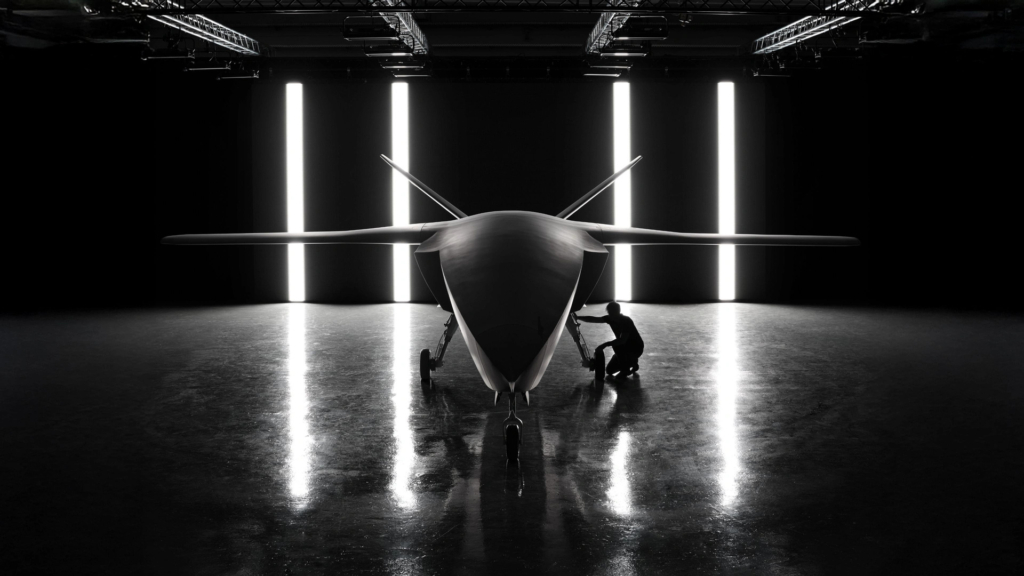
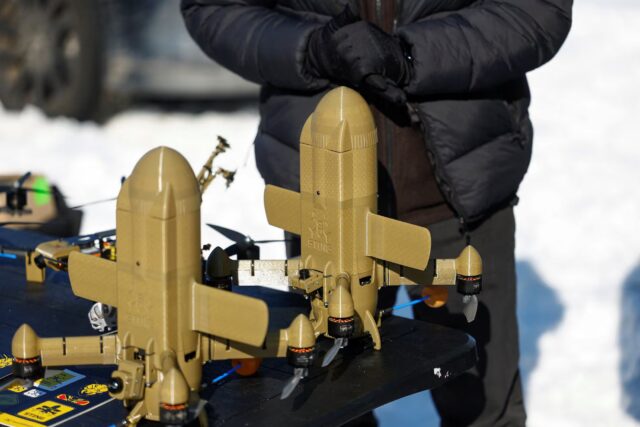
Germany’s about-turn is highlighted in a new think-tank IISS blog piece. Germany has an urgent requirement for a “Jagdbomberdrohne”, aka “fighter-bomber-drone.” The country is racing to fill yawning gaps in its capabilities, including capable jet-engine-powered UAVS. Germany has the goal to be ‘ready for war’ by 2029.
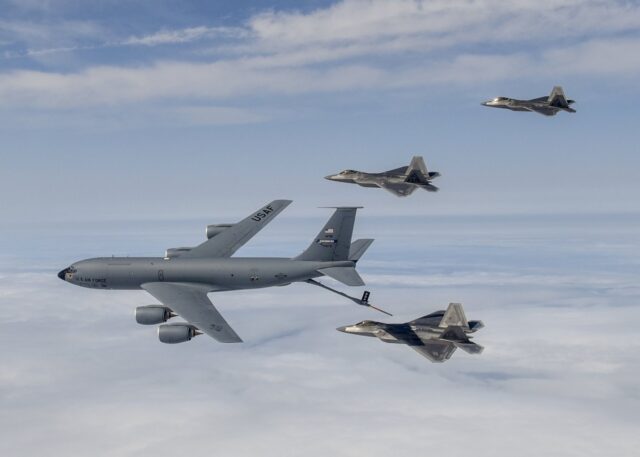
Should Germany realize this goal, it would be one of the world’s first. The US Air Force currently plans to first pair the F-22 Raptor with loyal wingman drones by 2029 or 2030. That said, Germany’s requirements seem to differ from the USAF. Its immediate priority is not a USAF CCA-style loyal wingman, but a stand-alone combat UAV that’s either remotely piloted or at least semi-autonomous.

This comes as part of a comprehensive push for rearmament. In Germany’s aerospace sector, a few more examples include increasing its F-35A order from 35 to 50, purchasing more Eurofighters, and developing a 2,000-kilometre range cruise missile with the United Kingdom.
European & US drone companies lining up for Germany
US drone makers, including Anduril, Boeing, General Atomics, Lockheed Martin, Kratos, and others, are lining up to build their drones in Germany. Germany’s Airbus is in talks with Kratos, while Rheinmetall is talking with Anduril, Boeing, and Lockheed simultaneously.

These are negotiating for their aircraft to be the basis of a customised drone built in Germany. Around 30-40% of the added value would be supplied by US contractors, with the remainder by European companies.
A version of the Kratos XQ-85A Valkyrie built by Airbus is scheduled to be operational for the German Air Force by 2029. But Germany is evaluating a full range of advanced combat drones, including Boeing Australia’s MQ-28 Ghost Bat, set to achieve initial operational capability in 2028.
Airbus to team with US Kratos Defense, deploying German mission system:
— Airbus Defence (@AirbusDefence) July 16, 2025
Airbus Defence and Space and US based @KratosDefense have entered into a partnership based on the Kratos XQ-58A Valkyrie, a flight-proven UCCA (uncrewed collaborative combat aircraft), which will be equipped… pic.twitter.com/sZ2UTKDv1J
Importantly, the German news outlet, Hartpunt, says the German Armed Forces have a requirement for around 400 unmanned combat aircraft. For reference, the US Air Force is currently planning to purchase around 1,000 CCAs.
Europe and Germany also have their own companies working on future combat drones. These include Helsing with its higher-end CA-1 Europa.
Germany’s Zeitenwende and call to arms
During the Cold War, the military of West Germany was one of the world’s most powerful and stood as the bulwark against any Soviet invasion of Western Europe.

After the Cold War, a reunited Germany enjoyed the peace dividend exceeding that of its neighbours, like the UK and France. By the 2010s, the German Bundeswehr had become a joke in operational readiness.
It infamously built its Baden-Württemberg-class (F125) frigates with minimal weapons for low-intensity operations. So much so that these warships were considered ill-suited for operations in the Red Sea repelling Houthi drones and missiles. Germany is now urgently retrofitting IRIS-T SLM air defense systems onto these ships.
Such a sorry sight. Sign of the times, it’s great that Germany is waking up but what a shortsighted decision it was not to correctly arm a 7 000 tons frigate. Applies, in a less ridiculous way, to other European navies where FFBNW is common practice. pic.twitter.com/Ngw1Chy14Y
— VLS Enjoyer (@VLS_Appreciator) October 16, 2025
Germany’s seeming aversion to the military having weapons extended to refusing to arm UAVs for more than ten years. Germany seemed to live in a world where war was a thing of the past.
In February 2022, while British and American intelligence sounded the alarms of an imminent Russian invasion of Ukraine, Germany said Russia had not taken the final decision and believed it would not.
The unprovoked invasion was a rude awakening for Germany. The country soon proclaimed its ‘Zeitenwende’ or turning point, and is now rushing to build the most powerful military in Europe.
🇬🇧🇩🇪🚀 The British Defense Minister, John Healey, confirmed that work is progressing rapidly on the joint UK-Germany development of a precision-guided missile with a range of 2,000 km (it is unknown whether this refers to cruise or ballistic missiles).
— Visioner (@visionergeo) November 5, 2025
🔹 According to the… pic.twitter.com/RBiBo8My0q
This is not happening in isolation. Poland’s air force is in rapid transition, Belgium is ordering more F-35s, and the Netherlands has signed an agreement to co-develop CCAs with the United States.
Across NATO Europe (excluding Spain), countries have committed to spending 5% of GDP on their militaries by 2035 (including 1.5% in defence-related infrastructure).