3 French Navy E-2C Hawkeyes undertake simultaneous launch Charles de Gaulle aircraft carrier

March 13, 2026
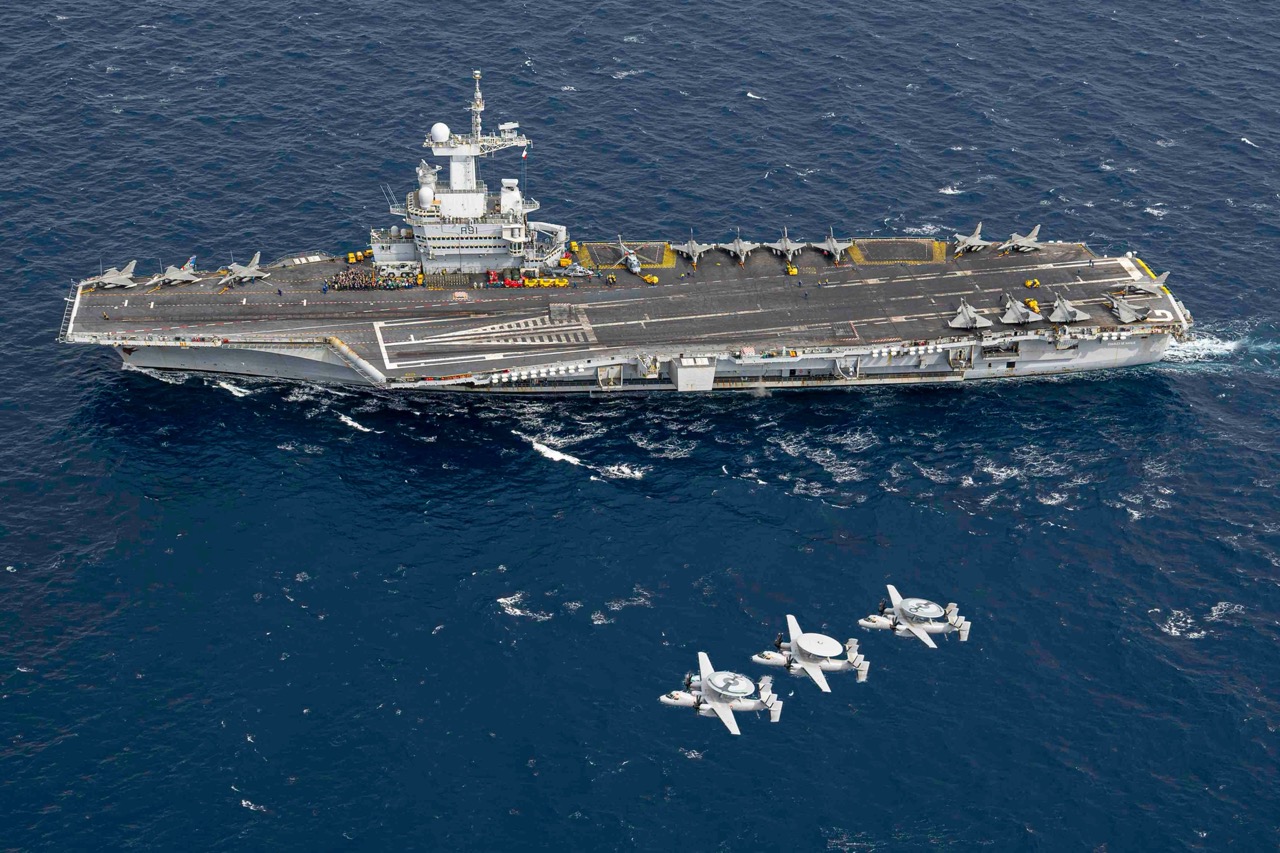
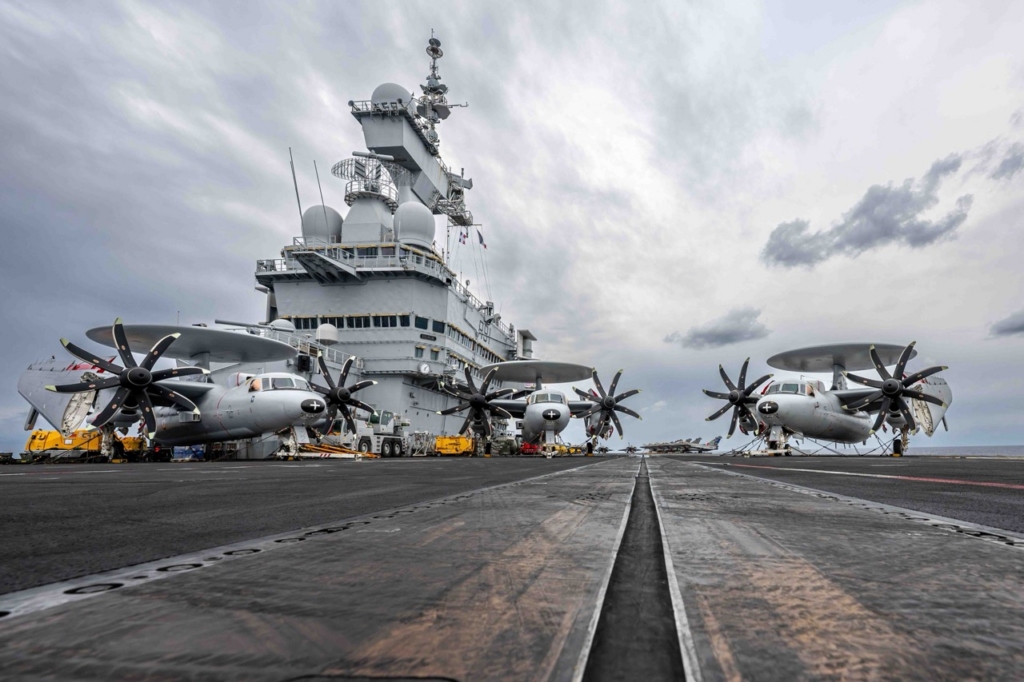
The French Navy has shared striking images of three Northrop Grumman E‑2C Hawkeye airborne early-warning aircraft launching in quick succession from the carrier FNS Charles de Gaulle (R91).
#Lafayette26 | À l'occasion de la relève de l'un des aéronefs, destinée à assurer la continuité opérationnelle, 3 E-2C Hawkeye de la Flottille 4F ont été catapultés simultanément depuis le porte-avions pour réaliser un vol en formation. Une première !🌊✈️@Cecmed_Off @French_CSG pic.twitter.com/fgj6FrZv8g
— Marine nationale (@MarineNationale) March 12, 2026
The precision-choreographed launches offer a rare look at the carrier air wing’s critical “eyes.”
France’s only aircraft carrier is currently operating in the eastern Mediterranean amid heightened tensions during the Middle East conflict.
The E-2C Hawkeye is the “eyes of the fleet”
The E-2C Hawkeye serves as the airborne command-and-control node for a carrier strike group. It serves as the “eyes of the fleet,” with a large rotating radar dome mounted above the fuselage to detect and track aircraft, ships, and missiles over long distances. Hawkeyes typically orbit hundreds of kilometres from the fleet, extending radar coverage far beyond what the ship’s sensors can provide.
Its crew is responsible for:
- Airborne early warning: detecting incoming aircraft or missiles
- Battle management: coordinating fighter aircraft (such as the Rafale M)
- Airspace control: directing intercepts and deconflicting aircraft movements
- Surveillance and intelligence: providing a real-time picture of the battle front
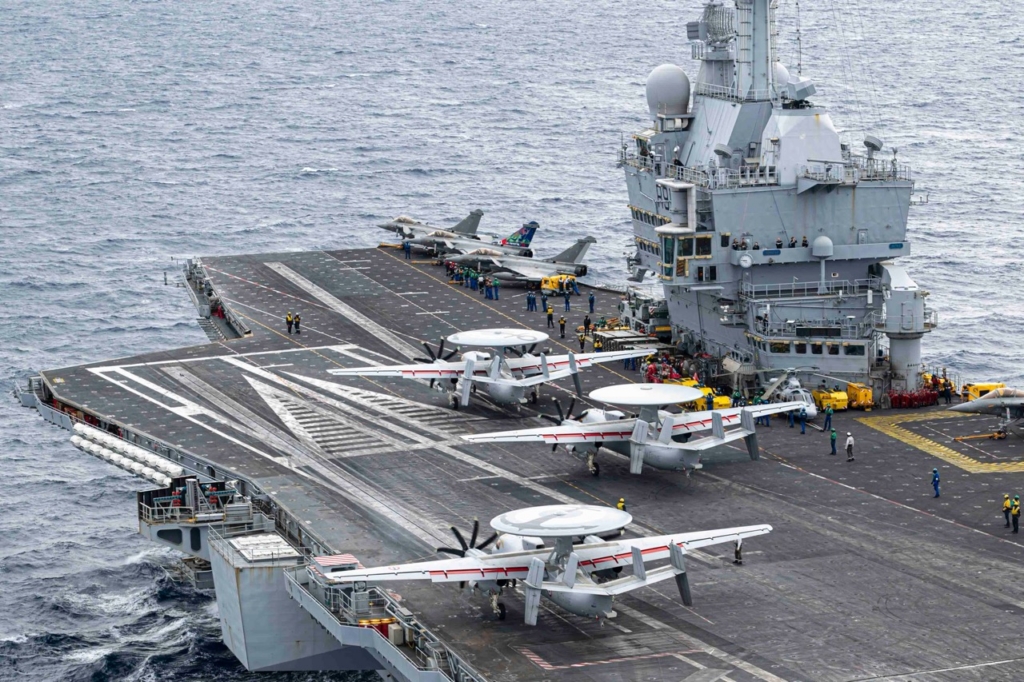
France operates three E-2C aircraft with its naval aviation unit Flottille 4F, which deploys aboard Charles de Gaulle.
Why the FS Charles de Gaulle aircraft carrier is now in the Mediterranean
The Hawkeye launches come as France’s carrier strike group has been redirected toward the eastern Mediterranean after tensions escalated across the Middle East.
President Emmanuel Macron ordered the strike group to the Mediterranean as the conflict involving the United States, Israel, and Iran intensified.
France’s wider naval response now includes multiple frigates and amphibious ships operating across the Mediterranean and Red Sea to support maritime security and protect commercial traffic.
Several European countries—France, Greece, Italy, the Netherlands, and Spain—have deployed naval and air assets to Cyprus following a strike by an Iranian-made drone on the British RAF base Akrotiri.
Spain dispatched the Álvaro de Bazán-class frigate Cristóbal Colón, which had been participating in NATO training exercises with France’s Charles de Gaulle aircraft carrier in the Baltic Sea before the Iranian drone strike.
Greece sent two of its frigates—Kimon and Psara—as well as four F-16 fighter jets. The Netherlands will dispatch its air-defence and command frigate, HNLMS Evertsen.
Last week, Italy’s Defence Minister Guido Crosetto committed to following the other European powers in sending naval assets to Cyprus in a post on X:
Un sentito ringraziamento alla Presidente del Consiglio Giorgia Meloni @GiorgiaMeloni per il prezioso sostegno dell’Italia a Cipro. Questo gesto sottolinea le nostre relazioni bilaterali di lunga data, basate su valori condivisi e sull’impegno comune per un’Europa più sicura e… pic.twitter.com/OFIRW5f5uh
— NikosChristodoulides (@Christodulides) March 5, 2026
“This gesture underscores our long-standing bilateral relations, grounded in shared values and our joint commitment to a safer Europe and to stability and security in the Mediterranean. It is a tangible demonstration of the ongoing strengthening of the Cyprus-Italy partnership,” Crosetto stated in the post.
The carrier air wing behind the launch
The nuclear-powered Charles de Gaulle — commissioned in 2001 and the only nuclear carrier outside the US Navy — typically embarks a mixed air wing including Rafale M fighters, E-2C Hawkeye aircraft and several helicopters.
During flight operations, it acts as an airborne command centre, linking the carrier’s radar picture with fighter patrols and escort ships.
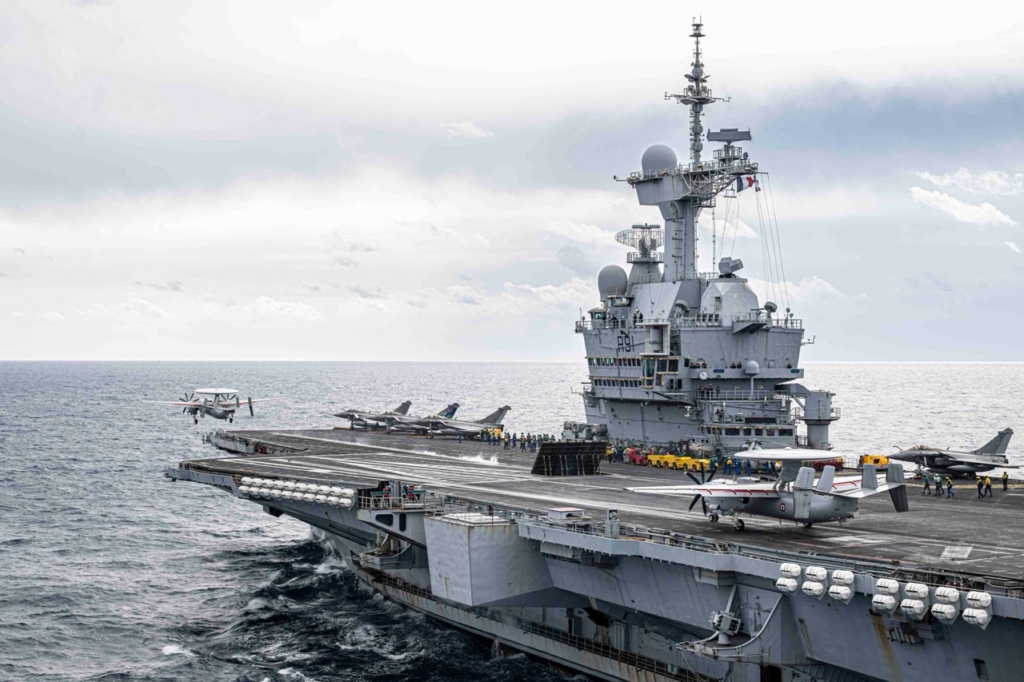
Images of the triple launch captured in this series offer a captivating view of the choreography of modern carrier operations. Nonetheless, in the context of the current conflict, it’s not just a flying display. The E-2C is critical to the combat power of a strike group.
Featured image: French Navy