Raptor 2.0: Could the F-22 be restarted or modernised?

December 6, 2025
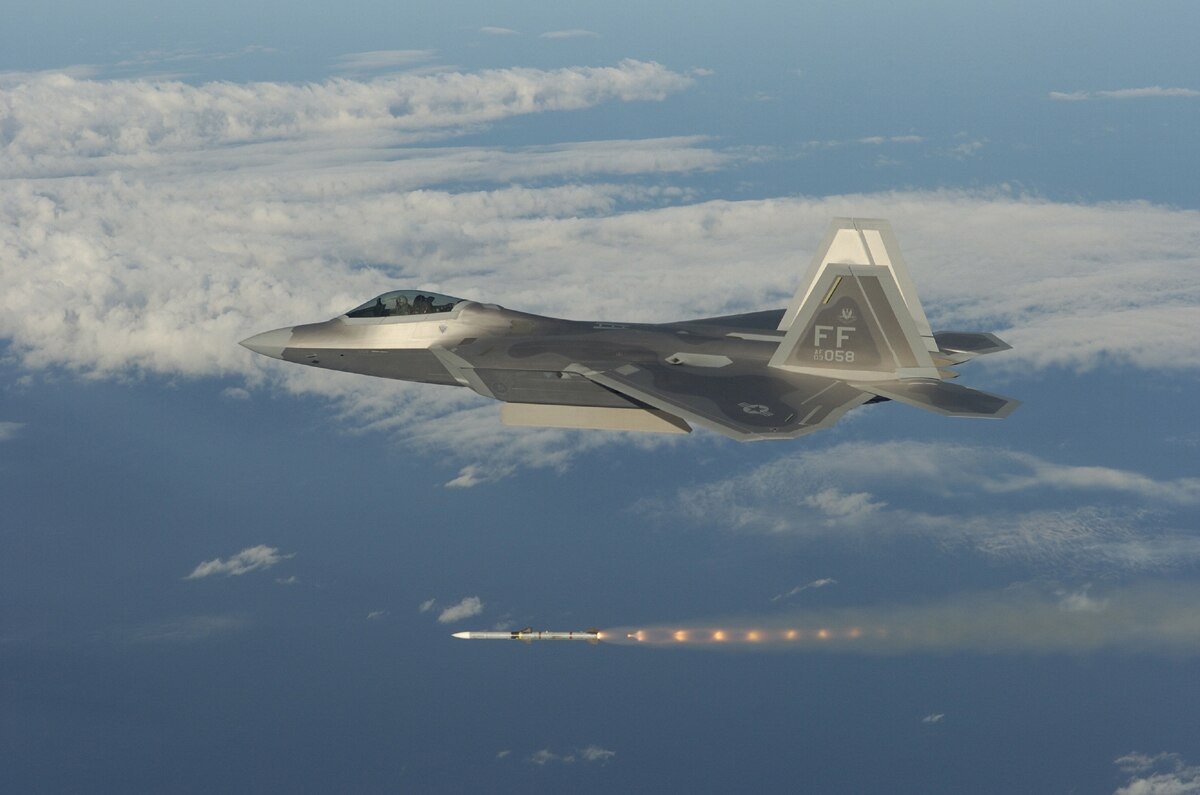
The chances of the F-22 going back into production are almost zero due to massive cost and logistical challenges, coupled with the F-47 making it redundant. That said, all combat-coded F-22s are being significantly modernised with ongoing debate over the fate of the training-coded Block 20 models.
Why the F-22 programme will not be restarted
Could production of the F-22 be restarted? Technically, of course, but it won’t happen. It is technically possible to restart the production of any fighter jet given enough resources. It’s possible to restart the production of the 1940s Convair B-36 “Peacemaker” and any other obsolete aircraft that ever existed.
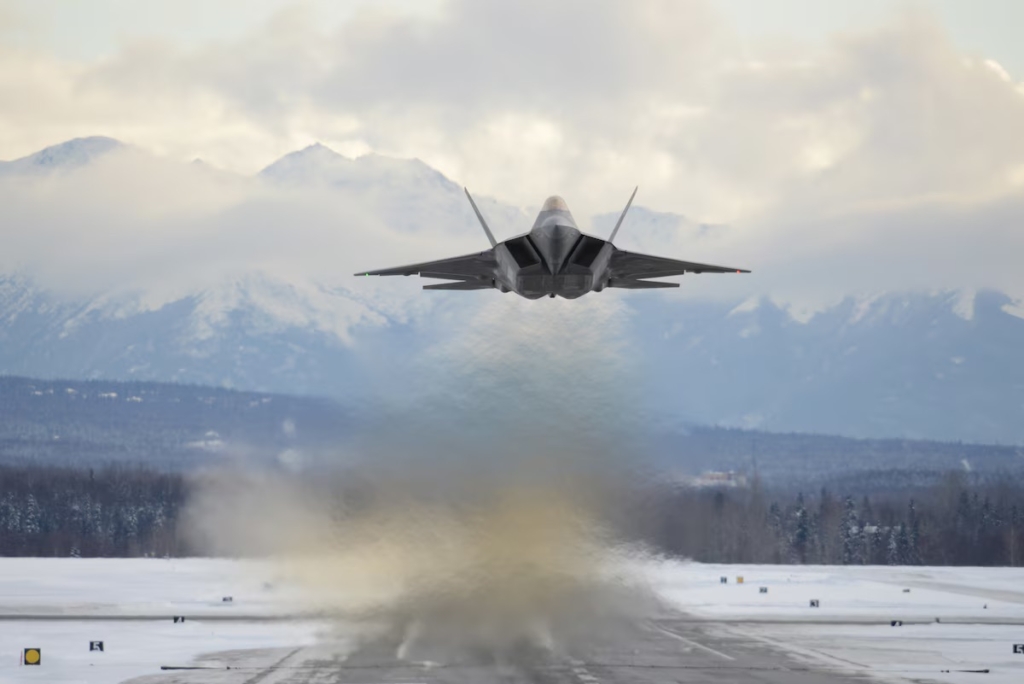
After a production line runs cold and is shut down, the industry moves on. Tooling is sold off or scrapped, and factory space is repurposed. Subcontractors go out of business, move into other industries, or merge with other companies. Technical know-how is lost.
Restarting production of an aircraft requires reviving a massive supply chain. Given that the last Raptor was delivered in 2011, this is more like completely rebuilding a supply chain than revitalising it. Such an effort would cost tens of billions. Additionally, the aircraft would have to be comprehensively upgraded to reflect the 15 years of technological development.
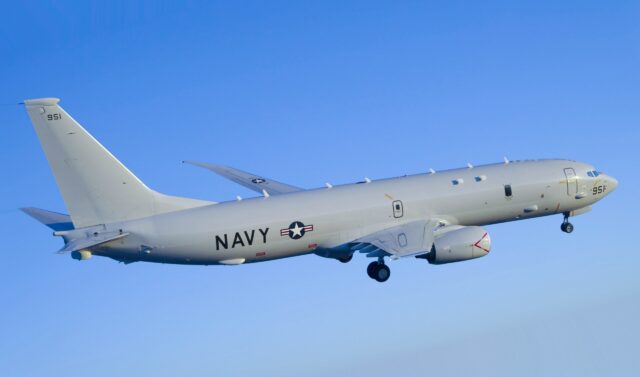
That said, it is not unheard of for companies to restart production of old jets. Lockheed did it in the 1980s with the C-5B Galaxy, and Boeing is currently mulling doing it with the C-17 Globemaster III.
The C-17 is still the gold standard for strategic air transport. It can carry a 77 tonne M1 Abrams MBT or two M2 Bradley IFVs. Such a pity the UK bought only 8. Given the need to increase net capabilities, I just wonder if Boeing will re-start the production line. pic.twitter.com/LbrLTsWILb
— Nicholas Drummond (@nicholadrummond) January 16, 2024
In 2023, Germany’s Rheinmetall needed to urgently restart production of ammunition for the Gerpard anti-aircraft vehicle; it stated, “earlier tools for producing the original ammunition were simply no longer there.” The solution was “unlike anything seen before” and required reverse engineering. This was just 35mm ammo; fighter jets are many orders of magnitude more complicated.
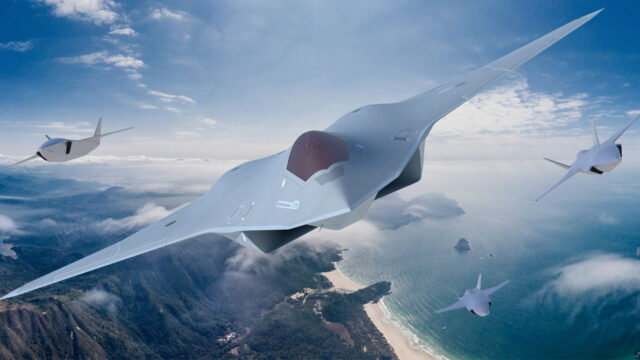
The F-47 6th-generation makes the F-22 redundant
Just as the development of the B-21 Raider makes the B-2 Spirit obsolete, the coming F-47 6th-generation fighter makes the F-22 Raptor obsolete as a new-production fighter jet.

The USAF is currently rushing the development of the F-47, planning for the jet to fly in 2028 and enter service around 2030. The F-47 is intended to be a generational leap over the F-22 and is expected to eventually replace the Raptor.
If the USAF were to restart the F-22 programme, the first fighter jets likely wouldn’t even be delivered before the first F-47s are expected to arrive. The F-22s the USAF would be getting would be a generation behind, although this could be mitigated by upgrading the design.
Meet the @USAirForce's sixth-generation fighter, the F-47, bringing next-gen technologies to ensure air dominance for decades to come.#AFANational pic.twitter.com/eUEfW2JzD8
— Boeing Defense (@BoeingDefense) September 22, 2025
But upgrading the F-22 design would cost billions and delay the jet even more. If the US were to relax its F-22 export ban, while also banning the export of the F-47, then it’s theoretically possible there could be some demand for the jet to be placed back into production.
However, even that is unlikely as Japan was always the primary export customer, and it has moved on to the next-generation Tempest/GCAP fighter.
Get the latest aerospace defence news here on AGN.
The F-22 will/is being upgraded
While it’s all but certain there will not be new F-22 airframes, it is possible the US Air Force could receive more combat-coded F-22s. The USAF has a current inventory of 142 combat-coded Raptors.

These 142 Raptors are in the process of receiving a comprehensive range of new upgrades, from external stealthy drop tanks to new sensors to being the first USAF aircraft to be paired with loyal wingman drones by the end of the decade. The US is working to keep these jets relevant and at the cutting edge into the 2040s, until the F-47 matures and arrives in enough numbers.
The US Air Force also has around 32 training variant Raptors that are not combat-coded. The USAF has tried to retire these jets for years, but it has been blocked by Congress every year.
A fantastic view of an F-22 turning and burning. Did you know that F-22's P&W F119 engine delivers 22% more thrust with 40% fewer parts than its F100 predecessor? The F119 allows a Raptor to achieve supercruise speeds of up to Mach 1.8! Superb machine 👌 pic.twitter.com/6GNaah61op
— Air Power (@RealAirPower1) October 16, 2024
Now, there is a debate about whether the Air Force should upgrade them to combat status. This would be expensive, and they wouldn’t be as capable as the other jets, but they would significantly boost the numbers as a stopgap measure.
Featured Image: United States Air Force