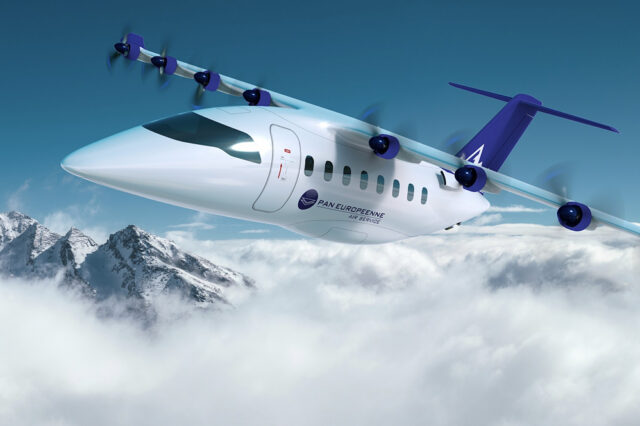
De Havilland’s next-generation Super Scooper DHC-515 takes shape in Canada

March 16, 2026

De Havilland Canada has released an update on the construction of its first Canadair 515 (DHC-515), currently in production in the company’s Canadian manufacturing facilities.
The aircraft, which will supersede the CL-415 aerial water-bombing aircraft, is a modernised version featuring the latest technology and aerodynamic improvements, positioning the type for continued service for many years to come.
The first De Havilland Canada DHC-515 Super-scooper takes shape in Canada
De Havilland Aircraft of Canada Limited (De Havilland Canada) has just provided an update on the De Havilland Canadair DHC-515 currently being built at its Canadian manufacturing facilities.
Building on the operational capability of the company’s previous-generation CL-415, the updated platform is described as offering “significant benefits to operators, including design changes that incorporate new materials and corrosion protection to reduce maintenance costs.”
In addition to structural refinements, the DHC-515 offers a complete upgrade of the flight deck with an advanced avionics suite, as well as modernised powerplants and an increased payload that will allow the aircraft to operate in some of the harshest environments in which aircraft fly. The first aircraft is due to be delivered to its Customer, the Greek government, in 2028.

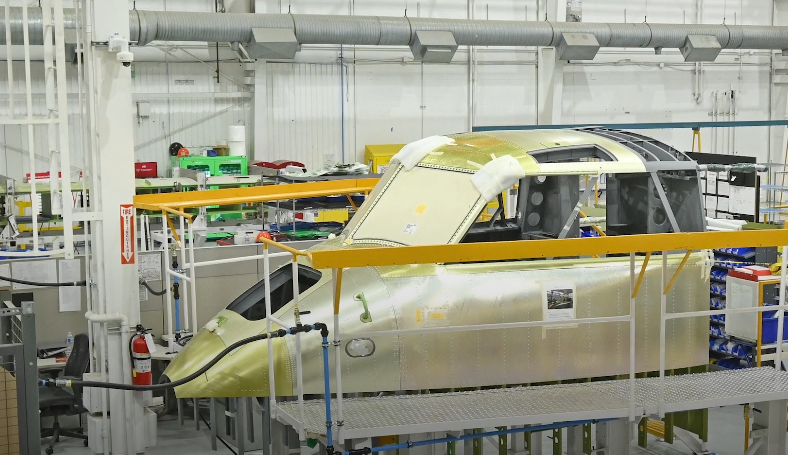
Announcing the progress being made on the first DHC-515 on 10 March, De Havilland Canada said that key elements of the aircraft’s structure have been married together for the first time.
This includes the cockpit structure with the forward fuselage area, which was joined at the company’s aerostructure assembly line in Calgary, forming the entire forward section of the first aircraft.
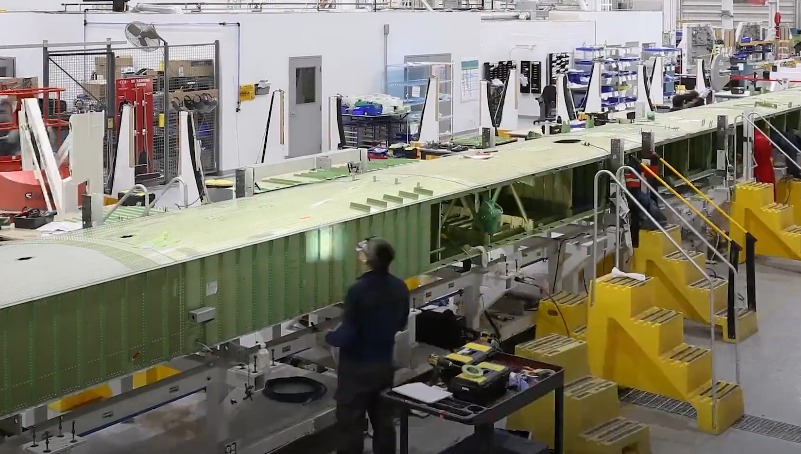
Additionally, the company said that it had recently completed the assembly of the first DHC-515 wing box, which is a single structure that spans 28.6 meters (93.8ft) in length.
This will eventually be joined to the central section of the fuselage in the coming months. Other components, including the engine nacelles, rear fuselage and wing floats, are also currently under construction.
Also on 10 March, De Havilland Canada released a new video detailing the assembly of the amphibious aerial firefighting aircraft at its Calgary plant. According to the company, the video “offers a behind-the-scenes look at the progress, precision, and dedication driving production forward.
From key assembly milestones to the skilled teams powering operations, the footage captures the continued momentum and commitment to excellence across DHC’s Canadian footprint.”
The DHC-515 is the next in a long line of Canadian firefighting aircraft
The DHC-515 is the latest amphibious aerial firefighting aircraft to be built by the Canadian planemaker. The series began with the Canadair CL-215 in October 1967 before Canadair itself was taken over by Bombardier in 1986.
The aircraft later morphed into the turbine-powered CL-215T (which also featured several other improvements) before the CL-415 took up the mantle in 1993, with 93 aircraft of that variant being built before production ended in 2015, as new orders dried up and older aircraft remained in service.
Fast forward to March 2022, De Havilland Canada (now owned by Calgary-based privately-held Longview Aviation Capital), which also owns Viking Air, began building on the legacy of the CL-215 and its upgraded CL-415 successor to develop the latest iteration of the legendary waterbombers.
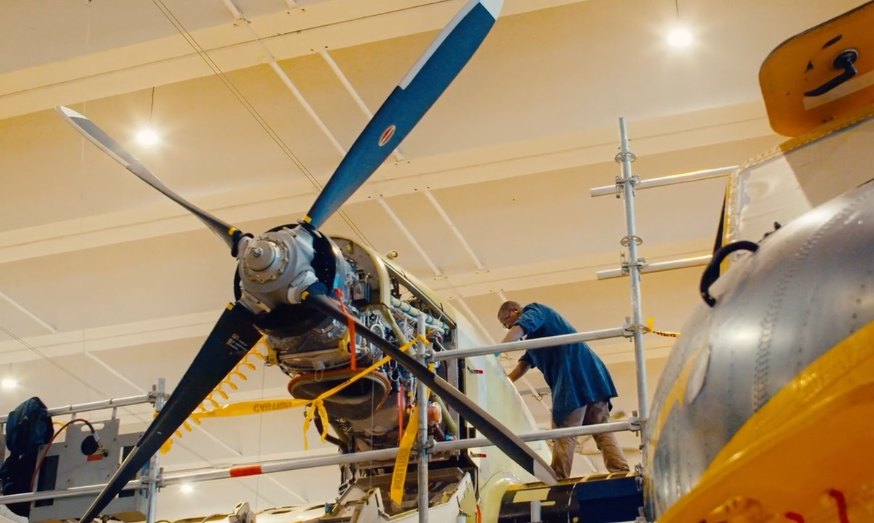
The DHC-515 has been designed to be a fully modernised version of the platform, with a range of improvements over its predecessors. The aircraft will be powered by a pair of Pratt & Whitney Canada PW100 turboprops and will also feature Universal Avionics’ Insight touchscreen instruments to reduce pilot workload and improve operational performance.
The DHC-515 has been designed to cruise at a speed of 180 knots (333 km/hr) and have a maximum range of 1,260 nautical miles (2,333 km). It will carry up to 6,137 litres (1,621 US gallons) of water and will be able to uplift a full load in an impressive 12 seconds, and will be able to do so from water surface conditions that can have waves of up to two meters (6 ft) in height – more than any other aircraft in its class.
Customers are already waiting to introduce the DHC-515
According to the company, De Havilland Canada is producing 22 aircraft for European customers, including Croatia, Spain, Italy, Greece, Portugal, and France. Construction of the first three of these aircraft is already underway.
The manufacturer has also recently signed contracts with the Canadian provinces of Manitoba, Ontario, and Alberta for additional aircraft to serve across Canada in the summer months, when the risk of wildfires is highest.
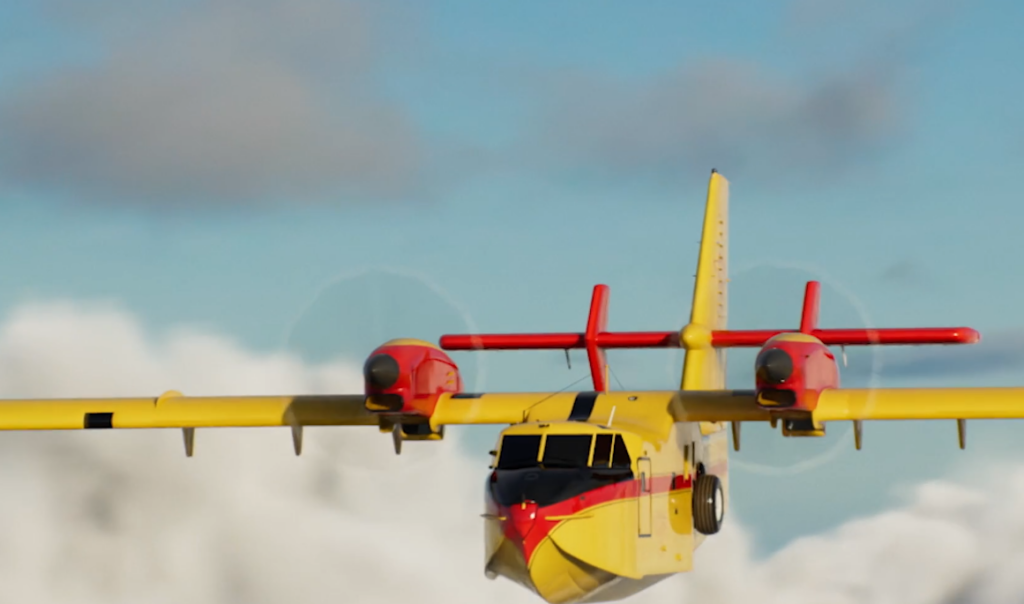
“These orders underscore the strong domestic and international demand for the world’s only purpose-built amphibious firefighting aircraft,” added the company.
There is a growing worldwide need for the DHC-515
As the effects of climate change become more apparent each year, the arrival of the DHC-515 could not be better timed. The increasing frequency of wildfires in various parts of the world, including North America, Europe, and Australia, means that the current global fleet of aerial water bombers is already stretched at certain times of the year, with existing assets being ferried around the world as the need arises.
Although some argue that having a fleet of aerial firefighting aircraft on the ground sitting on standby for much of the year is not cost-effective, the amount of damage being caused by such wildfires easily outweighs the cost of the aircraft.
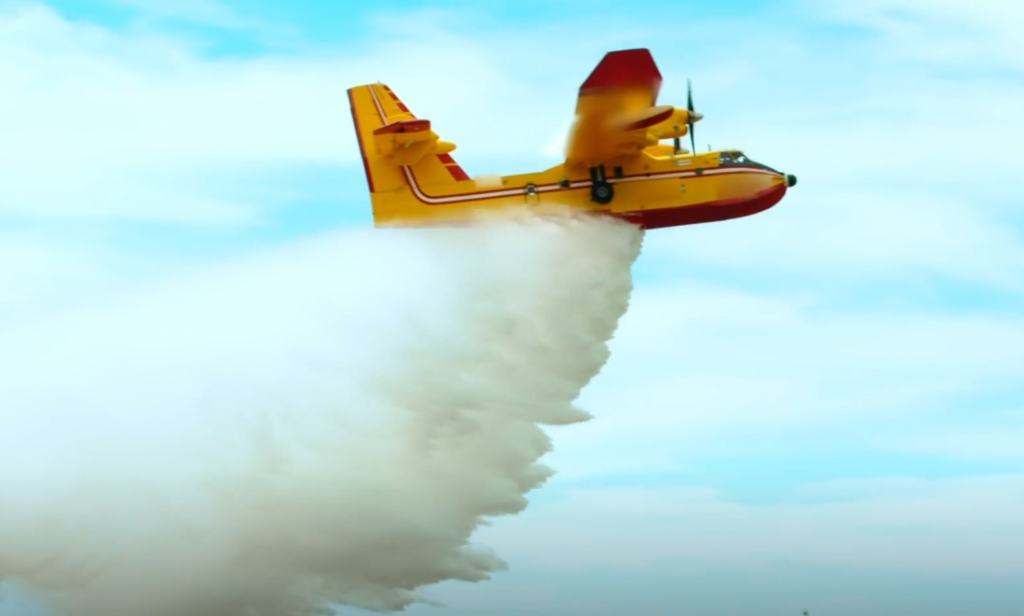
The huge wildfire across California in early 2025 is estimated to have caused over $250 billion of damage alone, with the availability of suitable aircraft stretched to breaking point at peak times during the state’s attempts to limit the damage caused.
The increased frequency and duration of fires worldwide is expected to lead to a growing global market for the DHC-515, as older platforms such as the CL-215 and CL-415 are retired.
Although the first aircraft is not expected to be delivered until 2028, an increasing number of countries are looking to De Havilland Canada to equip them with the next generation in water bombers so that the rising demand for such specialised aircraft can be met with new-generation aircraft that are fit for purpose.
Featured image: De Havilland Canada