Butterfly-inspired lattice could make aircraft lighter and six times more impact-resistant

April 12, 2026
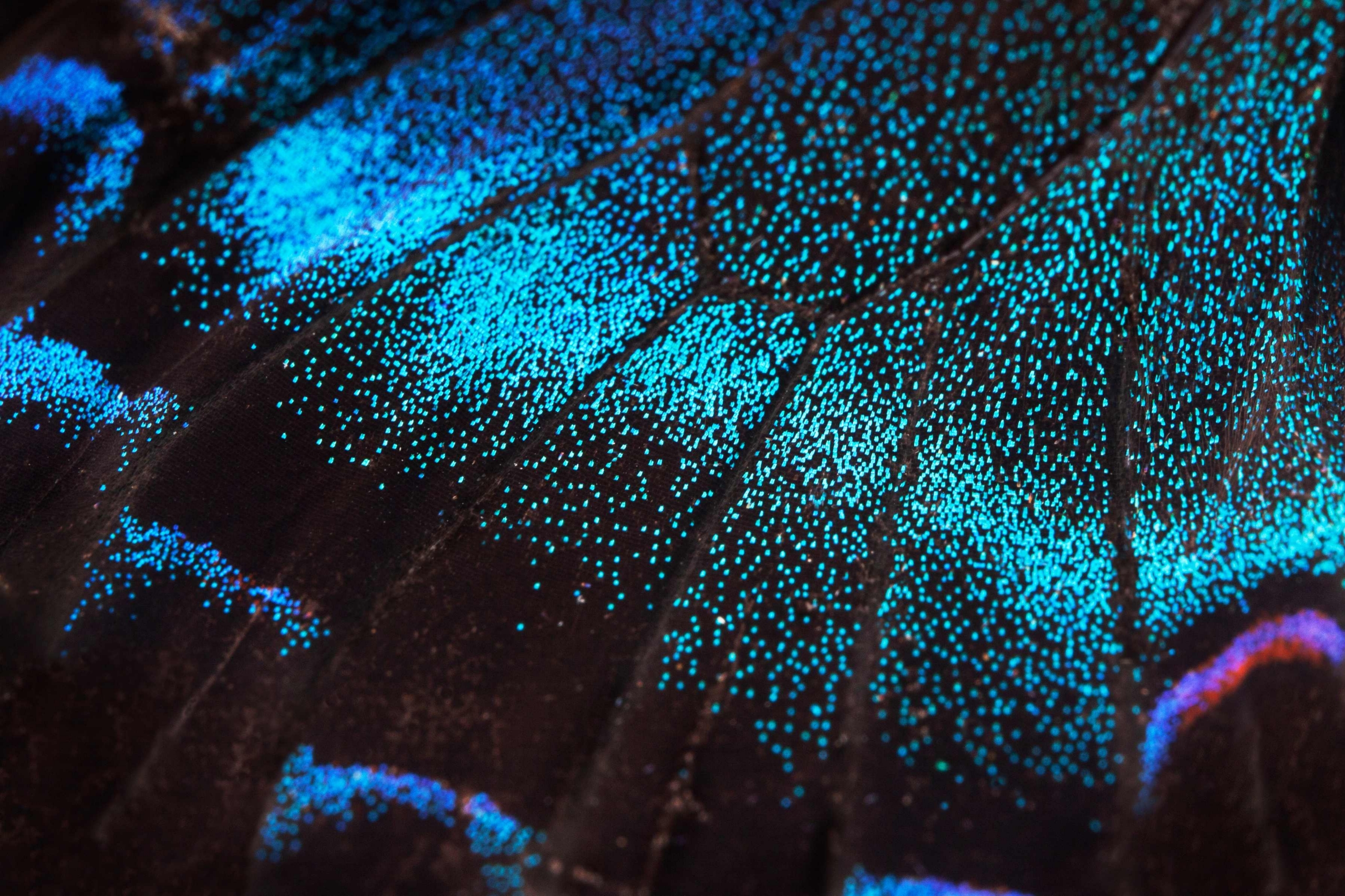
A structure modelled on the fine vein network of a butterfly’s wing is offering a glimpse into how future aircraft could be built-lighter, stronger and far better at handling sudden impacts.
The study by a collaborative research team from Tohoku University and the Wuhan University of Technology, published in the International Journal of Mechanical Sciences, describes a new class of lattice material that changes the way forces move through a structure.
Instead of concentrating stress in one weak spot, the design spreads it out, allowing the material to deform in a controlled manner rather than fail abruptly.
For aerospace engineers, where every kilogram matters and structural failure is not an option, that balance between weight and resilience is critical.
From butterfly wings to aircraft structures: how nature is reshaping aerospace materials
The starting point for the study is deceptively simple. Butterfly wings, despite being extremely light, are able to withstand continuous vibration and airflow during flight. This is largely due to the network of curved veins that distribute stress evenly across the wing.
The researchers translated that idea into an engineered structure by combining curved and straight elements into what they describe as a butterfly-inspired lattice.
Unlike conventional lattice designs, which tend to behave the same in all directions, this new structure is intentionally anisotropic, which means it channels forces along preferred paths.
In practical terms, that allows engineers to decide how and where a structure will deform under load.
For aerospace applications, this opens the door to designing components that respond predictably to stress, rather than failing unpredictably.
Why conventional lightweight structures fall short under real-world loads
Lightweight lattice materials are already widely studied for use in aircraft, spacecraft and protective systems. Their appeal lies in their ability to absorb energy while keeping weight low.
But the study highlights a persistent problem: traditional lattice structures often suffer from localised failure. When stress builds up at a single point, the structure can collapse suddenly, reducing its ability to absorb further energy.
In aviation, such behaviour is undesirable. Aircraft structures are expected to manage loads progressively, whether from turbulence, landing forces or debris impact, without catastrophic failure.
The butterfly-inspired design tackles this issue directly by redistributing stress across multiple paths, preventing the kind of single-point collapse seen in conventional designs.
Butterfly-inspired lattice spreads stress to prevent structural failure
One of the key findings of the research is how the new structure changes its deformation behaviour under load.
Traditional designs tend to deform in a single dominant mode, often leading to early failure. In contrast, the butterfly-inspired lattice transitions between different deformation modes, initially bending, then stretching and allowing it to absorb more energy over time.
This multi-stage response is significant. It means the material does not simply resist impact but manages it, spreading the load and delaying failure.
For aircraft design, that could translate into structures that are better able to handle extreme events, from hard landings to in-flight structural loads, without adding weight.
Butterfly-inspired lattice design shows significant performance gains
The new lattice structure demonstrated energy absorption levels up to six times higher than a traditional body-centred cubic design. At the same time, its stiffness, measured by elastic modulus, was more than double.
Importantly, these gains were achieved without a significant increase in weight. The structure maintains a relatively low density, making it suitable for applications where weight savings are essential.

In aerospace terms, this combination of higher strength, better energy absorption and low weight is precisely what engineers seek in next-generation materials.
Impact testing shows how lattice structure handles high-speed loads
To understand how the material performs in dynamic conditions, the researchers subjected it to high-speed impact testing using a Split Hopkinson Pressure Bar setup.
These tests simulate the kind of rapid loading conditions encountered during impacts. High-speed imaging and digital analysis were used to track how stress moved through the structure in real time.
The results showed a clear difference from conventional designs. Instead of concentrating stress along a single line, the new lattice distributed it across multiple pathways, reducing peak stress and delaying structural collapse.
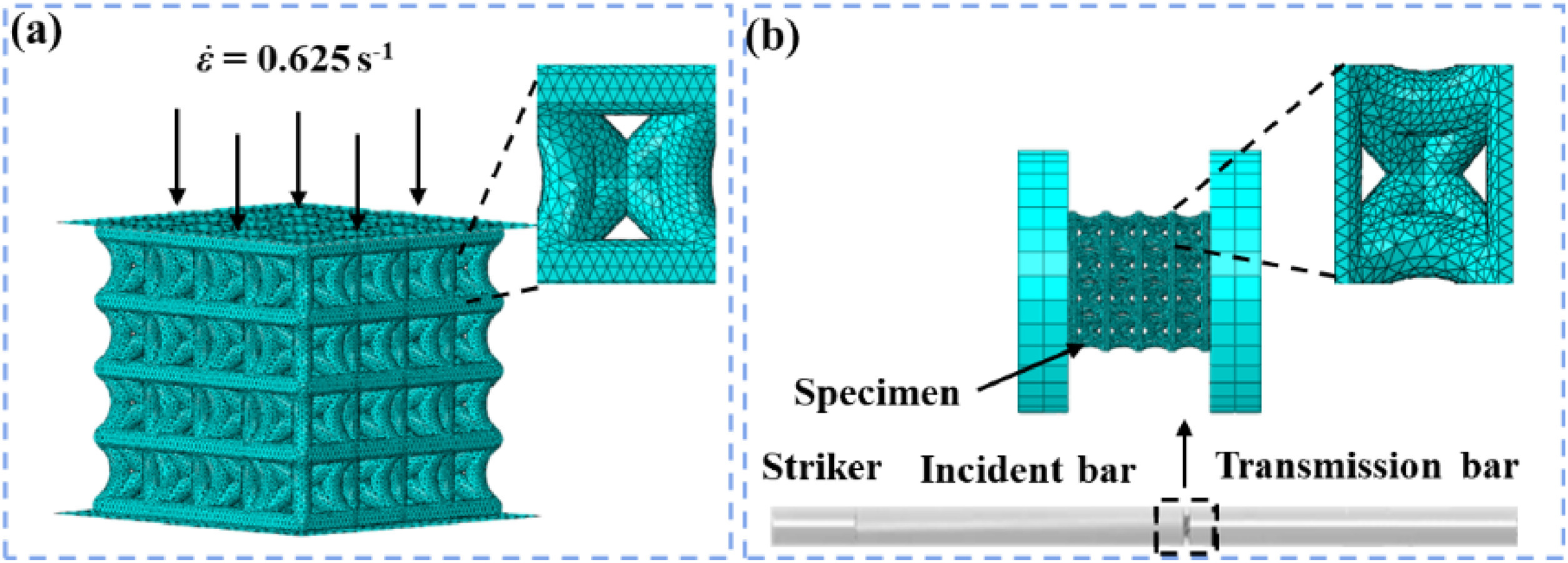
This behaviour is particularly relevant for aerospace applications, where materials must perform reliably under sudden and extreme loads.
3D printing enables complex structures once considered impractical for aerospace use
A key enabler of the design is advanced manufacturing.
The lattice structures were produced using high-resolution 3D printing, allowing the precise fabrication of curved and interconnected elements that would be difficult to achieve using traditional methods.
This is an important point. Many high-performance designs remain theoretical because they cannot be manufactured at scale. Additive manufacturing changes that equation, making it possible to produce complex geometries with high accuracy.
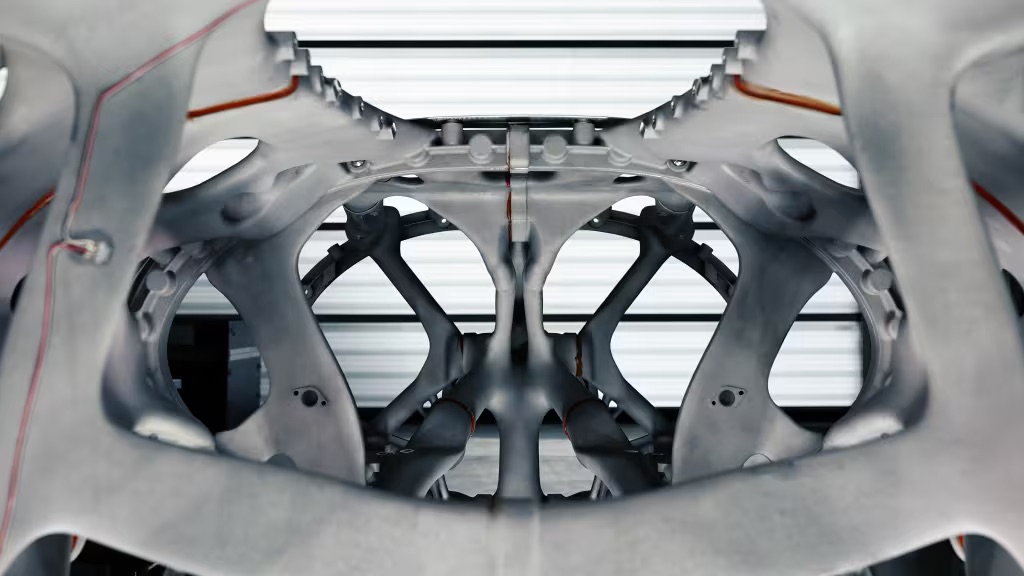
For the aerospace industry, which is already adopting additive manufacturing for components and tooling, this type of structure could be integrated into future aircraft designs.
Implications for aircraft structures, crashworthiness and future airframe design
While the study does not focus specifically on aircraft, its implications for aerospace are clear.
Structures that can absorb more energy without failing could be used in a range of applications, from internal airframe components to protective systems designed to handle impact or crash loads.
The ability to control how a structure deforms also opens possibilities for designing aircraft that are not just lighter, but inherently safer and capable of managing stress in a more predictable way.
Over time, such materials could influence how airframes are designed, shifting the focus from simply resisting loads to intelligently distributing them.
Featured image: stock.adobe.com