Bahrain F-16 Block 70 scores first air-to-air kill against Iranian drones

April 10, 2026
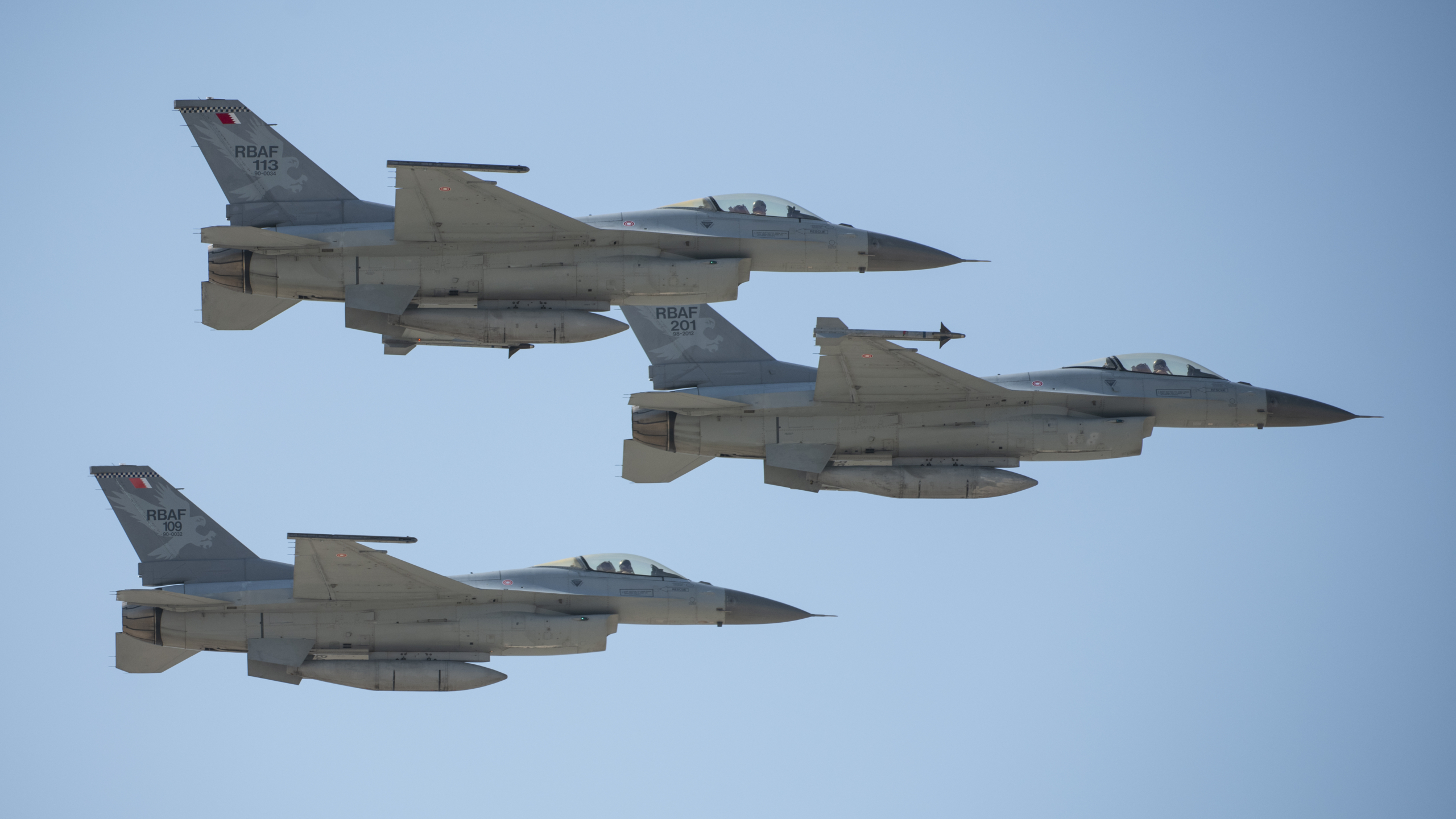
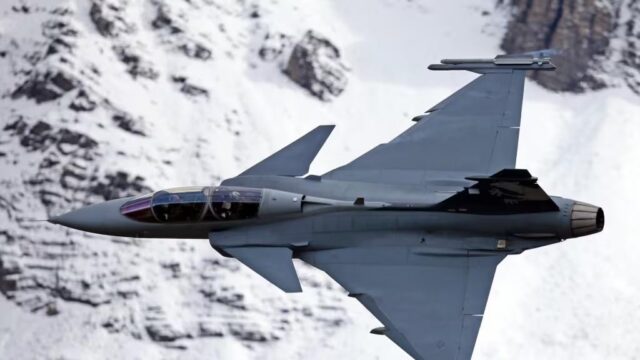
Lockheed Martin’s latest F-16 Block 70 has achieved its first air-to-air kills as Bahraini drones shot down a pair of Iranian drones that had slipped through its air defence.
Bahrain achieves first F-16 Block 70 air-to-air kill
The story was first reported by Aviation Week and written by Steve Trimble. He wrote, “Royal Bahraini Air Force (RBAF) F-16 Block 70 fighter scored the type’s first air-to-air kill on April 1 against a pair of Iranian drones.” The article cites an unnamed source familiar with the matter.
A @LockheedMartin F-16 Block 70 fighter jet operated by the Royal Bahrain Air Force achieved its first air-to-air kills, intercepting and destroying two hostile unmanned aerial vehicles.
— Lockheed Martin News (@LMNews) April 9, 2026
Lockheed Martin reposted an article by Aviation Week saying “F-16 Block 70 fighter jet operated by the Royal Bahrain Air Force achieved its first air-to-air kills, intercepting and destroying two hostile unmanned aerial vehicles.”
The Iranian drones had evaded previous intercept attempts by ground-based air defence before being engaged by Bahrain’s F-16s. The episode took place before dawn.
The Bahraini F-16s fired AIM-9X Sidewinder and 32 AIM-120C-1 AMRAAM air-to-air missiles at the drones, destroying them.
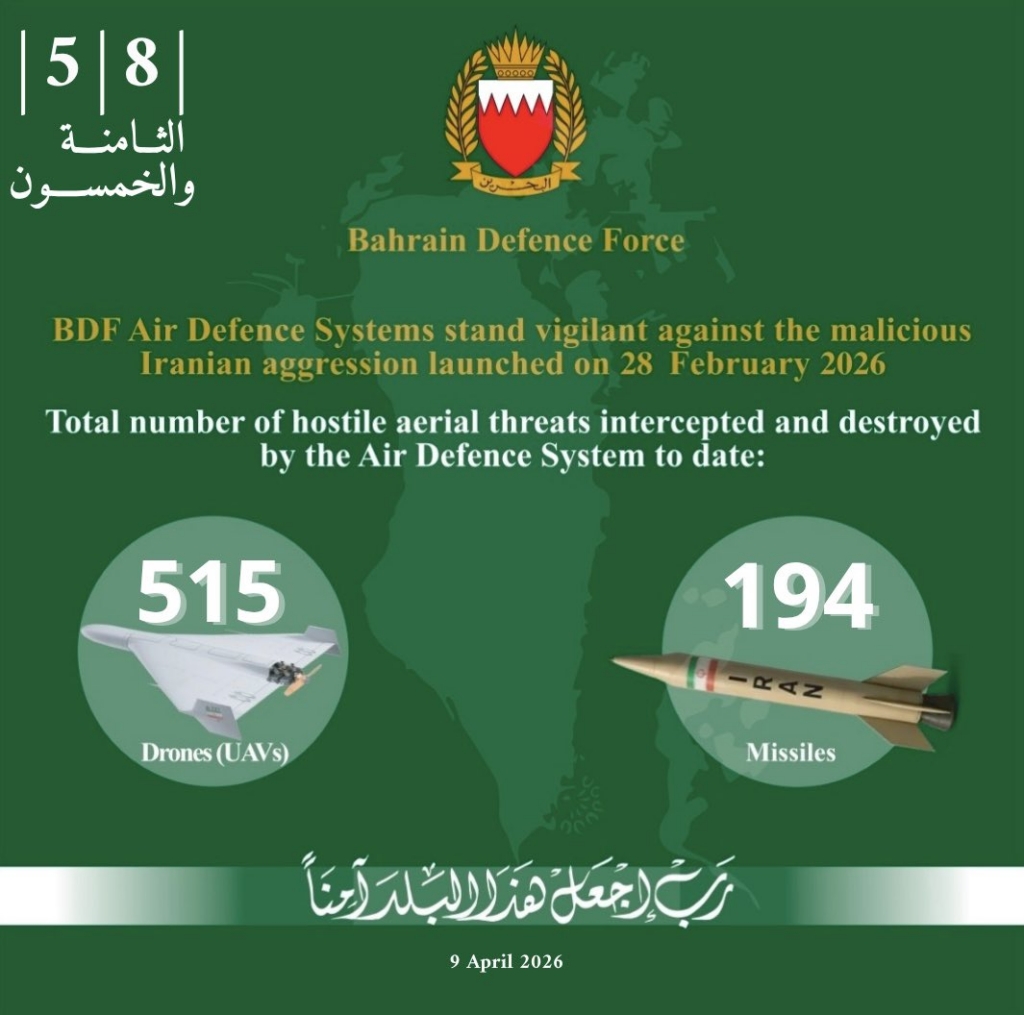
The Bahrain Defence Force reports it has intercepted a total of 194 Iranian missiles and 515 drones up to the 9th of April.
Get the latest aerospace defence news here on AGN.
Bahrain’s fleet of F-16 Fighting Falcons
Bahrain is the smallest Gulf state, and it operates a fleet of F-16 Fighting Falcons as its frontline fighter jet. These are equipped with the Northrop Grumman APG-83 radar and the Lockheed AAQ-33 Sniper targeting pod.

Bahrain’s order for updated F-16s dates from 2019, when the US authorized the export of 16 Block 70s along with 32 AIM-9X Sidewinders and 32 AIM-120C-1 AMRAAM missiles. These 16 Block 70s have now been delivered.
The country became the launch customer for the Lockheed F-16 Block 70 when it took delivery of the first examples in March 2024. Lockheed started producing its most modern Block 70/72 variant of the hugely successful F-16 family in 2021.
تُعلن القيادة العامة لقوة دفاع البحرين أن منظومات الدفاع الجوي بقوة دفاع البحرين بفضلٍ من الله، ثم بيقظة رجالها مستمرة في مواجهة موجات تتابعية من الاعتداءات الإيرانية الإرهابية الآثمة، استهدفت مملكة البحرين.https://t.co/QOpL6Y7f8j pic.twitter.com/SAWREZ5x1k
— قوة دفاع البحرين (@BDF_Bahrain) April 9, 2026
Block 70 jets are produced at the plant in Greenville, South Carolina, after the assembly line was relocated from Fort Worth in Texas, to make room for the F-35.
An expensive way to take down one-way attack drones
While the development is notable for being the first time Lockheed’s F-16 Block 70 has achieved an air-to-air kill, there is another naunce.
These are not the right missiles for routinely shooting down Shahed-style drones. Shahed-style drones have an estimated per-unit cost range of around $20,000 to over $50,000, depending on the variant and integrated capabilities.
🇺🇸🇧🇭 The US State Department has approved a possible Foreign Military Sale to Bahrain of F-16 sustainment, for an estimated cost of $445 million. pic.twitter.com/JINoPg3XlG
— Colby Badhwar (@ColbyBadhwar) December 1, 2025
According to OSINT account Colby Badhwar, writing in September 2025, the marginal unit cost for an AIM-120 AMRAAM is around $1 million, while the marginal unit cost for an AIM-9 Sidewinder is around $400,000.
The marginal unit cost is not the same as the purchase price, especially the export purchase price. It is unclear how much Bahrain paid to purchase its air-to-air missiles in 2019.
Adding to the issue is that there just aren’t enough of these higher-end missiles to counter the seemingly uncountable masses of cheap drones.
To better counter this threat, the USAF has integrated cheaper and plentiful laser-guided 70mm Advanced Precision Kill Weapon System II (APKWS II) rockets onto its F-15Es, some F-16s, and A-10s. The War Zone estimates these cost $15,000 to $20,000 each.

Switching to rockets has been followed by France, Ukraine, and other countries. Ukraine is also increasingly relying on cheap (starting from around $2,500) interceptor drones that it can produce en masse.
That said, it would seem these expensive missiles were more of a measure of last resort. Bahrain has shot down hundreds of drones, but these two drones slipped through its other layers of air defence.
Featured Image: US Air Force