Operation Midnight Hammer exposes B-2 Spirit command-and-control limitations

February 3, 2026
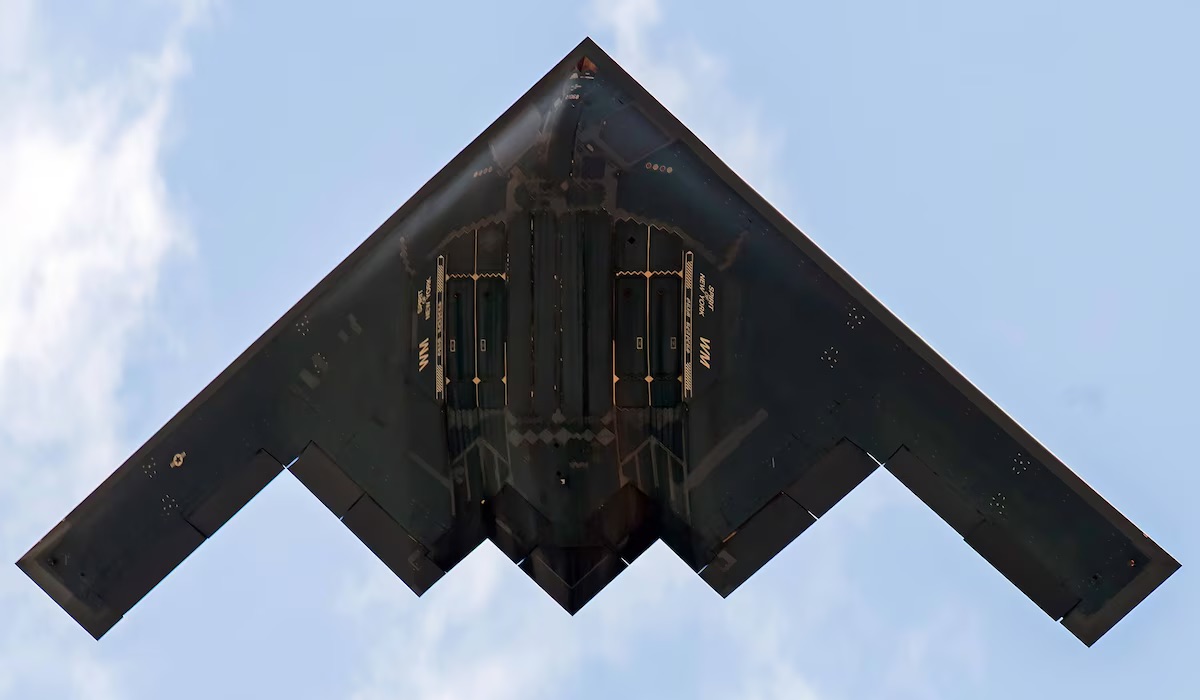
The United States Air Force has acknowledged significant operational lessons from Operation Midnight Hammer, the B-2 Spirit-led strike on Iran’s nuclear infrastructure, as new disclosures point to communications and command-and-control shortfalls during the mission.
Senior Air Force commanders say the June 2025 operation demonstrated the reach and lethality of America’s long-range bomber force, but also exposed vulnerabilities in how mission-critical data is exchanged with penetrating aircraft operating deep inside contested airspace.
Those shortcomings are now being examined as intelligence assessments continue to challenge the White House’s initial claim that Iran’s nuclear programme was “obliterated”.
B-2 bomber strike exposes command-and-control limits in contested airspace
Speaking at a Mitchell Institute for Aerospace Studies forum in January, Lieutenant General Jason Armagost, Deputy Commander of Air Force Global Strike Command, said the service must urgently improve how it securely communicates with bombers during high-end strike operations.
“If that strike package is not able to communicate the status of their forces and receive the ‘go’ from the mission commander, then that is a failure on all of us,” Defense News reports Armagost as saying, referring directly to Operation Midnight Hammer.
The operation saw Northrop Grumman B-2 Spirit bombers launch Massive Ordnance Penetrator (MOP) bunker-buster weapons against hardened Iranian nuclear facilities, including Fordow and Natanz.
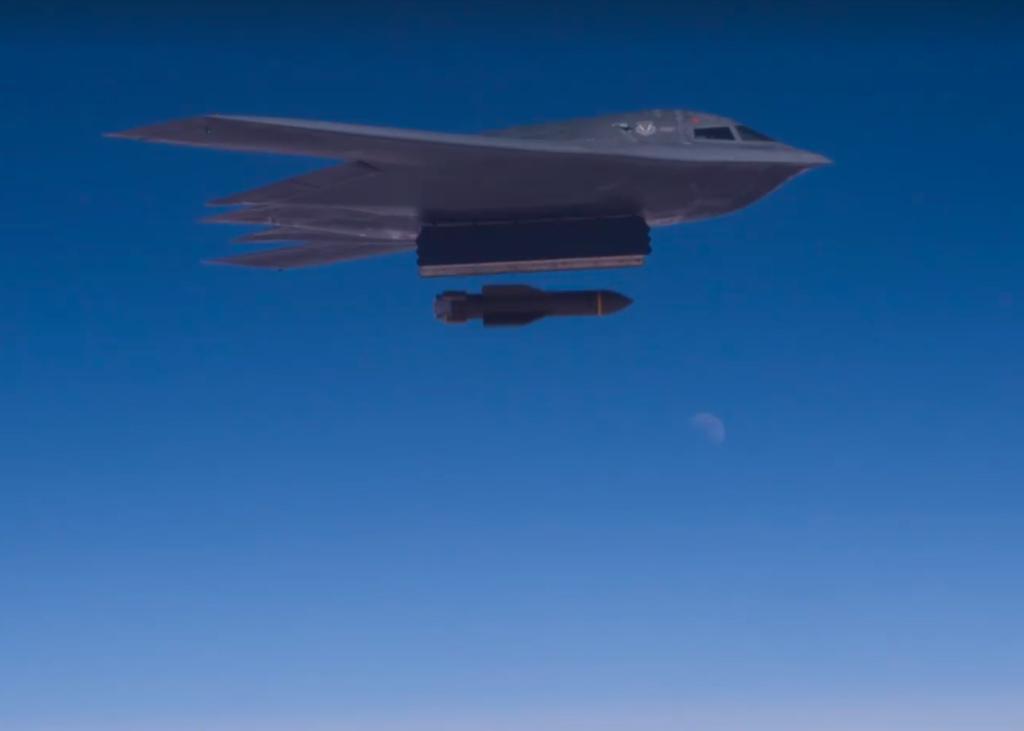
Each MOP weighs nearly 13,600 kg and is designed to penetrate hundreds of feet of reinforced rock before detonating.
While the strike highlighted the unique capabilities of the B-2 fleet, Air Force officials conceded that secure, real-time data flow between aircraft, commanders and intelligence nodes did not meet future combat requirements.
Defense News also quoted Major Claire Randolph, Chief of Weapons and Tactics at US Air Forces Central Command, cautioning that communications improvements must not undermine cockpit authority.
“We have to improve our communications capabilities, but we also have to be very careful about where decision-making authority ends up,” she said, warning against command interference during live combat missions.
Intelligence doubts raise questions over effectiveness of B-2 strikes on Iran
Those communications gaps matter because the strategic impact of the strikes remains contested.
As first reported by CNN in June 2025, a preliminary Defense Intelligence Agency assessment concluded that the attacks delayed Iran’s nuclear programme by only “a few months”, contradicting repeated claims by Donald Trump that the facilities had been completely destroyed.

According to officials briefed on the assessment, the bunker-buster strikes failed to collapse the deepest underground sections of the Fordow and Natanz sites. The report also suggested Iran had relocated significant quantities of enriched uranium ahead of the attack, preserving key elements of its nuclear capability.
The DIA assessment reportedly found that damage was concentrated on above-ground power systems and ancillary infrastructure rather than on the core centrifuge halls buried deep beneath the mountains.
White House rejects Iran strike assessment as Air Force takes measured view
The Trump administration forcefully dismissed the DIA’s conclusions. White House Press Secretary Karoline Leavitt described the assessment as “flat-out wrong” and accused unnamed intelligence officials of leaking classified material to undermine the President.
Trump himself maintained that Iran’s facilities were “demolished” and “under rock”, a position echoed by Defence Secretary Pete Hegseth, who said the bombing campaign had eliminated Iran’s ability to produce nuclear weapons.

Senior lawmakers, however, have offered a more measured view. Republican Congressman Michael McCaul, Chairman Emeritus of the House Foreign Affairs Committee, told CNN that the strikes were never intended to permanently destroy Iran’s nuclear programme, but rather to impose a significant, if temporary, setback.
B-21 Raider positioned as solution to bomber communications gaps
The operational lessons from Midnight Hammer are now shaping expectations for the Northrop Grumman B-21 Raider, which is set to replace the B-2 as the backbone of the US Air Force’s penetrating strike force.
Air Force leaders say the B-21’s advanced data-sharing architecture and resilience against electronic warfare will be central to future long-range strike missions. Armagost said the service is already aligning its command-and-control concepts around the Raider’s capabilities, noting that operations like Midnight Hammer would look “very different and easier to execute” once the B-21 enters operational service.

Northrop Grumman has described the B-21 as a sixth-generation platform designed to operate as part of a networked strike ecosystem rather than as a standalone bomber, though Air Force officials have cautioned that improved platforms alone will not eliminate the need for clearer decision-making authority in contested environments.
Airpower dominance, but no illusions about kinetic limits
For the US Air Force, the emerging picture is one of unmatched strike capability paired with growing realism.
Operation Midnight Hammer confirmed that the B-2 remains a uniquely potent tool for deep-penetration missions, capable of delivering massive ordnance against some of the world’s most hardened targets.
At the same time, it underscored the limits of kinetic power alone in achieving long-term strategic effects, particularly against an adversary that has spent decades dispersing, hardening and concealing its nuclear infrastructure.
The Air Force’s push to overhaul bomber communications, accelerate B-21 integration and refine command-and-control doctrine suggests Midnight Hammer is now viewed less as a final answer and more as a case study in how future deep-strike campaigns must be fought.
Featured image: USAF