Artemis II splashdown marks return of crewed deep space flight and clears path back to the Moon

April 13, 2026
Days after Artemis II returned safely to Earth, the significance of the mission is becoming clear.
Orion spacecraft’s splashdown in the Pacific did more than conclude a historic journey around the Moon; it validated the systems, partnerships and operational readiness that will underpin humanity’s return to the lunar surface for the first time in over 50 years.
Nearly 10 days after leaving Earth, NASA’s Artemis II astronauts came home in the most demanding phase of the mission, plunging through the atmosphere at hypersonic speed, enduring a planned communications blackout and relying on Orion’s parachutes to bring them safely into the Pacific.
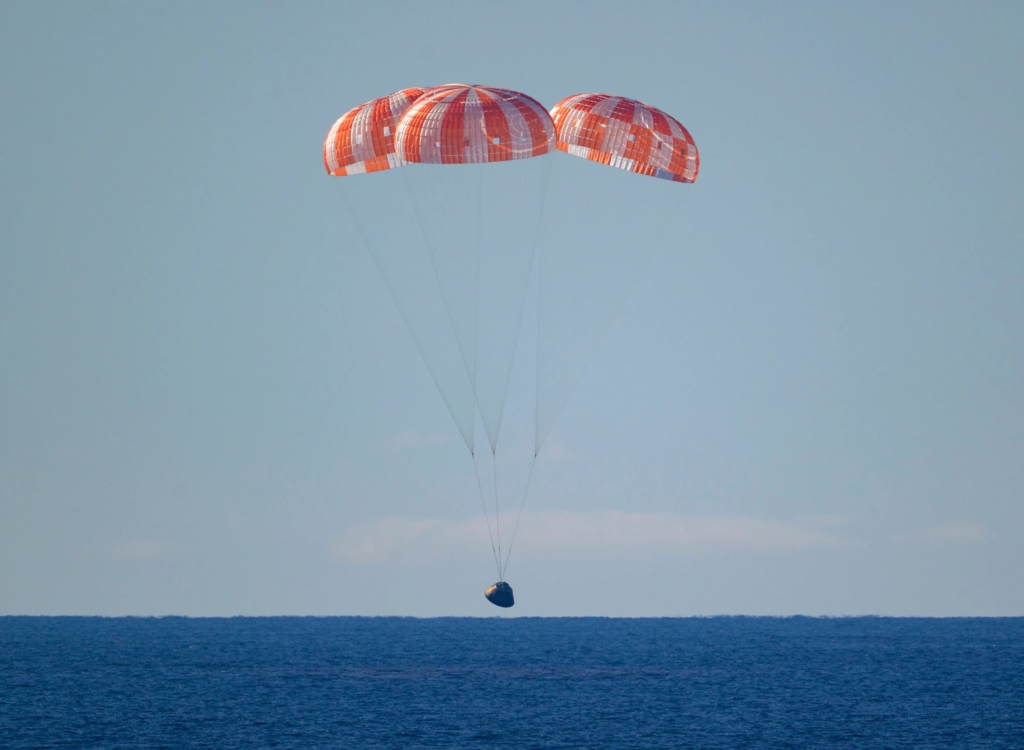
At 5:07 p.m. local time on 10 April off the coast of San Diego, Orion splashed down under three main parachutes, completing a landmark test flight that has restored crewed deep-space capability to NASA for the first time since Apollo.
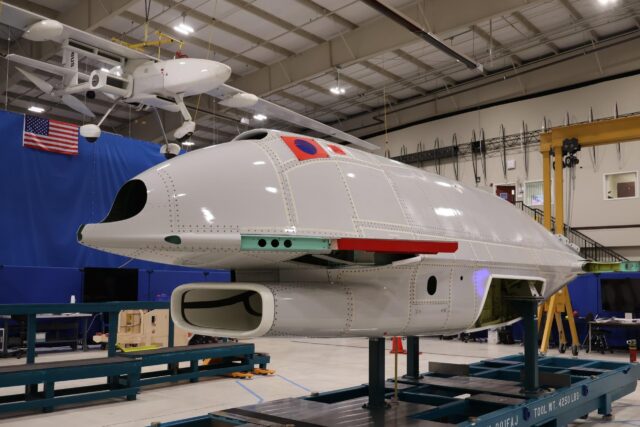
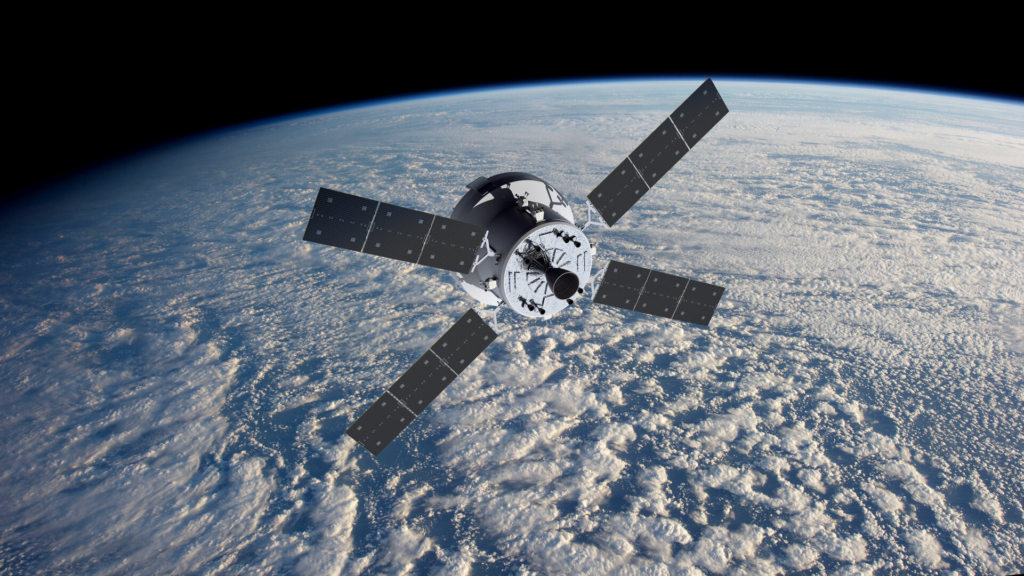
The mission also marked a major European contribution, with the European Space Agency’s European Service Module powering Orion throughout its journey to the Moon and back.
Artemis II shifts focus to what comes next
With the mission now complete, attention is turning to what Artemis II has proven, and what still needs to be demonstrated before astronauts can return to the lunar surface under Artemis III.
The flight validated Orion’s life-support systems, deep space navigation, communications and, critically, its ability to survive re-entry at lunar return velocities. It also demonstrated the performance of the European-built service module, which enabled the mission’s trajectory with such precision that two planned burns were no longer required.
At the same time, key challenges remain. Future missions will depend on the readiness of commercial lunar landers and supporting infrastructure, as well as continued system integration across international partners.
Orion’s fiery return delivered the Artemis II mission’s toughest test
Friday’s return was always expected to be Artemis II’s defining technical challenge.
At 7:33 p.m. EDT, Orion’s crew module separated from its European-built service module, which had sustained the spacecraft throughout the mission.
Twenty minutes later, the capsule began re-entry, striking the upper atmosphere at 400,000ft and travelling at roughly 35 times the speed of sound.
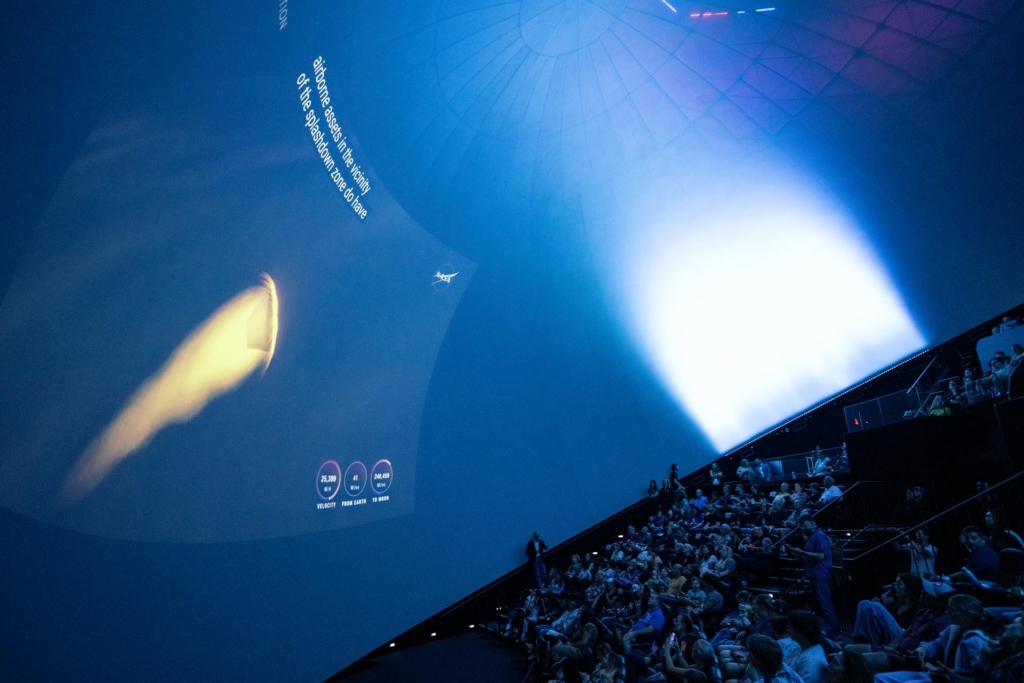
Plasma rapidly built around the spacecraft, triggering a planned blackout of just over six minutes as temperatures on the heat shield climbed to around 5,000°F (2,760°C).
The tension eased when communications were restored.
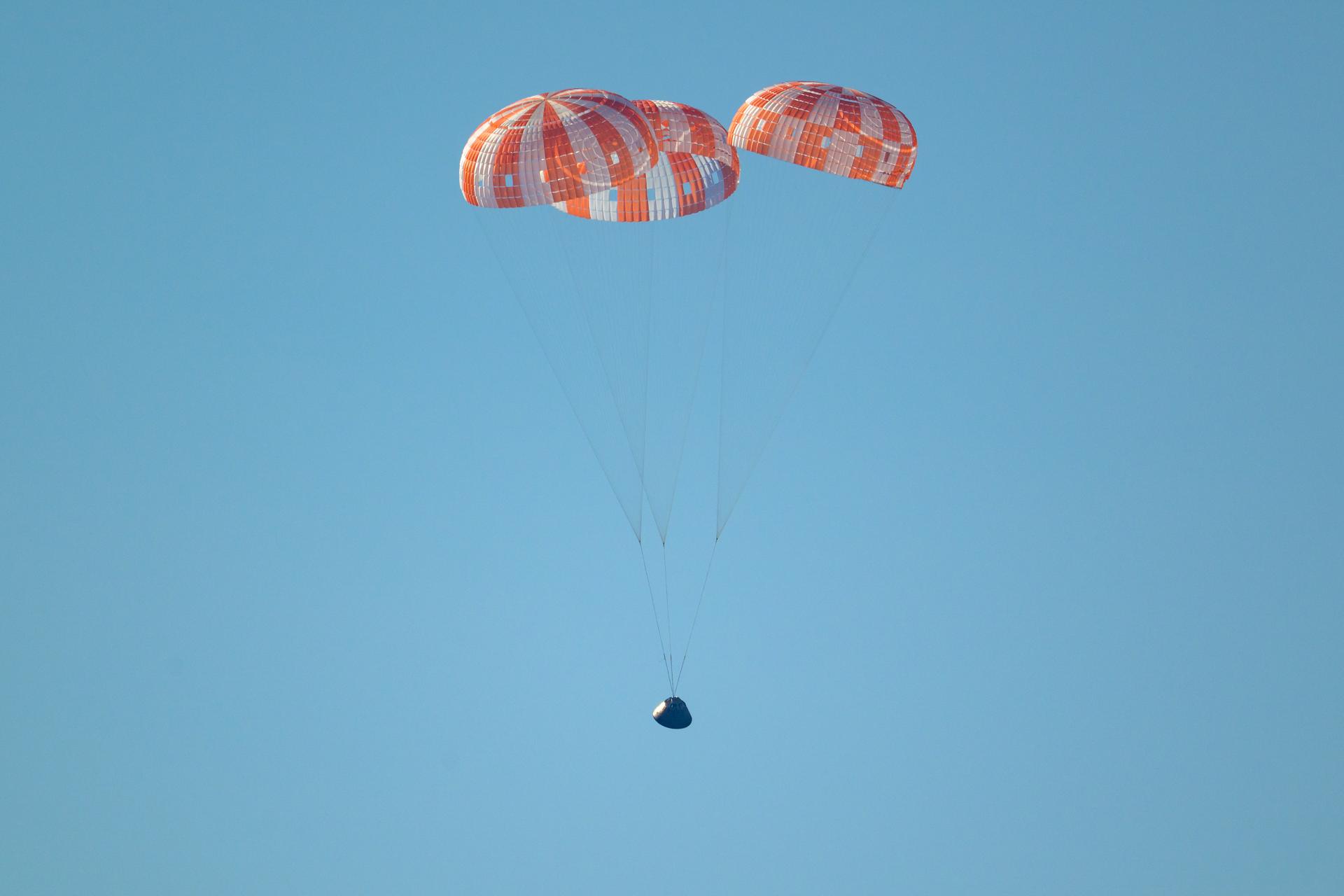
At 23,400ft, Orion’s drogue parachutes deployed to stabilise the capsule. At 5,400ft, the drogues were released and Orion’s three main parachutes opened cleanly, reducing descent speed to a controlled splashdown.
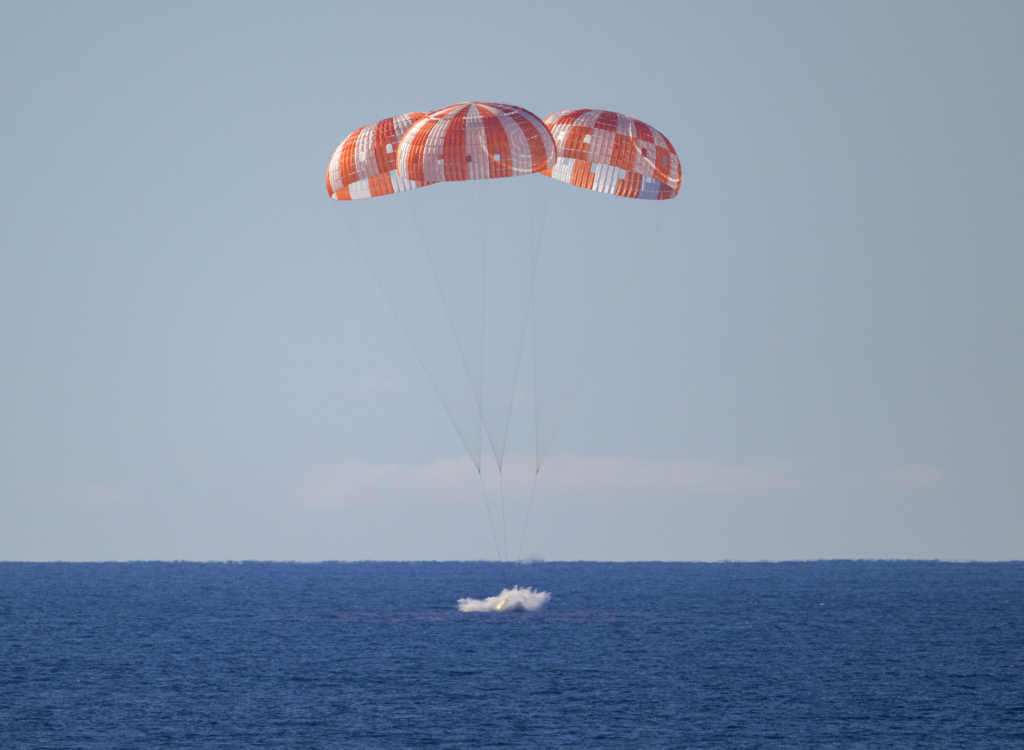
NASA commentator Rob Navias called it “a perfect bull’s eye splashdown”, while commander Reid Wiseman’s first message after landing offered the clearest verdict: “We are stable one — four green crew members.”
Recovery operations confirm mission success at sea
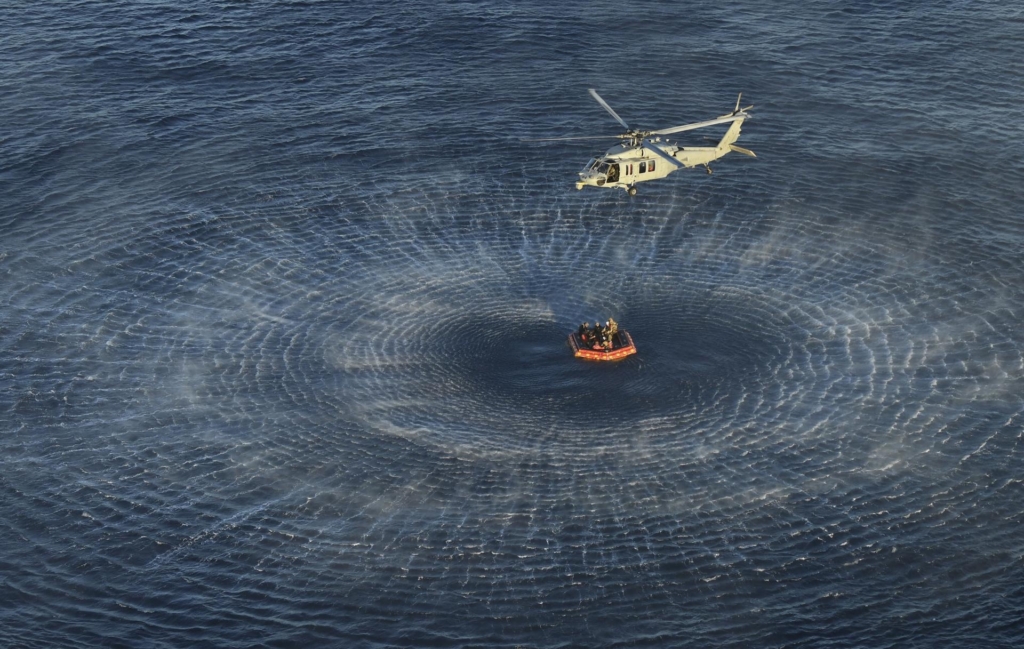
Recovery crews were already in position when Orion hit the water. Within minutes, rigid inflatable boats reached the capsule and divers attached a flotation collar to stabilise it.
After engineers powered down non-essential systems, the side hatch was opened and the astronauts emerged onto an inflatable raft known as the “front porch”.
One by one, the crew were hoisted into US Navy helicopters and flown to the amphibious transport dock USS John P. Murtha, where they underwent initial medical checks before their return to Houston.
NASA Associate Administrator Amit Kshatriya said the mission had validated the spacecraft’s most critical systems.
“The entry, descent, and landing systems performed as designed and the final test was completed as intended,” he said. “This moment belongs to the thousands of people across fourteen countries who built, tested, and trusted this vehicle. Their work protected four human lives travelling at 25,000 miles per hour and brought them safely back to Earth.”
Europe’s service module underpinned every phase of the Artemis moon mission
While Orion’s splashdown was the visible climax, much of Artemis II’s success rested on the European Service Module.
Built under ESA leadership and largely assembled by Airbus Defence and Space in Bremen, the module supplied breathable air and drinking water, generated electrical power through four solar arrays, regulated spacecraft temperature and delivered the propulsion needed to carry Orion through deep space.
The programme involved 20 principal contractors and more than 100 European suppliers, making it one of Europe’s most complex contributions to human spaceflight.
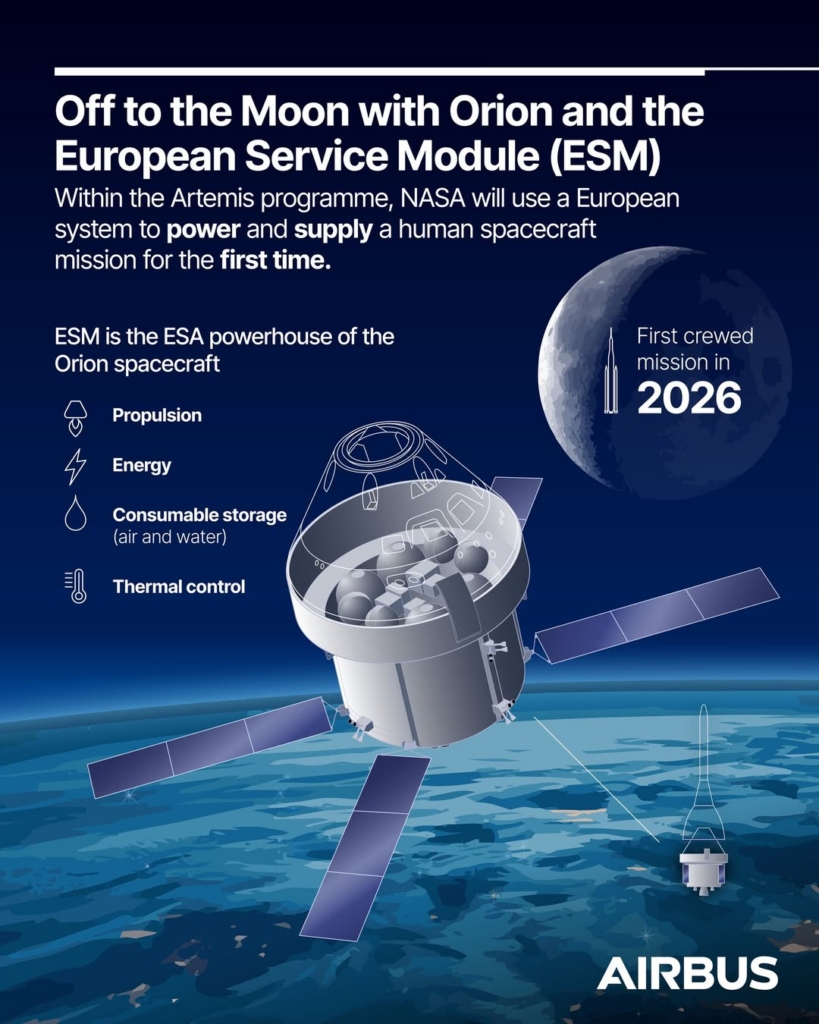
ESA Director General Josef Aschbacher said the mission demonstrated Europe’s role as a core partner in lunar exploration.
“The European Service Module put on a powerful demonstration of Europe’s capability to deliver critical elements for ambitious international exploration missions,” he said.
ESA’s Daniel Neuenschwander added that the module’s performance exceeded expectations, noting that its precision reduced the need for planned trajectory correction burns.
Artemis II: A record-setting journey beyond the Moon
The four astronauts, Reid Wiseman, Victor Glover, Christina Koch and Canadian astronaut Jeremy Hansen, travelled farther from Earth than any human crew before them, reaching a peak distance of 252,756 miles during the lunar flyby.
Over the course of the mission, Orion covered more than 694,000 miles through deep space.
Launched on 1 April aboard NASA’s Space Launch System, the spacecraft completed a series of system checks, manual flying exercises and trajectory manoeuvres before sweeping around the far side of the Moon on 6 April, passing within 4,067 miles of the surface.
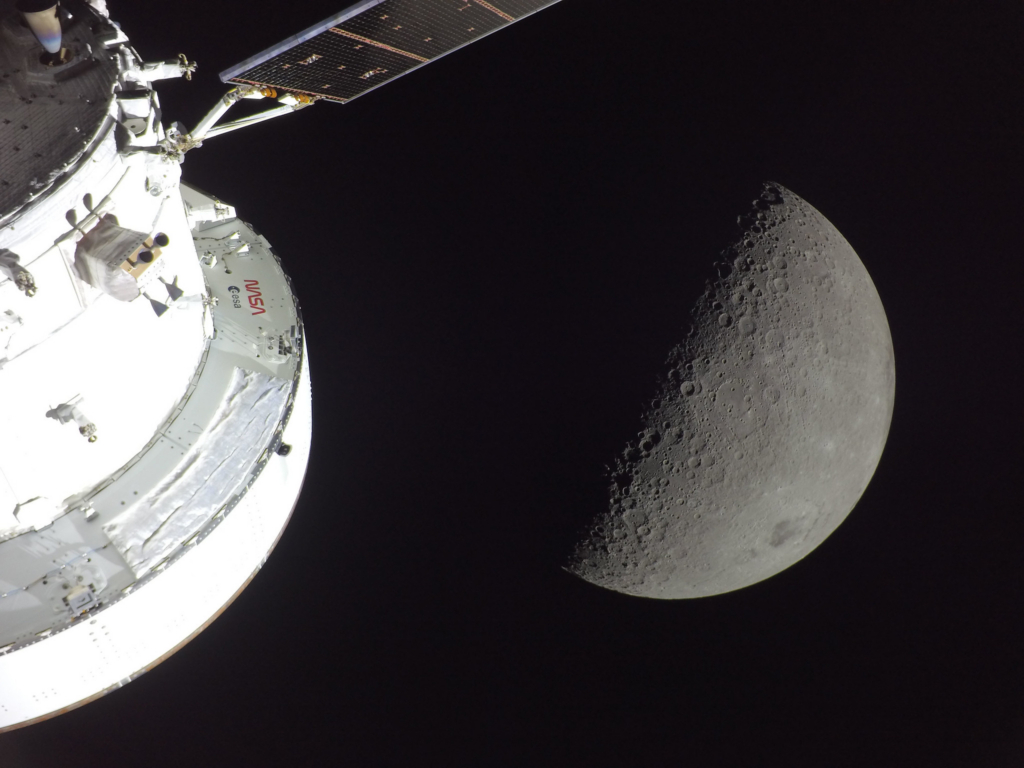
The crew conducted life-support checks, emergency drills, spacecraft handling tests and scientific experiments designed to deepen understanding of human performance in deep space.
They also returned with thousands of images of the lunar surface, data that could help inform future landing site selection near the lunar south pole.
Artemis III now becomes the next critical step
Shortly before re-entry, Wiseman looked out of Orion’s window and offered one final reflection.
“We got a great view of the moon out window 2 — looks a little smaller than yesterday,” he told mission control.
“Guess we’ll have to go back,” came the reply from Houston.
That is now exactly what NASA and its international partners intend to do.
With Artemis II complete, the focus shifts to Artemis III and the next phase of lunar operations, including integrated testing with commercial landing systems and the technologies required to return astronauts to the lunar surface.
Orion’s safe return has demonstrated that crewed deep space flight is once again within reach. The challenge now is turning that capability into a sustained human presence on the Moon.
Featured image: NASA