Australia’s Albatross 2.0 could revitalise the golden age of flying boats

February 18, 2026
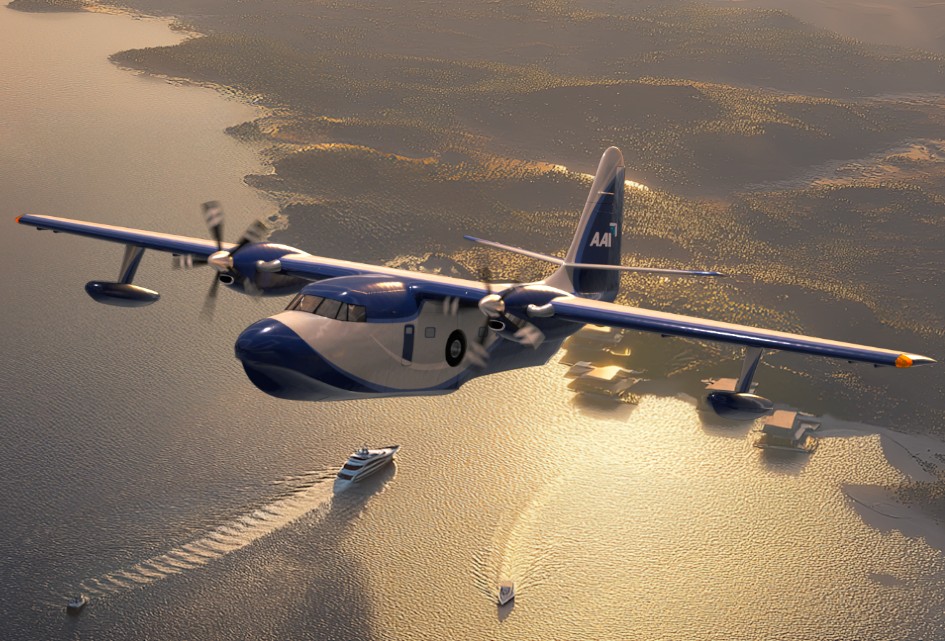
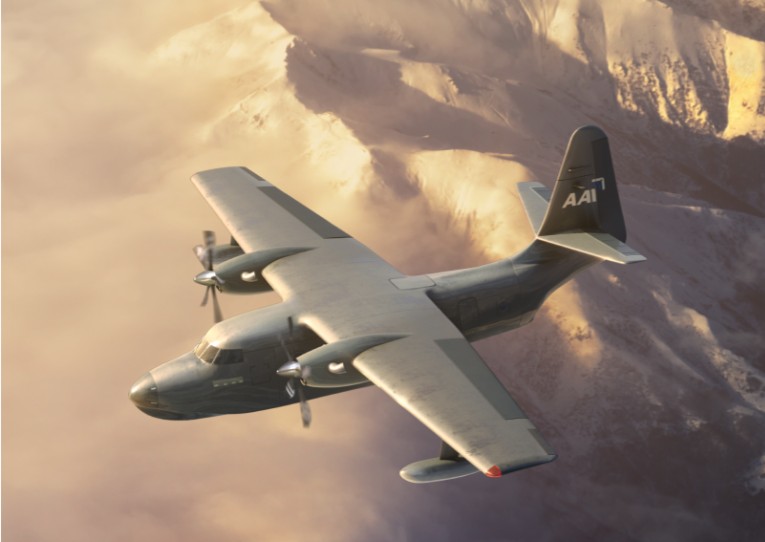
A vintage flying boat that first served in the late 1940s could be heading back into production. The Grumman HU-16 Albatross is being reimagined by an Australian aerospace company as the ‘Albatross 2.0’ to fulfil a range of roles covering maritime patrol, paramilitary, search-and-rescue, and passenger-carrying and other commercial duties.
Now, on the back of winning an order from an Indian company, the aircraft could become a reality, once again finding a niche in a largely unserved market that only flying boats can truly fulfil.
AAI’s Albatross 2.0 receives order from India for 15 aircraft
On 5 February, Australia’s Amphibian Aerospace Industries (AAI) based in Brisbane, announced that it had signed a deal with India’s Apogee Aerospace to supply 15 Albatross 2.0 amphibious aircraft to the Indian company.
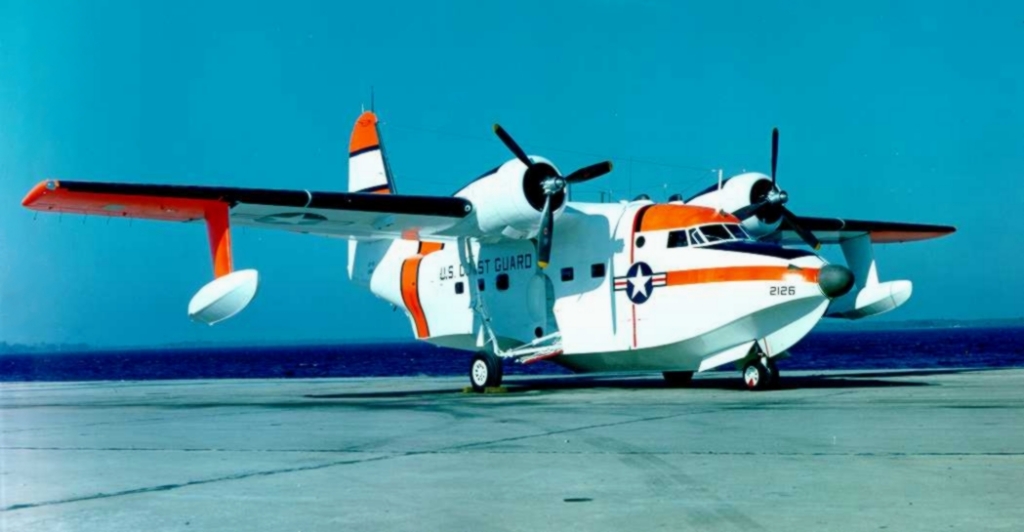
The Albatross 2.0 is a modernised version of the original Grumman HU-16 Albatross flying boat that first saw service with the US Navy in 1949, and which still flies privately in small numbers today.
The Albatross 2.0 is the world’s first and only FAA or EASA-certified transport category amphibious aircraft above 19 seats (with a capacity up to 28 seats) in the Registered Passenger Transport (RPT) sector.
According to the parties, the agreement carries a reported value of about $420 million and includes plans to establish manufacturing, maintenance, and systems integration capability in India. Apogee also plans to invest additional funds to establish overhaul and training capabilities for the Albatross 2.0 in India.

Under the collaboration, Apogee Aerospace has also been designated as AAI’s exclusive Authorised Representative Partner for the Indian Subcontinent in the Restricted Category covering defence and government requirements.
The partnership extends to end-to-end systems integration for the militarisation of the aircraft, and the establishment of aircraft tail-section manufacturing in India to support the global supply chain for the new aircraft.
AAI is yet to confirm whether Albatross 2.0 will enter full-scale production, with the company planning on refurbishing existing airframes first.
The introduction of newly built aircraft would be on a phased approach, depending upon demand, said AAI. However, as type certificate ownership for the Albatross belongs with AAI, new production of the type could be possible.
At a total cost of $420 million for 15 aircraft, this implies a list price per unit of $28 million. However, the overall value of the overall deal is likely to include other elements of operating the Albatross 2.0, including the provision of spares and other supporting infrastructure.
A vintage design for the modern age – more about the Albatross 2.0
According to the company, the Albatross 2.0 is capable of carrying a payload of up to 28 passengers or alternatively, up to 4,536kg (10000lbs of cargo). The type can also be used for troop transportation, medevac services, cargo carrying and other maritime patrol missions.
Rather than rely on the first-generation radial piston engines that powered the original Albatross aircraft, the new type will be powered by the Pratt & Whitney PT6-67F turboprop engines, already widely used throughout the world on smaller regional passenger and transportation aircraft.
Additionally, the aircraft will feature a modern glass cockpit and retractable landing gear for land as well as water-based operations.
Interiors will be custom-built depending on the types of missions to be flown. AAI states that an 8 to 28-seat executive interior could be provided for VIP operations, while washrooms and a fully functioning galley can also be fitted inside the Albatross 2.0 for regular passenger operations.
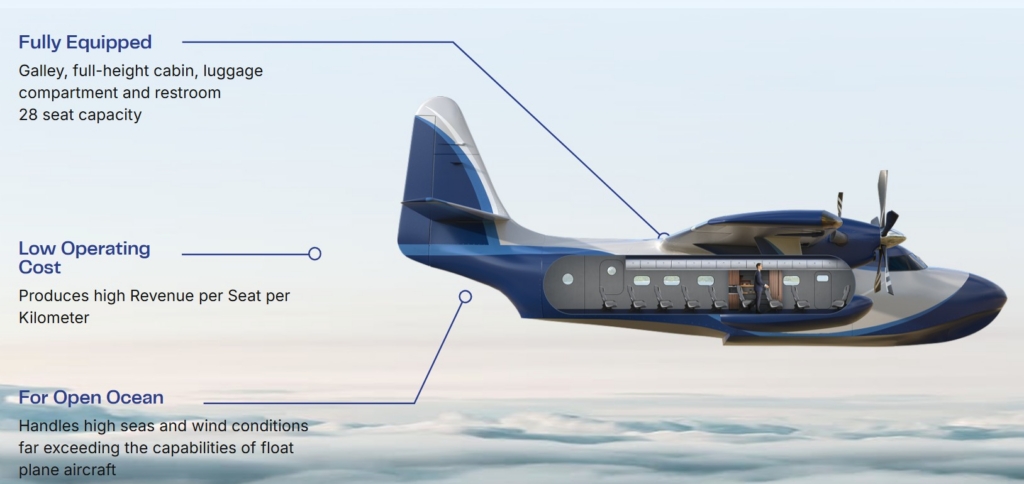
The company is pitching the Albatross at high-end leisure operators, though the plane’s ability to reach properties with waterfront access, targeting premium tourism and business services, exclusive island resort destinations, as well as offering point-to-point executive corporate travel options. The company states that the aircraft can operate in open-sea conditions with wave heights of around two meters (6-8 ft).
Although AAI has not yet detailed the full performance specifications of the Albatross 2.0, its capabilities are likely to be an improvement over the original HU-16 Albatross.
The original incarnation of the type could cruise at around 200 knots (370 kph) and offered a range of 2,800 nautical miles (5,185 km), depending on internal configuration and whether auxiliary fuel tanks were fitted.
A brief history of the Grumman Albatross
The Grumman Albatross was first designed towards the end of the Second World War as a replacement for the US Navy’s fleet of PBY Catalina flying boats. The HU-16 Albatross was intended to act as a utility transport and search and rescue airborne platform. The first production Albatross was subsequently delivered to the US Navy in 1949.
The Albatross was a design descendant of the Grumman Goose, with the same general configuration but aerodynamically cleaner and much larger in scale. The Albatross was of all-metal construction, except for fabric-covered elevators and rudder, and was powered by twin Wright Cyclone radial engines.
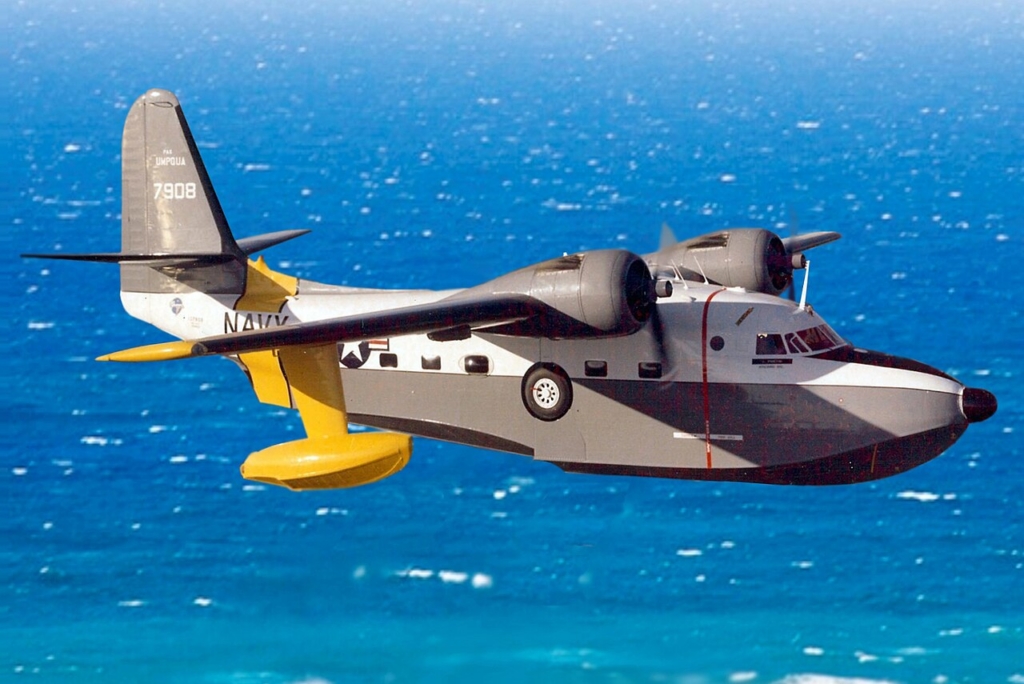
Around 464 Albatross aircraft served with the US Navy, US Air Force, and US Coast Guard of 22 nations for more than 40 years. The Albatross was proudly called “GOAT” by the US Coast Guard for its reliability, ruggedness, and versatile capabilities from Maritime Patrol, Anti-Submarine Warfare (ASW), search and rescue (SAR), to tactical insertion, humanitarian response and other such special missions.
The Albatross served the US military well for many years in many roles, with only four being lost in action throughout its service life. The type was eventually retired in the mid-1970s, having been superseded in the SAR role by the Lockheed HC-130 Hercules and the Sikorsky HH-3 Jolly Green Giant helicopter.
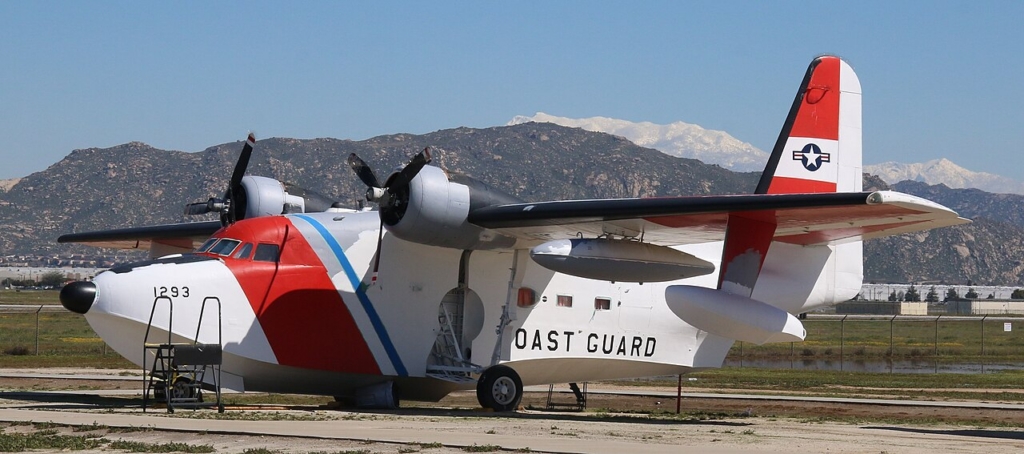
The US Coast Guard retired its last example in 1983, while just a handful of original Albatross aircraft continue to fly today in the hands of private owners.
Many of these feature executive interiors, upgraded cockpits, electronic avionics displays and other systems. However, they generally all still feature their original radial engine powerplants.
Why the Albatross 2.0 could succeed in a niche market.
With its deep-sea capabilities and amphibious configuration, the prospects for the Albatross 2.0 look good on paper. Limited competition exists for the type in the form of the De Havilland Twin Otter and the Cessna 208 Caravan float planes.
However, neither of these platforms offers the range or has comparable payload capabilities that a traditional flying boat, such as the Albatross, can offer. Neither can they operate in open sea environments like the Albatross 2.0
With the capability of serving a huge range of roles, operating over significant sector lengths, and being able to operate on the open sea, the prospects for the Albatross 2.0 look promising. Ultimately, it will be up to the market to decide whether the world needs to revisit the vintage world of flying boats.
Featured image: AAI