China’s spaceflight dreams go up in smoke as Tianlong-3 maiden launch fails

3 min read
The maiden launch of China’s next-generation reusable orbital rocket, Tianlong-3, has failed.
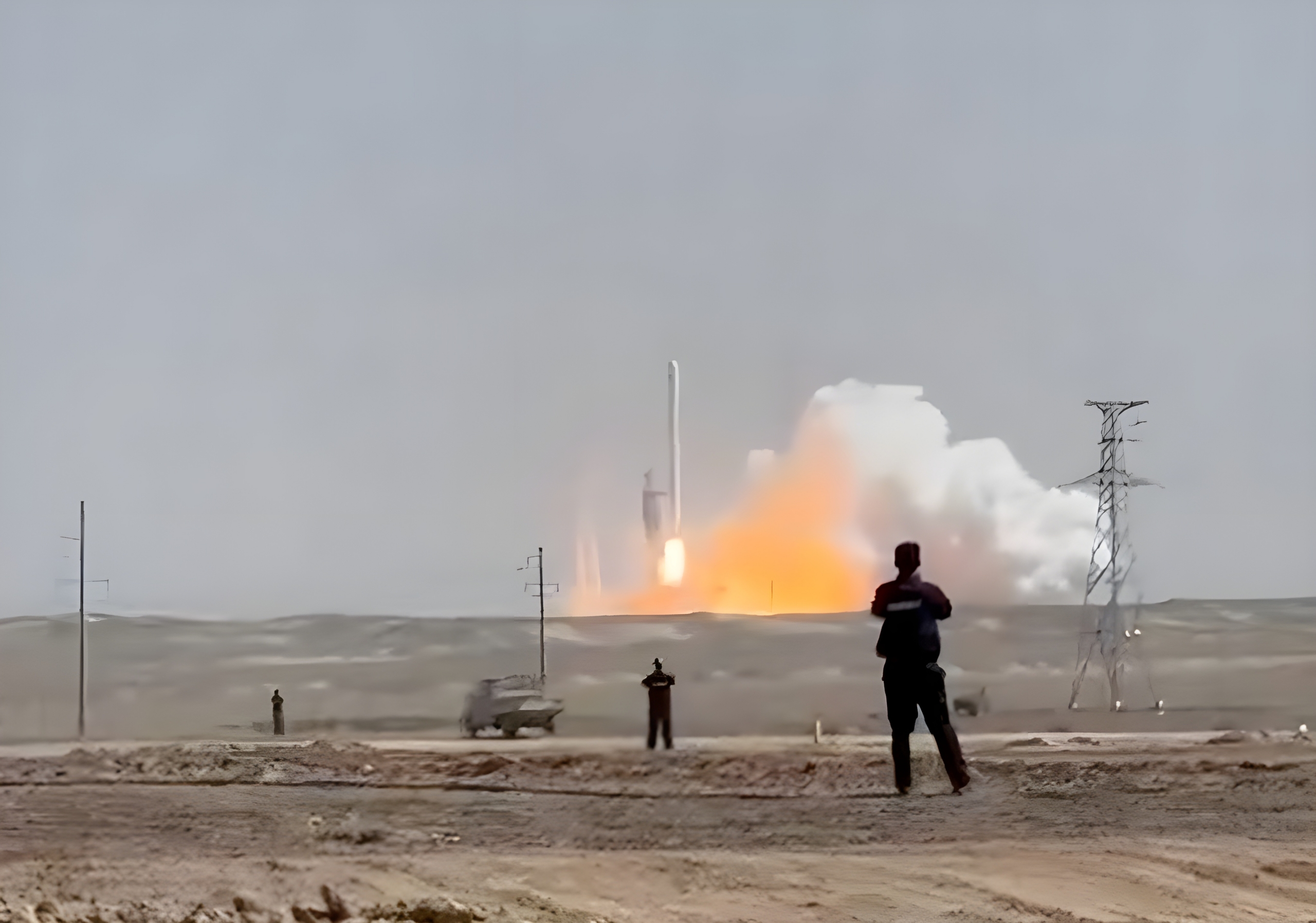
The rocket lifted off from Jiuquan in north-east China successfully, but suffered an anomaly on ascent. It never reached orbit.
China has not commented on the nature of the anomaly nor what payloads were aboard at the time. However, a short statement was released via state-funded outlet Xinhua.
“Having blasted off at 12:17 p.m. (Beijing Time), the commercial rocket experienced an anomaly during flight, resulting in the failure of the mission,” it read. “The specific cause is currently under analysis and investigation.”
China’s Tianlong-3 rocket suffers an explosion after launch
Flying for the first time in its expendable configuration, the Tianlong-3 rocket launched successfully, but began to lose thrust in the early stages of ascent.
Videos of the launch appear to show a small explosion, visible around 33 seconds into the clip below:
A small explosion of the engine bay at 33s of this video of Tianlong-3 maiden launch pic.twitter.com/9MSV7FQWxG
— Ace of Razgriz (@raz_liu) April 3, 2026
After the explosion, the rocket appears to continue on its trajectory. However, no orbital insertion occurred, and it likely splashed down somewhere in the Pacific Ocean.
Built by Chinese commercial aerospace company Space Pioneer, Tianlong-3 was widely hoped to be China’s answer to SpaceX’s Falcons – a reusable rocket capable of launching dozens of satellites and supporting cargo transport for Tiangong, China’s space station.
Space Pioneer issued an apology following the failed launch attempt, vowing to work to ensure the complete success of future missions.
It’s not the first time Space Pioneer has suffered a setback on the Tianlong project. In June 2024, a Tianlong-3 accidentally lifted off when the first stage detached from its stand during a static fire test. The first stage crashed and exploded in the mountains, but no one was hurt.
Wow. This is apparently what was supposed to be a STATIC FIRE TEST today of a Tianlong-3 first stage by China's Space Pioneer. That's catastrophic, not static. Firm was targeting an orbital launch in the coming months. https://t.co/BY9MgJeE7A pic.twitter.com/L6ronwLW1N
— Andrew Jones (@AJ_FI) June 30, 2024
After the incident, Space Pioneer made more than 120 improvements to Tianlong-3 ahead of today’s launch. Although the launch was not successful, today’s flight will have generated lots of valuable data for engineers to take back to the lab.
Reports suggest another Tianlong-3 is nearing completion, so despite the setback, Space Pioneer could well attempt another launch before 2026 is out.
What is Tianlong-3, China’s answer to SpaceX’s reusable rockets?
Tianlong-3 is a partially reusable, two-stage launch vehicle, designed to compete in the emerging market for lower-cost orbital launches.
The rocket uses kerosene and liquid oxygen across both stages and is currently operating from Jiuquan Satellite Launch Center, with future missions planned from Wenchang Commercial Space Launch Site.
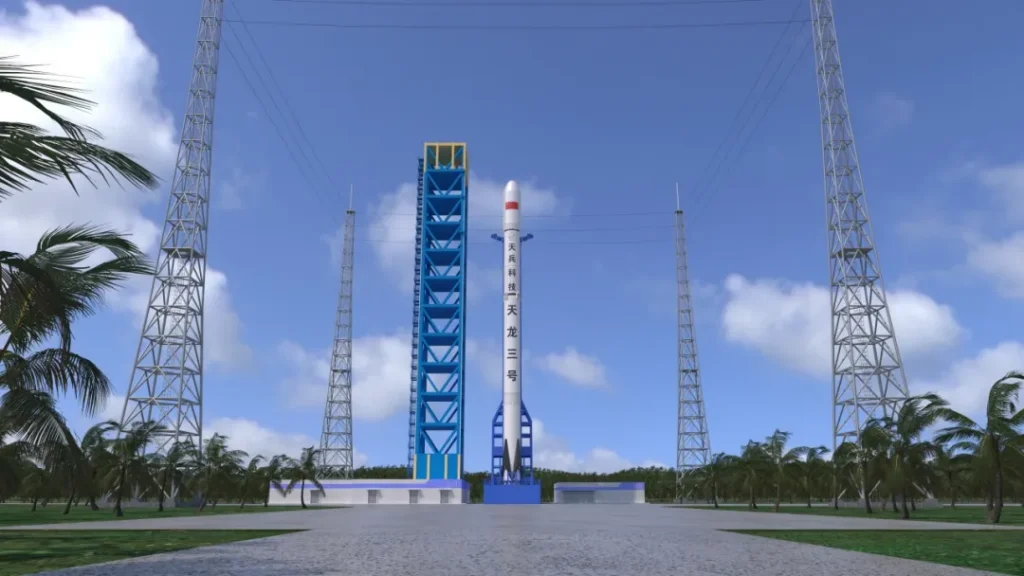
In its expendable configuration, Tianlong-3 is expected to deliver up to 22 tonnes to low Earth orbit, dropping to around 17 tonnes when the first stage is recovered for reuse. For sun-synchronous missions, capacity is projected at 17 tonnes expendable or 14 tonnes with reuse.
The rocket’s first stage is powered by nine TH-12 engines, producing a combined thrust of around 820 tonnes, while the upper stage uses a single vacuum-optimised variant.
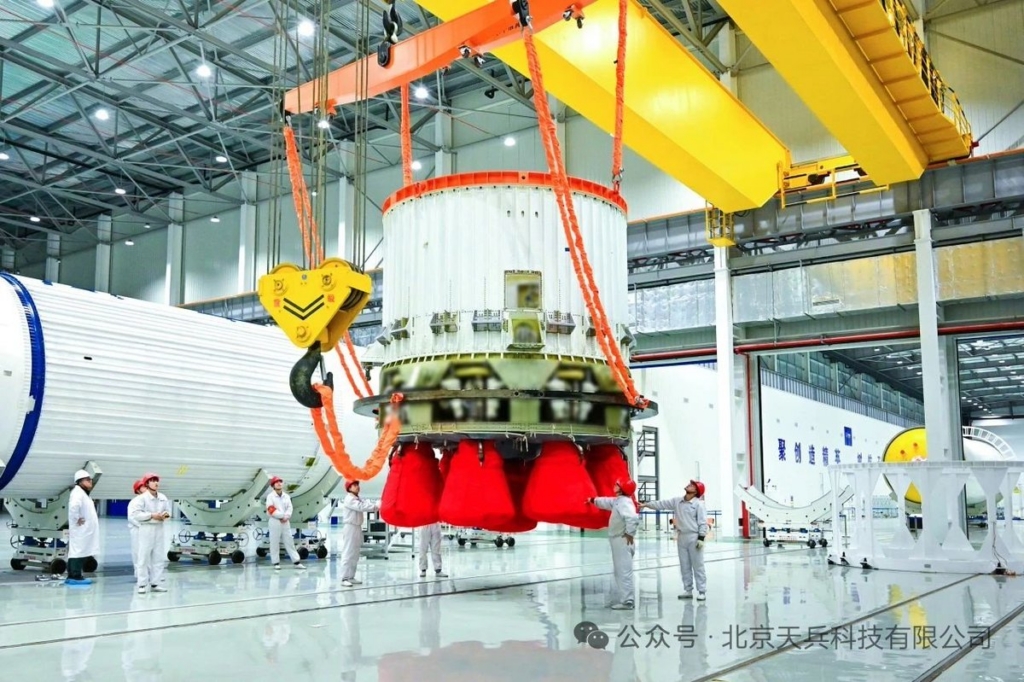
Space Pioneer intends the booster to be reused up to ten times, returning via a propulsive vertical landing on either a ground pad or drone ship, guided during descent by grid fins.
Tianlong-3 stands approximately 71 metres tall at launch and has a liftoff mass of around 590 tonnes. Both stages share a 3.8-metre diameter, topped by a 4.2-metre payload fairing designed to accommodate large satellite payloads.
Featured image: Weibo / screenshot