


Italian Navy eyes Bayraktar TB3 uncrewed aircraft for carrier operations

5 min read
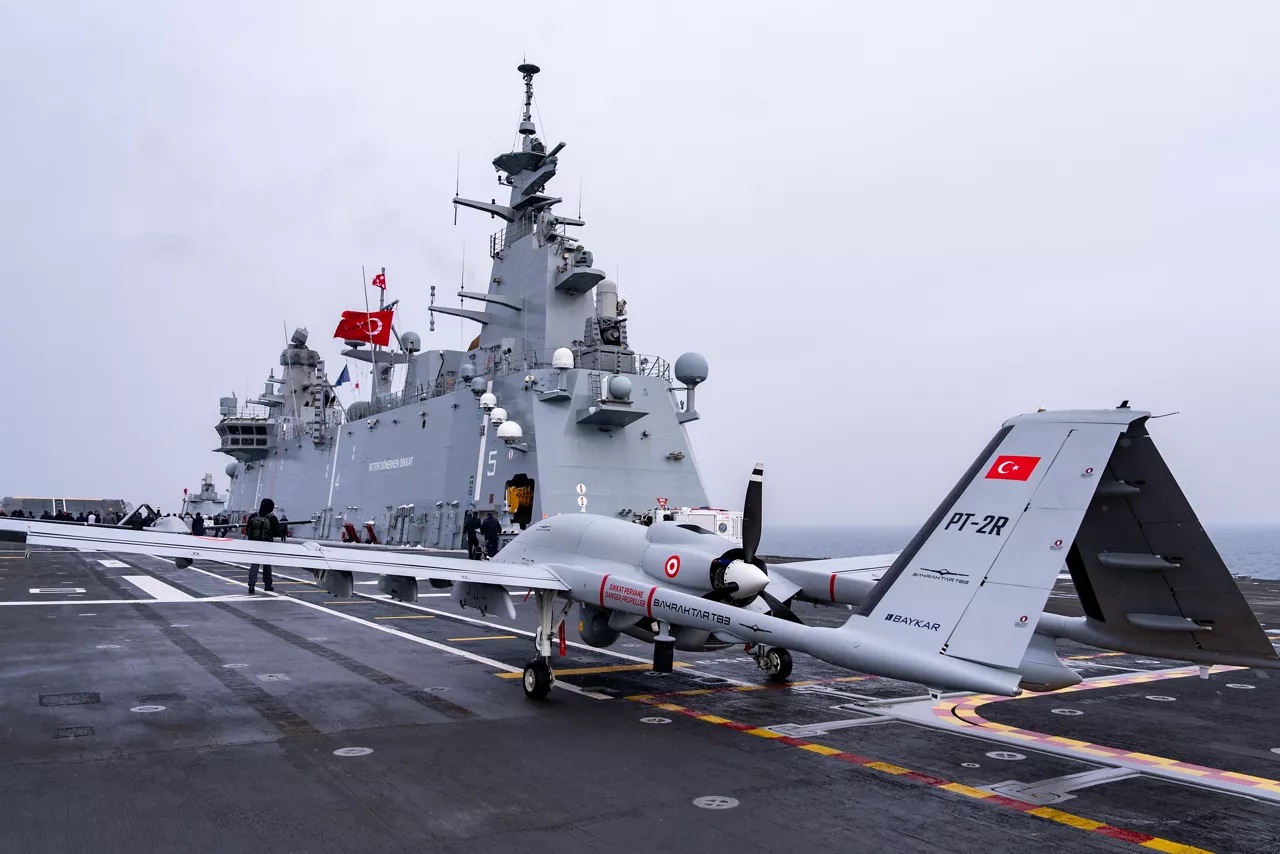
The Italian Navy is moving towards a significant shift in how it projects air power at sea, with plans taking shape to potentially operate the Bayraktar TB3 unmanned combat aerial vehicle (UCAV) from its flagship aircraft carrier, ITS Cavour.
At his first parliamentary hearing since taking command in November 2025, Chief of Staff Vice Admiral Giuseppe Berutti Bergotto signalled a shift towards carrier air wings that rely less on manned aircraft and more on a mix of crewed and uncrewed systems.
The development was first reported by Middle East Eye, which cited remarks made during the hearing as well as sources familiar with the Italian Navy’s growing interest in shipborne drones.
Italy shifts carrier air wing strategy towards unmanned naval aviation
Speaking before Italy’s Senate defence committee on 30 March, Bergotto pointed to unmanned systems as becoming central to naval operations, describing them as a necessary step if the navy is to remain operationally relevant in an increasingly contested maritime environment.
At the centre of that discussion was the Bayraktar TB3, a navalised variant of the widely exported TB2 drone, developed by Turkish defence firm Baykar.
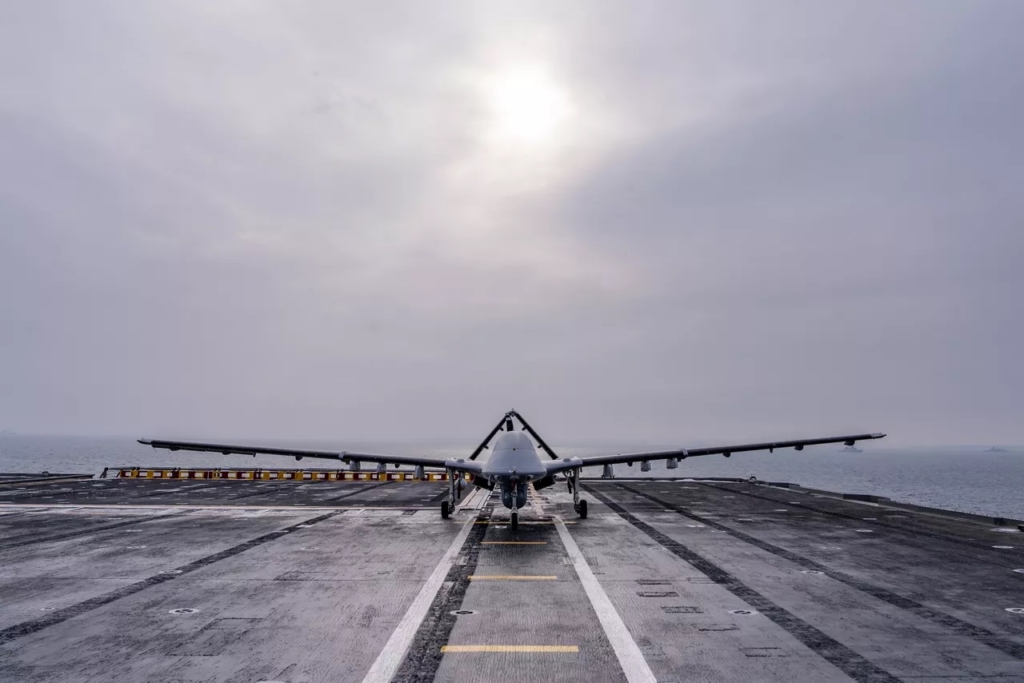
The admiral made clear that the platform is not just being observed but actively examined as part of future carrier aviation concepts. He suggested that, through industrial cooperation with Italy’s Leonardo, the system could be acquired and integrated aboard Cavour, enabling both surveillance and armed roles.
“As you know, Baykar has signed a cooperation agreement with Leonardo; therefore, the acquisition would be through Leonardo, and it can be integrated aboard the aircraft carrier Cavour,” he said, referring to a partnership agreement signed last year between the Italian and Turkish defence companies that allows them to collaborate on projects such as the TB3.
The remarks stopped short of a formal procurement announcement, but they offered the clearest indication yet that Italy is seriously considering fixed-wing unmanned aircraft as part of its carrier air wing.
Why the Bayraktar TB3 drone is critical for Italy’s aircraft carrier operations
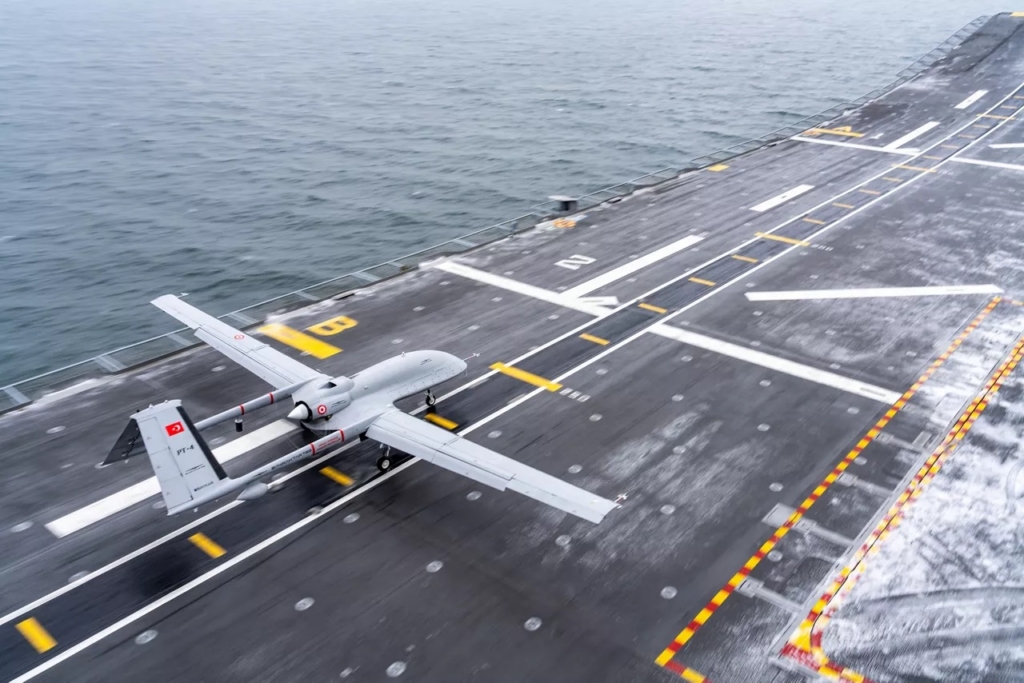
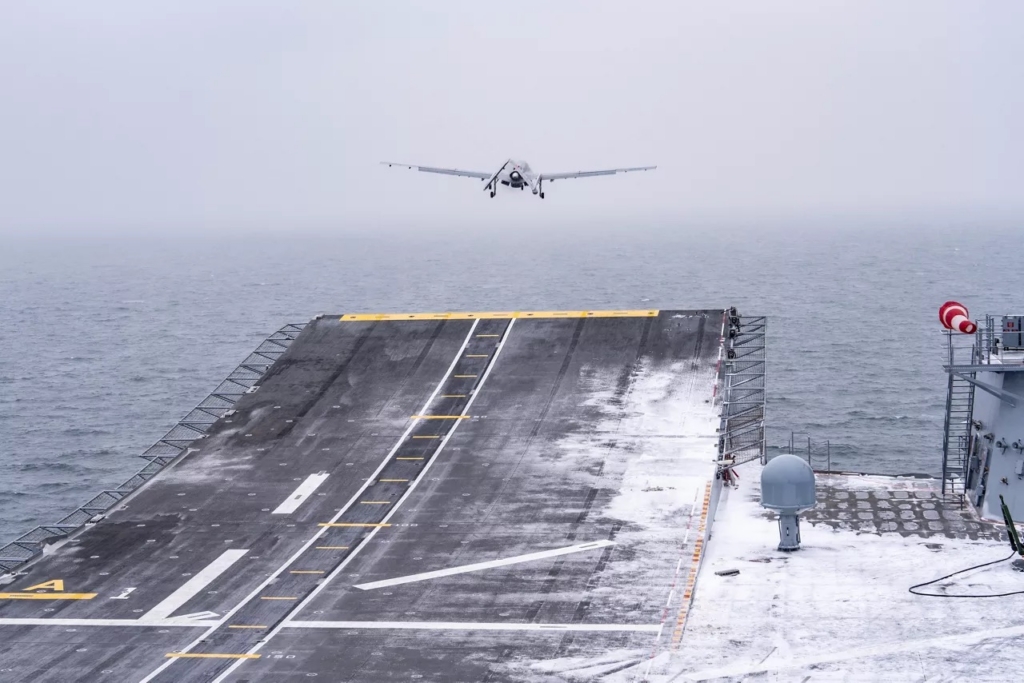
Unlike conventional drones designed for land bases, the TB3 has been developed specifically for short-deck naval operations. It is capable of taking off from ski-jump carriers such as Turkiye’s TCG Anadolu, a configuration similar to Cavour.
Recent demonstrations have drawn particular attention. During NATO’s Steadfast Dart 2026 exercise in the Baltic, TB3 drones successfully operated from Anadolu in harsh winter conditions, autonomously taking off and landing while also conducting live-fire engagements.
For European navies, this is not a minor technical detail. Carrier-compatible fixed-wing drones have long been discussed but remain largely absent from operational service. The TB3, by contrast, is already flying from ships.
That distinction is driving interest well beyond Turkiye.
Europe’s carrier drone gap and why TB3 offers a near-term solution
For years, European defence planners have debated the need for carrier-capable unmanned systems, particularly as navies confront the rising cost and complexity of manned aviation.
Yet progress has been slow.
Analysts point out that while programmes have been studied extensively, few have translated into deployable systems. The TB3, by comparison, offers a near-term option, one that can be integrated without waiting for entirely new development cycles.
“It is the quickest available answer to a capability gap,” Riccardo Gasco, an analyst affiliated with the IstanPol Institute, was quoted by Middle East Eye, reflecting a growing sentiment that Europe may need to look outward, rather than rely solely on domestic programmes.
Leonardo–Baykar partnership enables TB3 integration for the Italian Navy
A key enabler of Italy’s interest lies in the emerging partnership between Baykar and Leonardo.
The two companies have established a joint framework, often referred to as LBA Systems, to explore cooperation in unmanned technologies, including integration into European defence ecosystems.
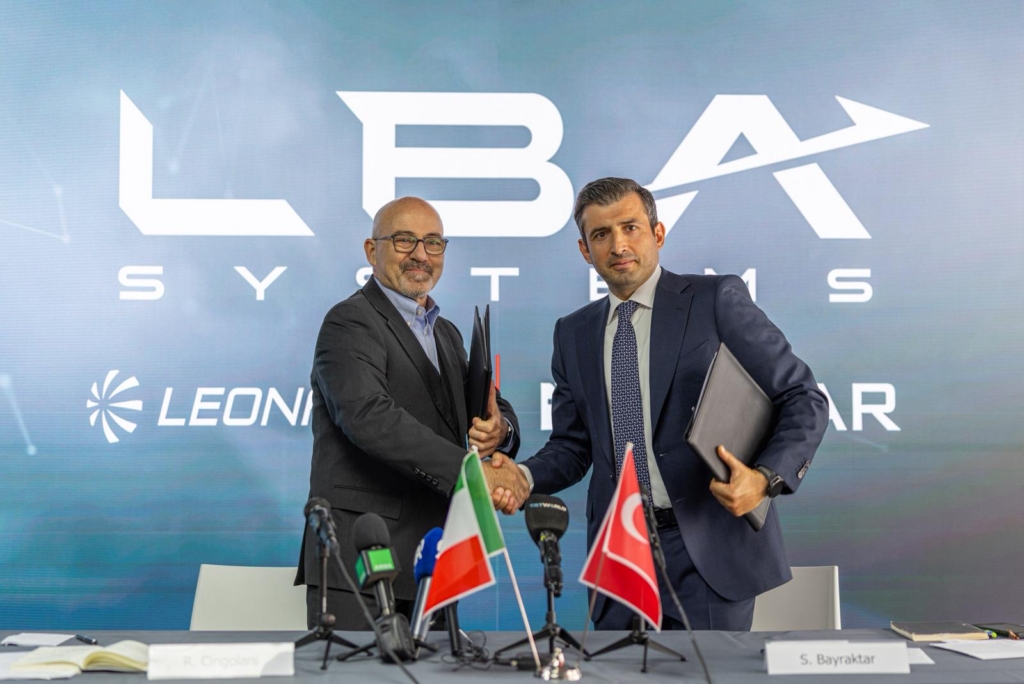
For Italy, this provides a politically and industrially viable route to acquire and adapt the TB3 without stepping entirely outside its domestic defence framework.
It also reflects a broader trend: as European defence policy tightens in some areas, bilateral industrial partnerships are increasingly filling the gaps.
What the Bayraktar TB3 brings to carrier strike groups
The TB3 is not designed to replace manned fighters such as the F-35B, which already operate from Cavour.
Instead, it complements them.
With an estimated payload of around 280 kg and the ability to carry multiple precision-guided munitions, the drone is suited to intelligence, surveillance and reconnaissance (ISR), as well as limited strike missions.
Its value lies in persistence and cost. A TB3 can remain airborne for extended periods, providing continuous surveillance over maritime areas, tracking targets and feeding data back to the carrier group.
It can also undertake lower-risk strike missions without committing high-value manned assets.
In practical terms, this means a carrier air wing that is more flexible and which is capable of distributing tasks between crewed and uncrewed platforms.
The origins of the TB3 concept are rooted in Turkiye’s own naval requirements.
After Ankara’s removal from the F-35 programme, the TCG Anadolu, originally designed to operate the aircraft, was repurposed to host unmanned systems instead. What began as a workaround has since evolved into a distinct operational model. Now, that model is attracting attention elsewhere.
For Italy, adopting a similar approach would not mean abandoning manned aviation, but rather expanding the toolkit available to carrier commanders. It would also mark one of the first instances of a European navy integrating a fixed-wing UCAV into carrier operations.
Italian Navy expands unmanned systems beyond TB3 drones
The TB3 is only part of a wider shift within the Italian Navy.
Bergotto used the parliamentary hearing to outline a broader move towards unmanned systems across the fleet, including smaller UAVs already deployed aboard frigates and newer vertical take-off systems capable of launching loitering munitions.
These systems extend surveillance reach and introduce new strike options, particularly in littoral and contested environments.
The emphasis is not just on acquiring platforms, but on reshaping how they are integrated, bringing operators, developers and data systems closer together as part of a more networked force structure.
If Italy proceeds with the TB3, the implications will extend beyond a single platform. It would signal a broader shift in how European navies think about carrier aviation by moving towards a model where unmanned systems are not an adjunct, but a core component of the air wing.
On deck, that could mean F-35Bs launching alongside drones, and in the air, a layered mix of surveillance, targeting and strike capabilities with crewed and uncrewed aircraft.
Featured image: NATO


