


Top 10 combat aircraft in air forces in 2026

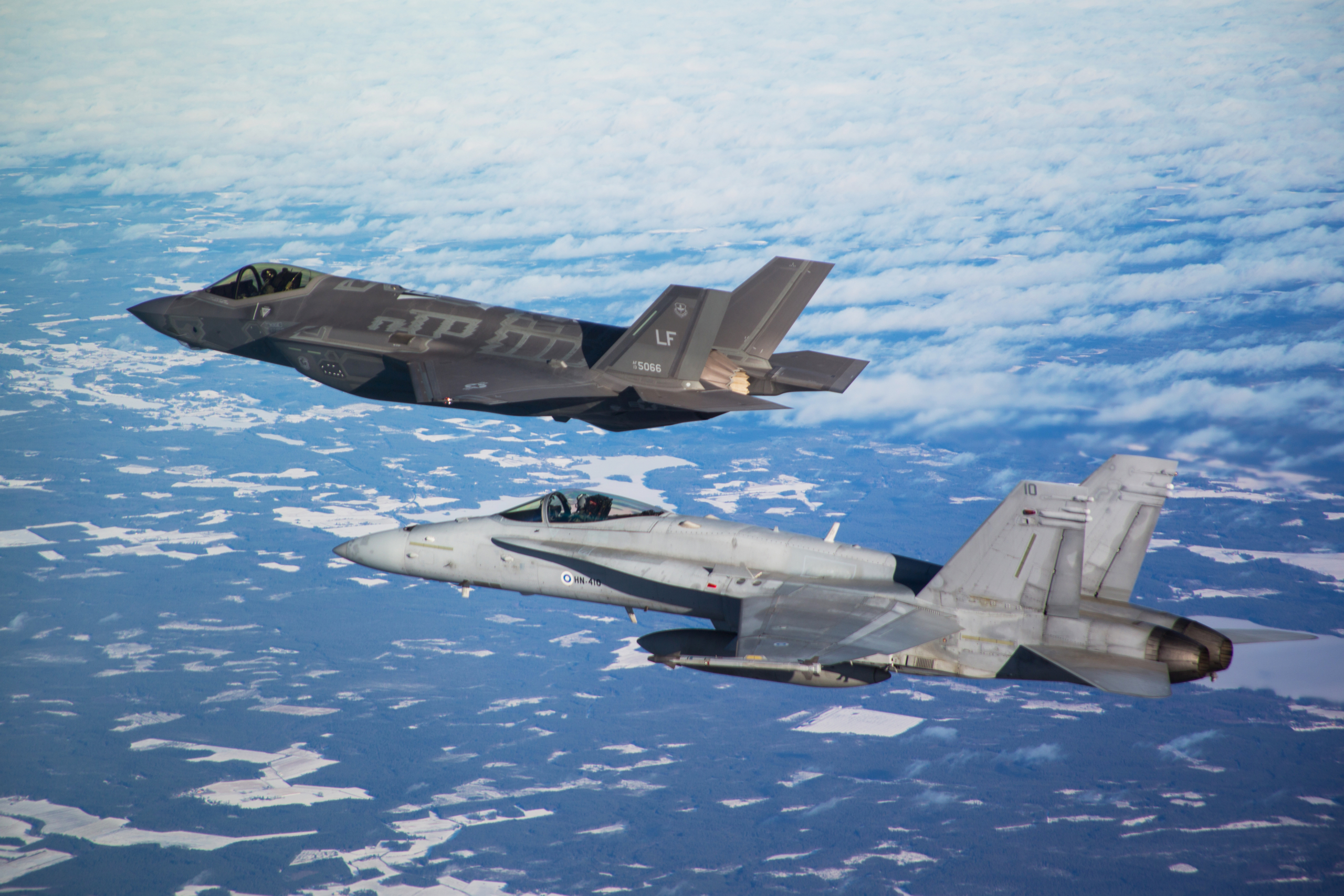
What are the top ten combat aircraft in 2026? That is a very open-ended question, as it could refer to the most common, the most advanced, the most popular, or a bunch of other things.
Combat aircraft is a category of warplanes that includes everything from the Embraer EMB 312 Super Tucano turboprop to the upcoming Northrop Grumman B-21 Raider. Here are some things to know about the world’s 2026 combat aircraft.
Most common combat aircraft
Sometimes it is difficult to estimate how many combat aircraft remain in service. Many old jets used by poorly funded air forces are little more than paper planes rotting on the tarmac, counted by OSINT accounts using satellite imagery.
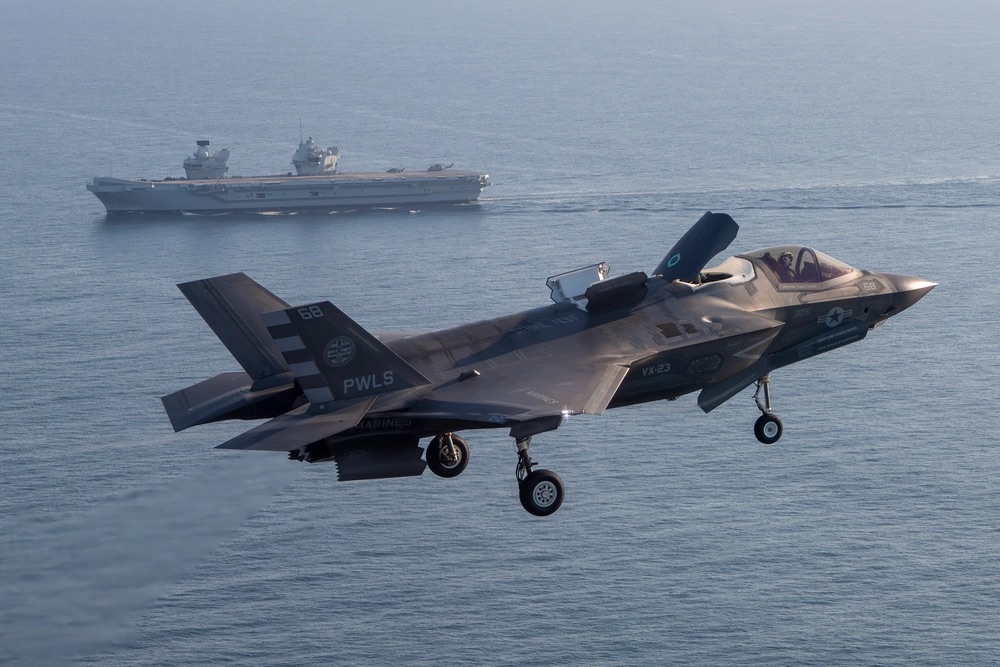
As a starting point, FlightGlobal uses Cirium data to compile a list of the most common combat aircraft in 2026.
Most common combat aircraft 2026 (per FlightGlobal):
- F-16 Fighting Falcon: 2,102
- Su-27/30/34/34/35 Flanker series: 1,299
- F-15 Eagle family: 897
- F-35 Lightning II: 883
- MiG-29 Fulcrum: 728
- Chengdu J-7/F-7: 649
- Eurofighter Typhoon: 528
- Su-24 Fencer: 383
- Su-25 Frogfoot: 371
This list provides a useful starting point, but it has plenty of issues. By the end of 2025, Lockheed Martin reported having delivered almost 1,300 aircraft. Another 20-30 may have already been delivered in the first six weeks of 2026.
This means the F-35 may now be the second most common fighter jet in the world in terms of active airframes.
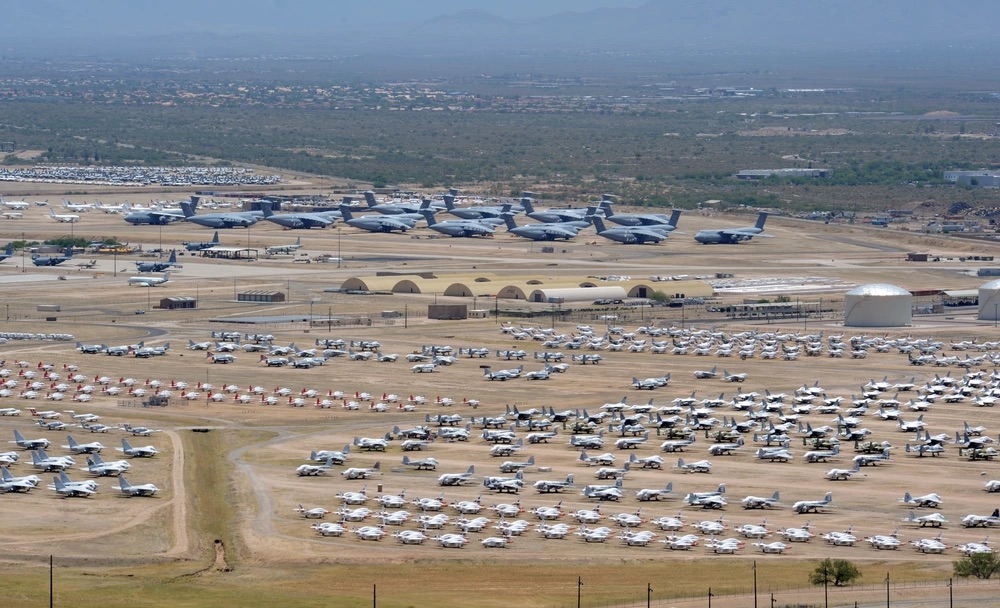
The MiG-29, Su-27 family, Su-24, Su-25, and especially the Chengdu J-7 family are likely exaggerated and include many airframes parked at airbases, but unserviceable, similar to counting US fighter jets parked and stripped for parts in the Davis-Monthan Air Force Base.
The Chengdu J-7 (based on the MiG-21) is mostly out of service at this point as a fighter jet. China is completing its retirement of them. About half (387) of the 649 reported in service are Chinese, while many of the rest are North Korean, and many of these are unserviceable.
Russia is listed as having 235 MiG-29s and 260 Su-24s in service. But it’s unclear how many of these are operational. Even those that are operational are rarely, if ever, still used by Russia for frontline duties.
Tenative partially adjusted combat aircraft 2026:
- F-16 Fighting Falcon: 2,102
- F-35 Lightning II: 1,300 (approx.)
- Su-27/30/34/34/35 Flanker series: 1,299 (maybe less, about 410 modern Russian Su-30/34/35s)
- F/A-18 family: 1,200 (inc. Growlers)
- F-15 Eagle family: 897
- MiG-29 Fulcrum: 728 (maybe much less)
- Chengdu J-10: 550+
- Eurofighter Typhoon: 528
- Shenyang J-16: 450
- Rafale/Chengdu J-20: 300+
What is interesting is that if largely obsolete aircraft like the Su-24, Su-25, and J-7 drop out of the list, it makes room for the aircraft like the Rafale, Chinese J-20, J-10, and J-16.

Rusi estimated China had 550 J-10s and 450 J-16s in service at the start of 2026. In 2025, Dassault announced it had delivered the 300th Rafale, while OSINT accounts found the 300th J-20 had been delivered based on serial numbers.
Strangely, the list also excludes the F/A-18 family entirely. There are around 1,200 of the family jets in service, including around 470 legacy Hornets, over 600 Super Hornets, and 170 EA-18G Growler EW aircraft.
Top 5th-gen fighter jets in 2026
If the topic switches to the most capable fighter jets, this becomes much more difficult to assess. What mission set and budget does an air force require and have?

The Lockheed Martin F-22 Raptor is considered the best air dominance fighter, while the F-35 Lightning II is the most advanced fighter jet by a considerable margin.
The F-22 is a one-trick pony designed for air-to-air missions, while the F-35 is a multirole fighter designed to penetrate enemy air defences and destroy them.
The F-35 also benefits from enormous economies of scale and a seemingly bottomless development and sustainment budget. According to some estimates, the F-35 accumulated around 20,000 combat hours in 2025 and is still maturing. The F-35 is widely regarded as an aircraft in its own category.
The Chinese J-20 is also benefiting from economies of scale, although its capabilities are much more opaque. More time is needed to assess the new J-35 and for it to mature.

Even if the Su-57 Felon was a good design, it simply lacks the economies of scale, the financial backing, and the precision industrial backing to mature it into any true J-20 or F-35 competitor. Making matters worse is that Russia lacks the force-multiplying ecosystem (advanced data links, off-board sensing, space-based cueing, etc.) that NATO air forces enjoy.
Other top combat aircraft of 2026
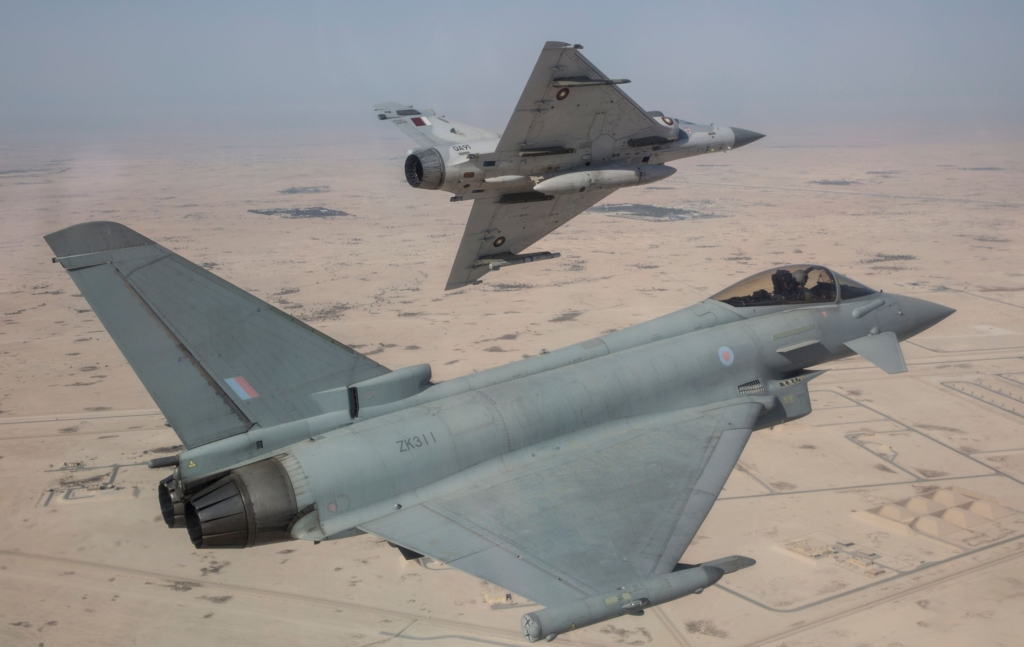
The main frontline 4th/4.5th generation fighters in 2026 include the US F-16, F-15E/EX, and F/A-18 Super Hornet. The top European fighter jets are the Rafale, Eurofighter Typhoon, and Saab Gripen. Others include the Chinese J-10C and J-16 and the Russian Su-34 and Su-30/35.
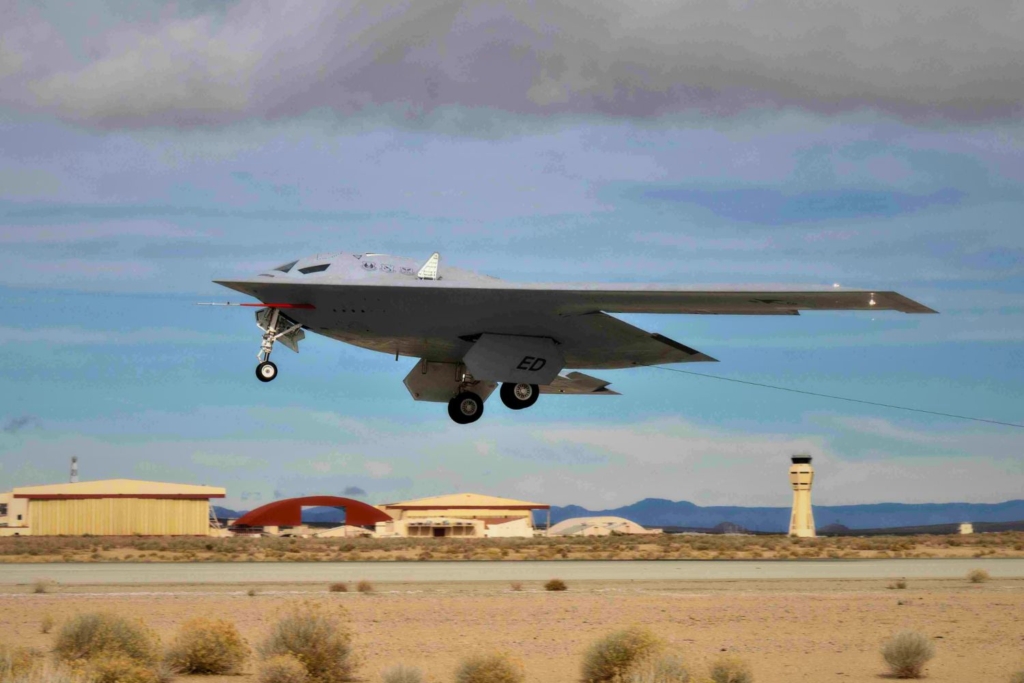
The world’s only stealth bomber in service remains the Northrop B-2 Spirit. However, it is soon to be joined by the next-generation B-21 Raider, of which the US Air Force already has multiple examples in testing and training.
Popular light fighters include the KAI T-50 Golden Eagle, Alenia Aermacchi M-346 Master, and Yakovlev Yak-130. The US Air Force is gearing up for the next-generation Boeing T-7 Red Hawk advanced jet trainer that could be adapted as a light fighter.
The Embraer EMB 312 Super Tucano is an example of a turboprop aircraft trainer and light attack aircraft in production that superficially resembles WWII-era fighters.
Top export combat aircraft of 2026
The Turkish KAAN, South Korean KF-21, Chinese J-35, Indian Tejas, and Russian Su-57 are either still in development or in low production and not yet relevant on the export market. There is also an export ban on the J-20, while F/A-18 production is coming to an end.
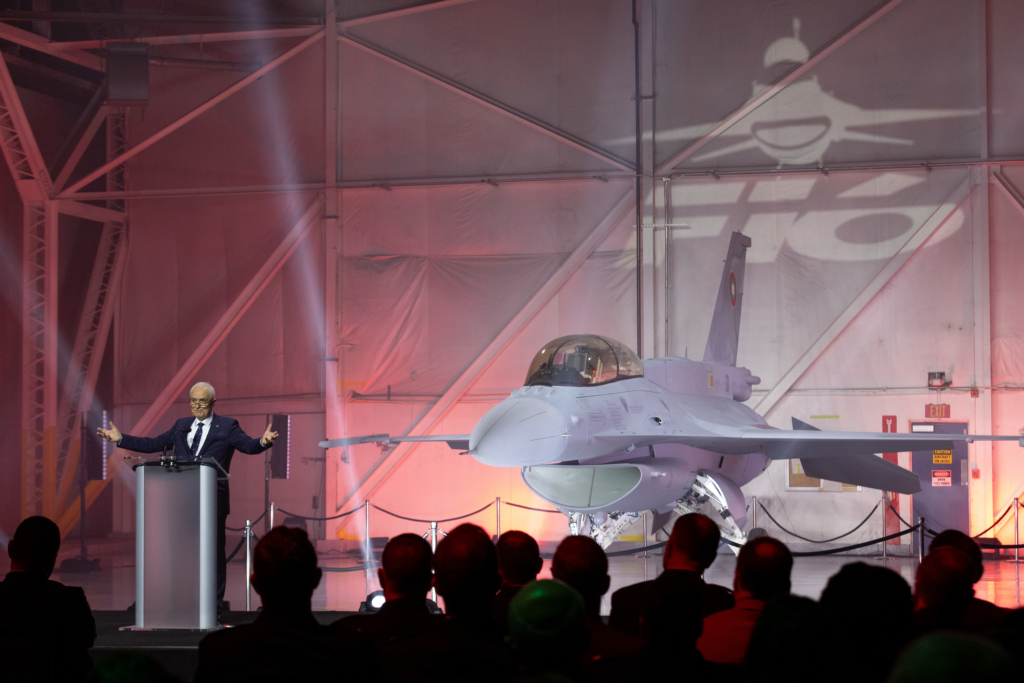
The most popular fighter jets on the export market are the F-35 (by far), the F-16 Fighting Falcon Block 70, and the French Rafale. The Saab Gripen’s export potential remains unclear, with the new military government in Peru reportedly cancelling its order, and questions remaining over Canada and Ukraine.
The Eurofighter has had some export success, but orders are more concentrated in its home European countries than the Rafale.
In 2017, the US passed the CAASTA act effectively banning most countries from purchasing Russian fighter jets. The Su-30/35’s sales then collapsed. There are some orders from Iran, Myanmar, Belarus, and Algeria, but these are limited. Large question marks are over Iranian purchases.

Purchasing Chinese fighters carries significant geopolitical baggage, while some countries are reluctant to purchase US fighters. It seems the main beneficiary of CAASTA was not US fighters, but the French Rafale.
With Russia effectively removed from most of the export market, France’s Rafales become an attractive option for countries like Indonesia, Serbia, and possibly Vietnam. India is a special case as it produces its own Su-30MKIs under license, as well as getting ready for a massive new Rafale order.
Interestingly, the Sino-Pakistani JF-17 Thunder may be emerging as a low-end and affordable export fighter jet.
Featured Image: Finnish Air Force


