Ireland’s forgotten jumbo jets: The rise and fall of Aer Lingus’ 747s

5 min read
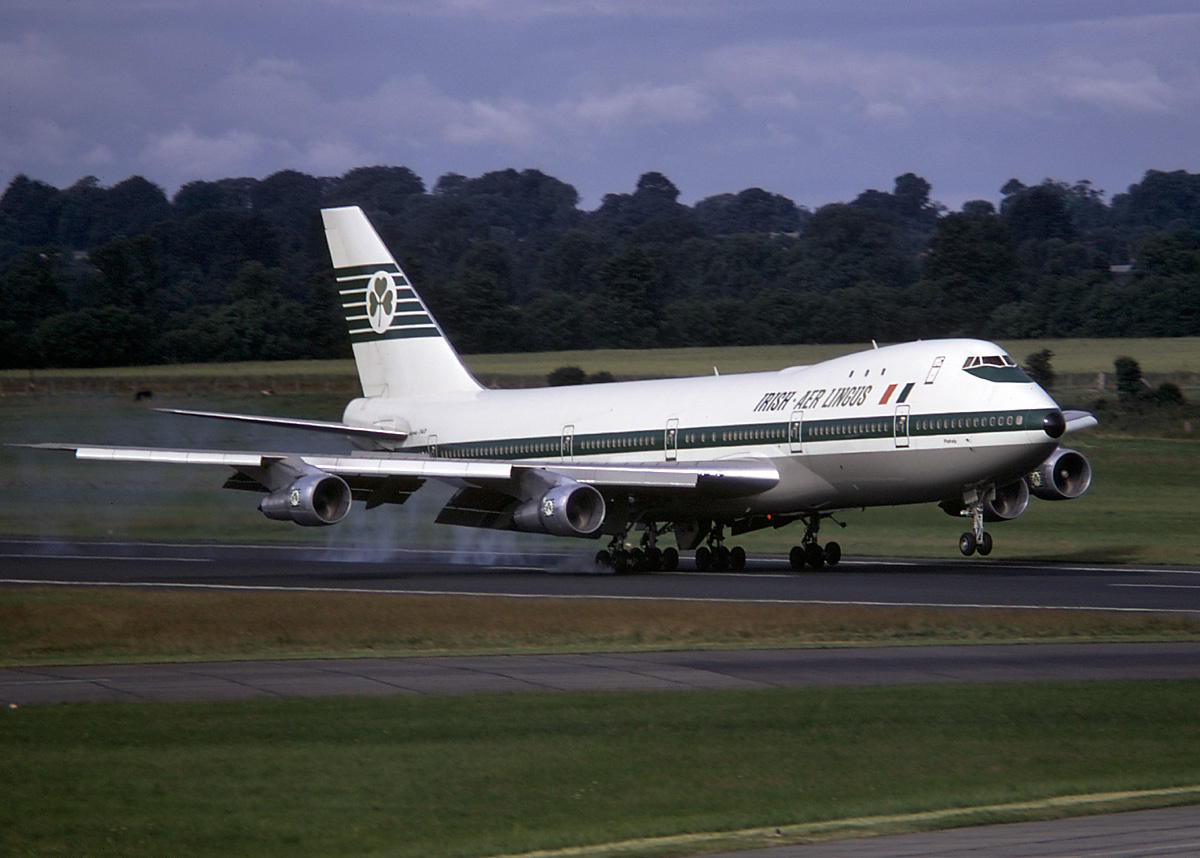
For nearly a quarter of a century, the Boeing 747 was the most visible symbol of Aer Lingus’ long-haul ambitions. The Irish flag carrier was among the early adopters of the jumbo jet, operating the type from the early 1970s until the mid-1990s.
Aer Lingus never operated a large 747 fleet, nor did it fly the later, more capable variants that became the backbone of other carriers’ long-haul networks. Its experience with the world’s most distinctive widebody is an interesting case study in how airline scale, economics, and changing technology ultimately determined the fate of the Queen of the Skies.
Aer Lingus entered the jumbo jet era in 1971
In March 1971, Aer Lingus took delivery of its first Boeing 747-100, becoming one of the first European airlines to introduce the type into scheduled service. During that era, the 747 transformed long-haul aviation, increasing capacity and reducing seat-mile costs.
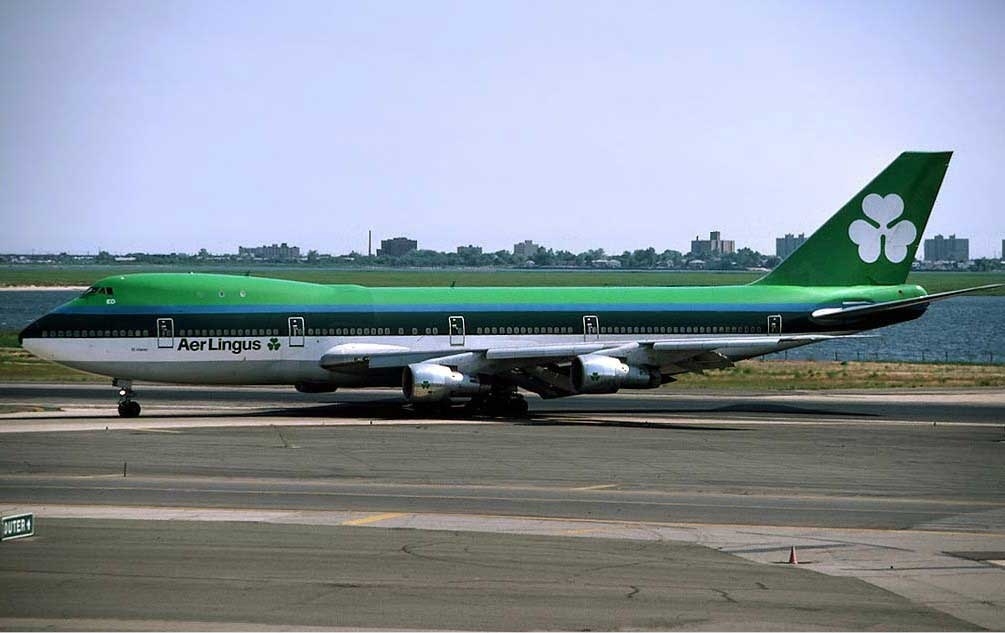
Adding the aircraft to Ireland’s flagship fleet signified the country’s ability to operate intercontinental air services at scale. Air Lingus operated the Boeing 747 primarily on transatlantic routes, particularly between Dublin and New York, where Irish-American demand supported high-density operations.
Over time, the airline would operate a total of three Boeing 747-100 aircraft. Unlike other European carriers that operated the type, including British Airways and Lufthansa, Aer Lingus never operated the updated 747-200 or 747-400 variants.
A small Boeing 747 fleet with high costs and big constraints
From the outset, scale constrained Aer Lingus’ 747 operations. Operating just three aircraft—and at times fewer—left Aer Lingus little margin for operational resilience. Any heavy maintenance event, technical issue, or seasonal dip in demand could quickly render the aircraft uneconomic.
Its route network did not have the breadth to accommodate four-engine widebodies completely. On Irish long-haul routes outside the summer peak, Aer Lingus had difficulty consistently filling a 747. To offset costs and maintain high utilization, the airline often leased its aircraft to other carriers.
Aer Lingus 747s were operated by several airlines over the years, including British Airways, British Caledonian, Air Jamaica, Air Siam, Air Algérie, and LAN Chile, sometimes operating far from their Irish base. These arrangements were financially necessary for the airline, reflecting a mismatch between Aer Lingus’ core network and the aircraft’s size.
The Boeing 747’s operational economics fail for Aer Lingus
By the late 1980s and early 1990s, long-haul flying was experiencing rapid economic changes. The development of reliable engines and ETOPS regulations enabled twin-engine aircraft to fly overwater routes previously reserved for larger jet aircraft.
Early 747s faced a direct threat from this shift in aircraft design. Although it was a revolutionary aircraft in its day, the 747-100 was fuel-hungry, and maintenance-intensive. It was increasingly outclassed by newer widebodies that offered similar range at significantly lower operating costs.
For a mid-sized carrier like Aer Lingus, the financial calculus was unforgiving. Operating a four-engine aircraft no longer made sense when newer twin-engine aircraft could deliver comparable performance with lower crew, fuel, and maintenance costs—and with greater scheduling flexibility.
Aer Lingus shifts to the Airbus A330
Aer Lingus’ strategic response came in the early 1990s with the introduction of the Airbus A330. In 1994, the airline became one of the first European carriers to operate the A330 on ETOPS-approved North Atlantic routes, replacing its four-engine aircraft.
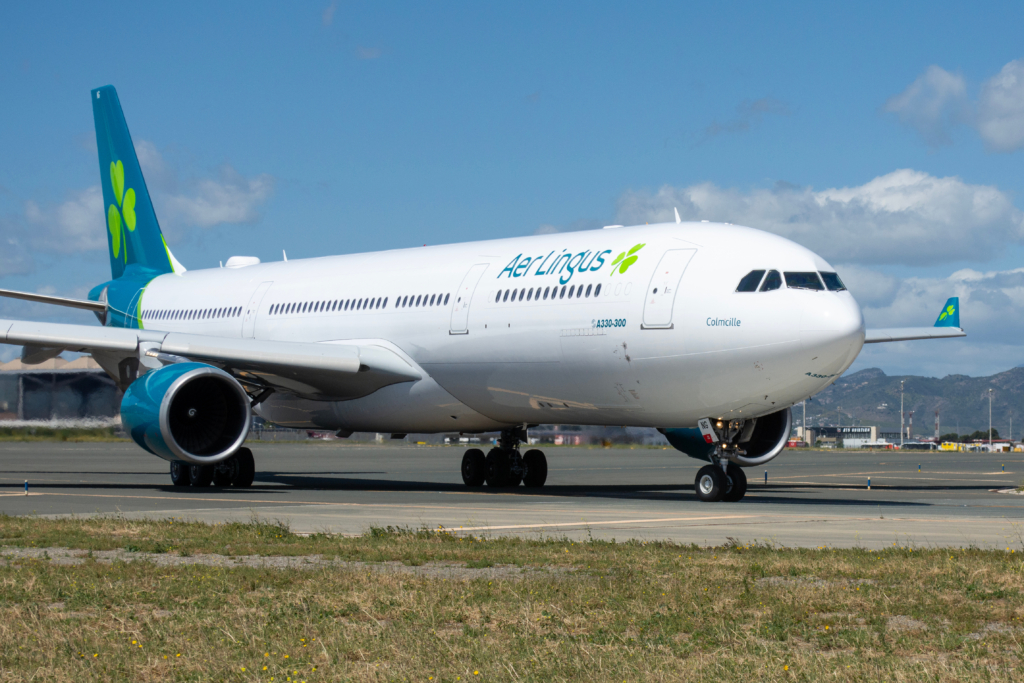
The A330 offered Aer Lingus exactly what the 747 could not: right-sized capacity, modern avionics, lower fuel burn, and far greater efficiency on thinner long-haul routes. Crucially, it allowed the airline to maintain transatlantic connectivity without the commercial risk of consistently filling a jumbo jet.
As A330 deliveries ramped up, the role of the 747 diminished rapidly.
The final Aer Lingus Boeing 747 flights
Aer Lingus’ last scheduled Boeing 747 service took place on 2 October 1995, closing the chapter on an aircraft type that had defined its long-haul image for over two decades. Unlike the fanfare that accompanied 747 retirements at some global carriers, the Aer Lingus exit was pragmatic rather than sentimental—it was a fait accompli.
What happened to Aer Lingus’ Boeing 747 aircraft?
Each of Aer Lingus’ three 747s followed a different post-Irish path, though none survived into the Boeing 747 preservation era.
- EI-ASI (“St Patrick”), the airline’s first 747, left Aer Lingus service in the late 1990s and was sold to Nigerian operator Kabo Air, where it flew as 5N-ZZZ before being scrapped in 2003.
- EI-ASJ, another long-serving aircraft, was sold to Kabo Air (registered 5N-AAA) after extensive leasing to other carriers. It remained in intermittent service for years before being scrapped in 2012, making it the last surviving former Aer Lingus 747.
- EI-BED, acquired second-hand from Lufthansa in 1979, spent much of its life leased abroad and was withdrawn from use in 1994, shortly before the type’s full retirement. It was scrapped in 1996.
None of the Aer Lingus Boeing 747-100 aircraft were preserved in museums, as its early-generation 747 retirements were more practical than nostalgic.
Why Aer Lingus never took a second look at the 747
Aer Lingus never considered other jumbo jet variants. As the 747-400 entered service, the airline’s strategy had shifted to more efficient, medium-capacity long-haul aircraft rather than very large widebodies.
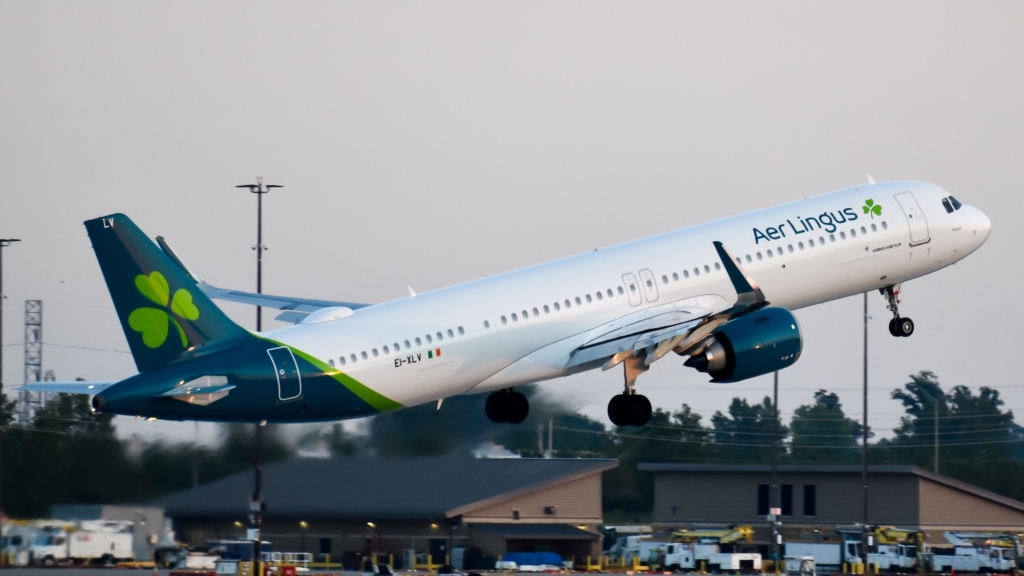
The airline has continued this practical approach to its long-haul fleet, adding the Airbus A321LR and A321XLR, which now form the backbone of Aer Lingus’ transatlantic expansion strategy. It is a significant contrast to the jumbo-centric thinking of the 1970s, but one that works far better for the Irish flag carrier.
Practicality shaped Aer Lingus’ Boeing 747 legacy
Aer Lingus’ Boeing 747 era reflects both ambition and restraint. The airline embraced the world’s largest passenger aircraft at a time when doing so signalled global relevance. It also recognised, earlier than many, when the economics no longer worked.
The retirement of the 747 was a recalibration for the airline, with Aer Lingus favouring flexibility over scale, frequency over spectacle, and efficiency over prestige. These decisions helped ensure the airline’s long-term survival in one of aviation’s most competitive markets.
Aer Lingus’ green-tailed 747s exist only in photographs and memories today. Their story illustrates how even the most iconic aircraft must ultimately adapt to airline operational realities.
Featured Image: Steve Williams | Wikimedia Commons