


Beirut-bound: Air Côte d’Ivoire plans long-haul expansion powered by brand-new Airbus A330-900neos

3 min read

Air Côte d’Ivoire is planning to spread its wings to yet another long-haul destination with the launch of flights from Abidjan to Beirut. The plans have long been in the works, with an initial launch date slated for 4 January 2026. It has since delayed its plans, pushing the inaugural flight to 29 March, 2026 with three weekly flights.
Its newly delivered fleet of two Airbus A330-900neos are to be deployed on the sector, dividing their time between service to Lebanon and on the carrier’s flight to Paris.
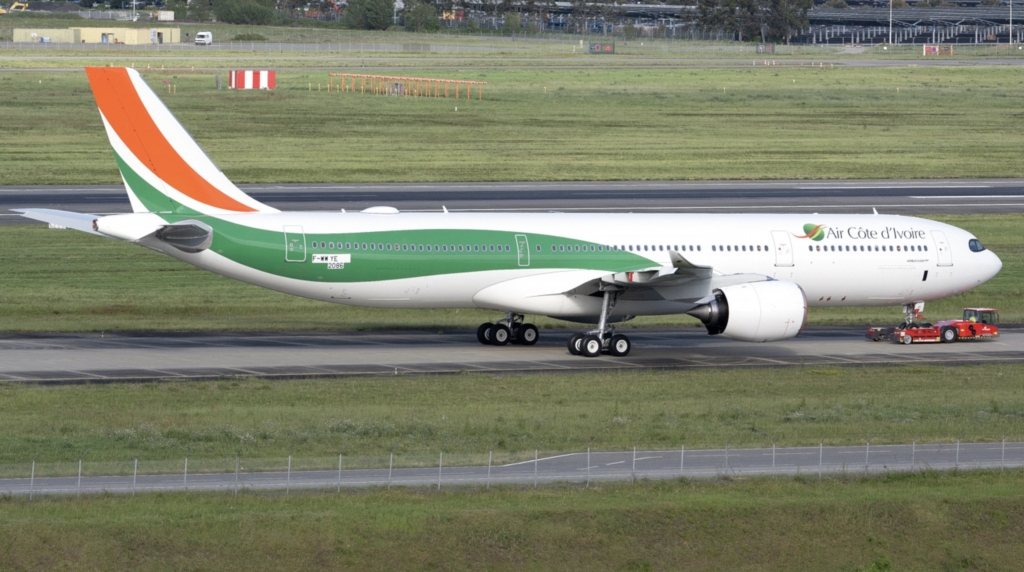
As reported in this week’s schedule update, Air Côte d’Ivoire is also increasing flights on the Abidjan-Paris route from daily to 8 weekly from summer 2026. It has adjusted flight times as well, with a mix of early and late-morning departures from France.
Beirut launch planned for March 2026
As outlined in the carrier’s filings to schedules, Air Côte d’Ivoire will be adding service to Beirut from 29 March, 2026. The three weekly flights will depart Abidjan in the afternoon, landing in Lebanon at around midnight. The return service will depart roughly six hours later, landing in Abidjan at around midday. Flights are already available for booking on the carrier’s website.
Air Côte d’Ivoire – Abidjan to Beirut flight schedule
| Flight | Origin | Destination | Departure | Arrival | Days of operation |
| HF910 | Abidjan (ABJ) | Beirut (BEY) | 14:40 | 00:05 (+1) | Tuesday, Thursday, Sunday |
| HF911 | Beirut (BEY) | Abidjan (ABJ) | 06:35 | 12:00 | Wednesday, Friday, Monday |
The airline has no non-stop rivals on the sector but faces considerable one-stop competition with the likes of Ethiopian Airlines, Turkish Airlines and even Royal Air Maroc despite the backtracking. All airlines are well-established, particularly those from the region surrounding Lebanon.
There demand pool is considerable for both Beirut and Paris, but is well-served already. Its non-stop connection will slash flight times, but pricing remains competitive on many of its rivals. Below is an example, with prices correct at the time of publishing.
Example Economy Class round-trip fares: Abidjan – Beirut (Thu 16 July to Fri 24 July)
| Price | Airline | Total flight time | Stop details |
| £617 (€722) | Turkish Airlines | 11 hrs 15 min | 1 stop – 1 hr 55 min in Istanbul (IST) |
| £731 (€854) | Ethiopian Airlines | 11 hrs 25 min | 1 stop – 50 min in Addis Ababa (ADD) |
| £796 (€928) | Royal Air Maroc | 11 hrs 15 min | 1 stop – 1 hr 30 min in Casablanca (CMN) |
| £939 (€1,095) | Air Côte d’Ivoire | 6 hrs 25 min | Non-stop |
The airline took delivery of its first A330neo last year. Though the carrier’s A330neo product is modern, its reputation has taken a hit. Notorious flight reviewer Josh Cahill recently accused the carrier of scamming him on its brand-new Paris route.
Why the long-haul strategy is risky
Air Côte d’Ivoire becomes the latest carrier in the region to attempt a venture into the long-haul market. It is not an easy segment, particularly considering heavy competition on key markets in Europe and the Middle East.

Air Senegal learnt this the hard way, expanding rapidly into Europe before downsizing considerably. It now flies to Paris and recently launched Brussels with a narrowbody Airbus A320.
African aviation expert and consultant Sean Mendis told Aerospace Global News: “While on paper the markets between Abidjan and both Paris and Beirut seem large, they are both well served already.”
“I fear that Air Cote D’Ivoire suffers from delusions of being able to capture instant market share despite a lack of track record and distribution networks in the destination markets,” he continued.
The carrier has big ambitions. It plans to launch flights to New York further down the line – also something that Air Senegal had tried (and failed). It closed the route citing “rising fuel costs and strong competition.”
Featured image: Airbus
Sign up for our newsletter and get our latest content in your inbox.


More from

September 4, 20264 min read


