


Japan accuses Chinese J-15 of twice locking radar on F-15 jets near Okinawa

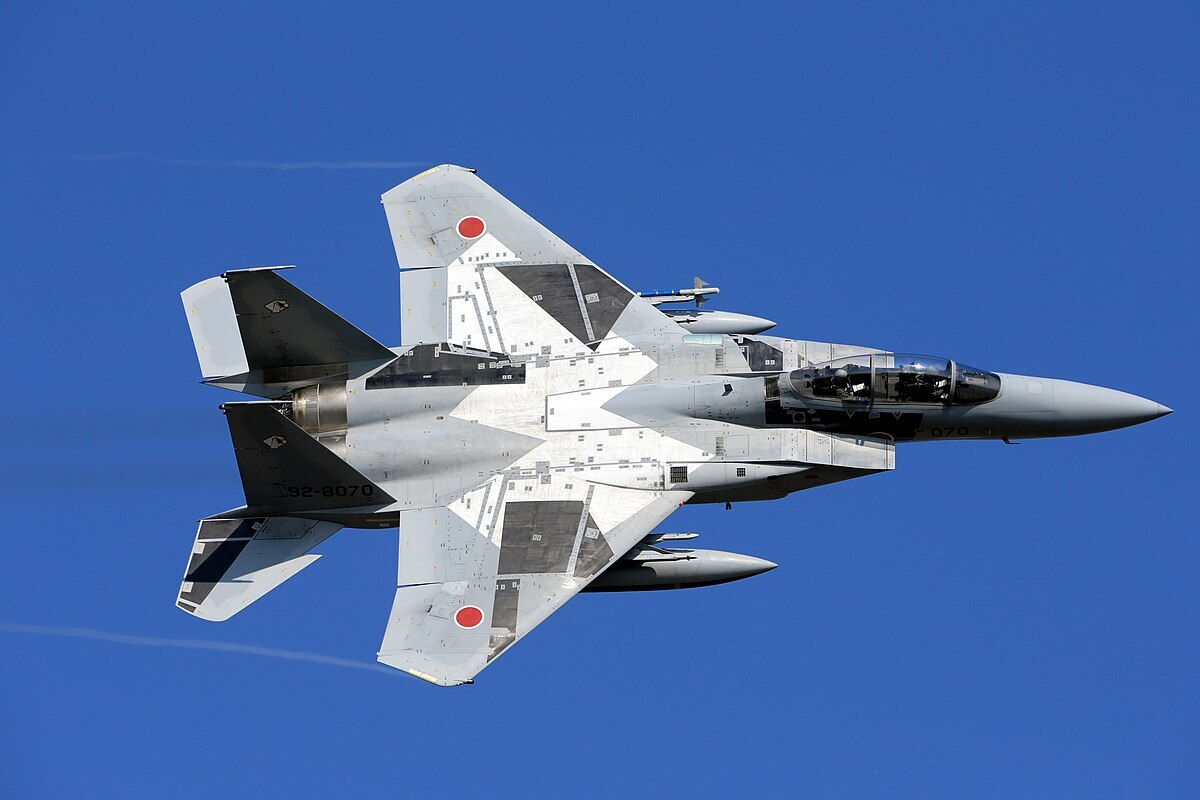
Tensions jumped on Sunday after Japan said a Chinese carrier-based J-15 fighter jet twice locked its radar on Japanese F-15s. The incident occurred near the southern Japanese Ryukyu Islands.
Japan accuses Chinese fighters of locking radar
According to The Guardian, Chinese warplanes are accused by Japan of targeting Japanese jets with their radars near the Okinawa Islands. In response, Japan’s prime minister, Sanae Takaichi, said the country would “respond calmly and resolutely.” Japan has already summoned China’s ambassador to protest.

She said Japan would take all possible measures to strengthen its maritime and airspace surveillance and monitor China’s miltiary activities.
Japan said it recorded 100 fighter jet take-offs from China’s first aircraft carrier, the Type 001 Liaoning. The country said that Chinese J-15 aircraft locked their fire-control radars on Japanese F-15s twice over a period of two hours.
Chinese fighter jets locked fire-control radar on Japanese F-15s for the first time Saturday, Japan’s Defense Ministry said.
— Clash Report (@clashreport) December 7, 2025
Prime Minister Sanae Takaichi called the move “extremely unfortunate,” saying Japan lodged a strong protest and would respond “calmly and firmly.”… pic.twitter.com/55YqIO69HW
The Guardian notes that a fire-control radar lock is one of the most threatening acts a military aircraft can take because it signals “a potential attack, forcing the targeted aircraft to take evasive action.” This is the first time Japan has made this accusation against China.
China denied the accusation, accusing Japan of intruding
For its part, China has dismissed Japan’s accusations and has instead responded with counterprotests. China’s Foreign Ministry spokesperson, Guo Jiakun, accused Japan of flying its jets into a Chinese military exercise.
#ICYMI: An American F-35B has landed on a Japanese destroyer for the first time, marking a milestone in U.S.-Japan cooperation. We're proud to power the F-35B with the only STOVL technology in production, enhancing deterrence with our allies.
— Rolls-Royce (@RollsRoyce) November 12, 2024
More here: https://t.co/i0NJRqqFED pic.twitter.com/hFZYDVzENE
China’s state-run English-language website, Global Times, reported, “Guo stated that the key to the incident lies in that Japanese fighter jets unauthorizedly intruded into the Chinese side’s exercise and training area, conducted close-in reconnaissance and interference with Chinese military activities…”
While much attention is given to the US and China Great Power Competition, less is given to the concurrent Chinese and Japanese competition.
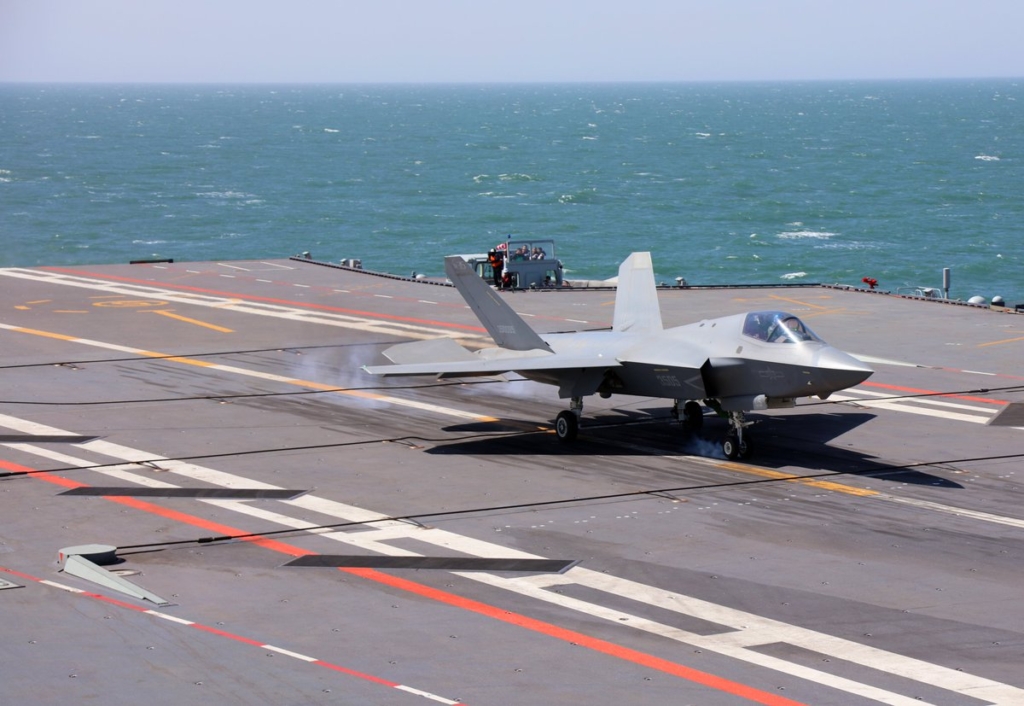
China is rapidly building its navy and air power with new aircraft carriers and fighter jets, including the carrier-based 5th-generation J-35 fighter jet entering service in 2025.

Meanwhile, Japan is converting two of its helicopter docks into aircraft carriers carrying the F-35B 5th-generation fighter jet, while also developing the 6th-generation GCAP/Tempest fighter jet with the UK and Italy.
Get the latest aerospace defence news here on AGN.
Geopolitical context of Sino-Japanese tensions
The relations between China and Japan have been strained for years, if not centuries. However, they are becoming more strained as China develops its military and becomes more assertive of the islands it claims in the Eastern Pacific.
Japan is a vital part of the First Island Chain, where the US and its Allies have fortified a string of islands extending from Japan to Taiwan and onto the Philippines.
Japan recently had an election that saw Sanae Takaichi elected as Prime Minister. Takaichi is seen as a hawk on China and has said that the security of Taiwan is part of Japanese self-defence. This, and other statements, have enraged China.
Taiwan was part of Japan for 50 years and the island shares deep cultural ties with Japan.
As tensions have escalated, China’s Global Times published an article questioning the legitimacy of Japan’s claim to the southern Ryukyu Islands. The piece called for more research into the status of the islands.
Chinese officials are concerned that Japanese PM Takaichi will loosen restrictions on Japan’s military use of force, as Chinese fighter jets lock radar on Japanese planes. Why else is Beijing escalating tensions?@ChinaPowerCSIS & @JapanChair discuss: https://t.co/V9iD7NcT8k
— CSIS (@CSIS) December 8, 2025
The Ryukyu Islands were once an independent country that was both a tributary state of China (the Ming and Qing dynasties) and Japan after 1609. Since 1879, the islands have been formally part of Japan, although there was a period of American rule after WWII.
Featured Image: Wikimedia Commons


