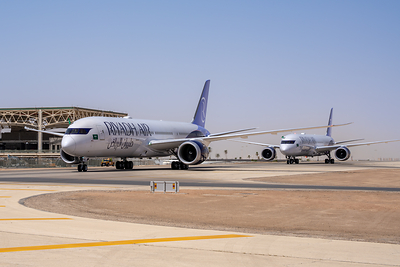
Hainan Airlines takes delivery of China’s first Airbus A330neo

3 min read
Hainan Airlines has taken delivery of China’s first Airbus A330neo, marking a significant milestone for both the carrier and Airbus’ slow-to-sell new-engined widebody.
The aircraft – an A330-900 – was handed over from Airbus’s Toulouse assembly line and flown to Hainan Airlines’ Haikou base.
Hainan Airlines’ new A330neo
Configured with 24 business-class and 277 economy-class seats, the wide-body has been tailored for Hainan Airlines’ mix of regional and long-haul operations.
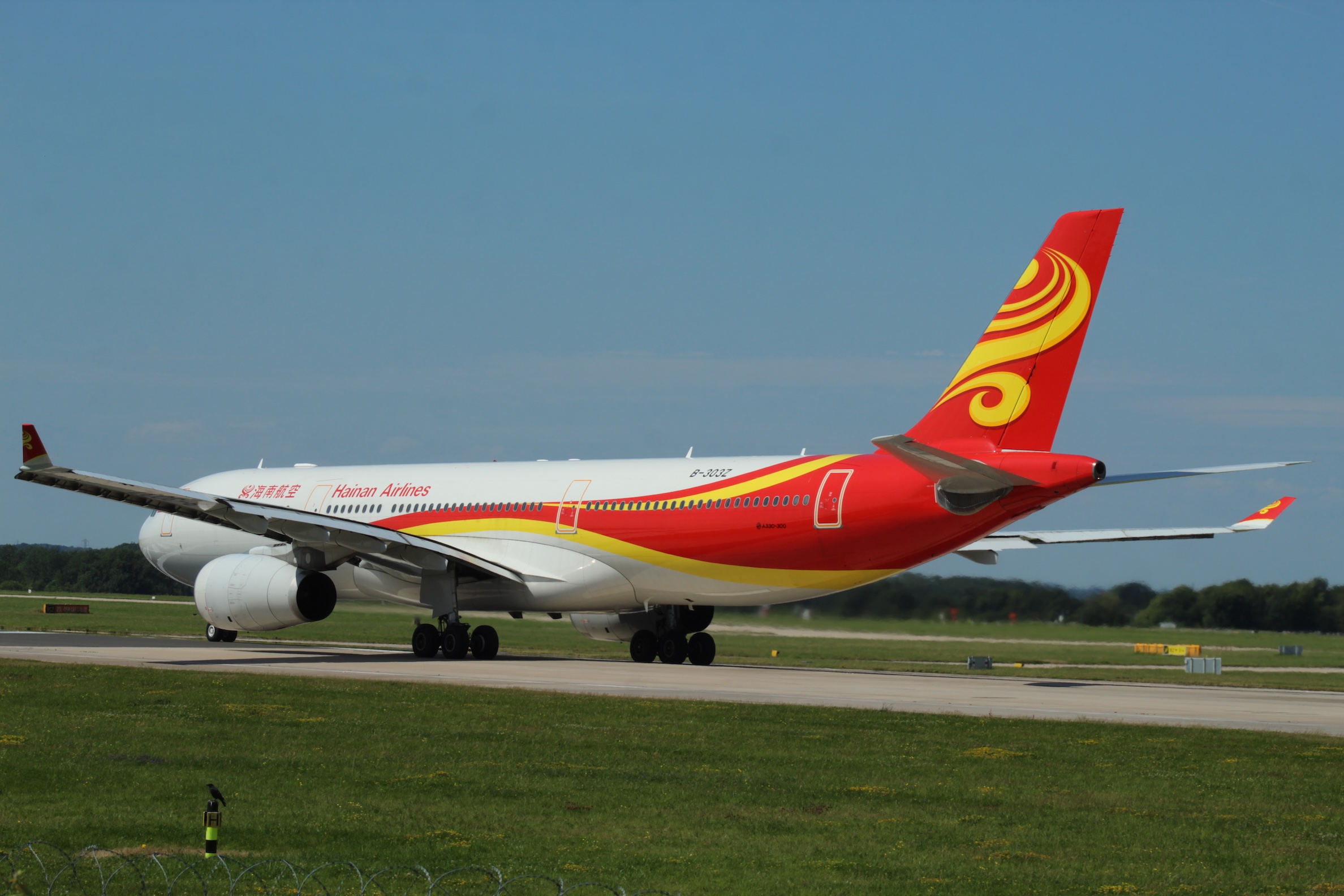
It joins Hainan’s existing fleet of A330ceos (pictured above), comprising -200s (five) and -300s (22). The neo aircraft will gradually replace older widebodies on international routes. The carrier has a further three A330neos on order.
The A330neo is powered by Rolls-Royce Trent 7000 engines and incorporates a new wing design and advanced aerodynamics, giving up to 25% greater fuel efficiency compared with previous-generation A330s.
These improvements will help Hainan reduce emissions while offering a quieter, more comfortable cabin experience.
The delivery comes as Hainan rebuilds its global network following the post-pandemic reopening of China’s international markets.

The airline has seen a sharp rise in overseas demand and is planning to restore capacity to pre-2019 levels by the end of the year.
The A330neo will be deployed on long-haul routes linking China with Europe, Australia and Southeast Asia, where its range and economics make it ideally suited to medium-density services.
New market for the A330neo
For Airbus, the milestone represents the type’s entry into one of the world’s largest twin-aisle markets.
Launched in 2014, the Airbus A330neo programme was designed to extend the life and competitiveness of the successful A330 family by incorporating new-generation technologies while retaining the type’s proven reliability and operating economics.
Available in two variants – the A330-800 and the larger A330-900 – the programme aimed to offer airlines a lower-cost alternative to the A350 and Boeing 787, while maintaining commonality with earlier A330 fleets.
Key upgrades include the Rolls-Royce Trent 7000 engines, reshaped wings with Sharklets, and an advanced Airspace cabin interior.
While the A330neo has found a solid niche, its sales trajectory has been moderate rather than spectacular.

As of 2025, total orders stand in the mid-400s, with more than half of those aircraft delivered. The A330-900 has attracted the overwhelming majority of sales, with the smaller A330-800 securing only limited interest from operators such as Kuwait Airways and Uganda Airlines.
Demand for the type has been strongest among carriers modernising mid-sized widebody fleets, including Delta Air Lines, TAP Air Portugal, Condor, Garuda Indonesia, and Virgin Atlantic.
Airbus has also secured new commitments in Asia and the Middle East, as fuel prices and environmental targets renew interest in efficient twin-aisle aircraft.
Although the A330neo has not matched the order volume of the Boeing 787 or A350, it continues to provide Airbus with a competitive, profitable product line.
AIrbus A330neo operations worldwide
Since entering service in late 2018 with TAP Air Portugal, the Airbus A330neo family has built a global presence.
In Europe, TAP Air Portugal was the launch operator, using the aircraft to replace its A330ceo fleet on transatlantic routes.
Airlines such as Virgin Atlantic, Corsair and ITA Airways have since joined the list of operators, deploying the type on long-haul services to the Americas, Africa and Asia.
In North America, Delta Air Lines flies a substantial A330-900 fleet on routes linking the United States with Asia and Europe, while in Latin America, Azul Brazilian Airlines uses the aircraft for intercontinental services from Brazil.
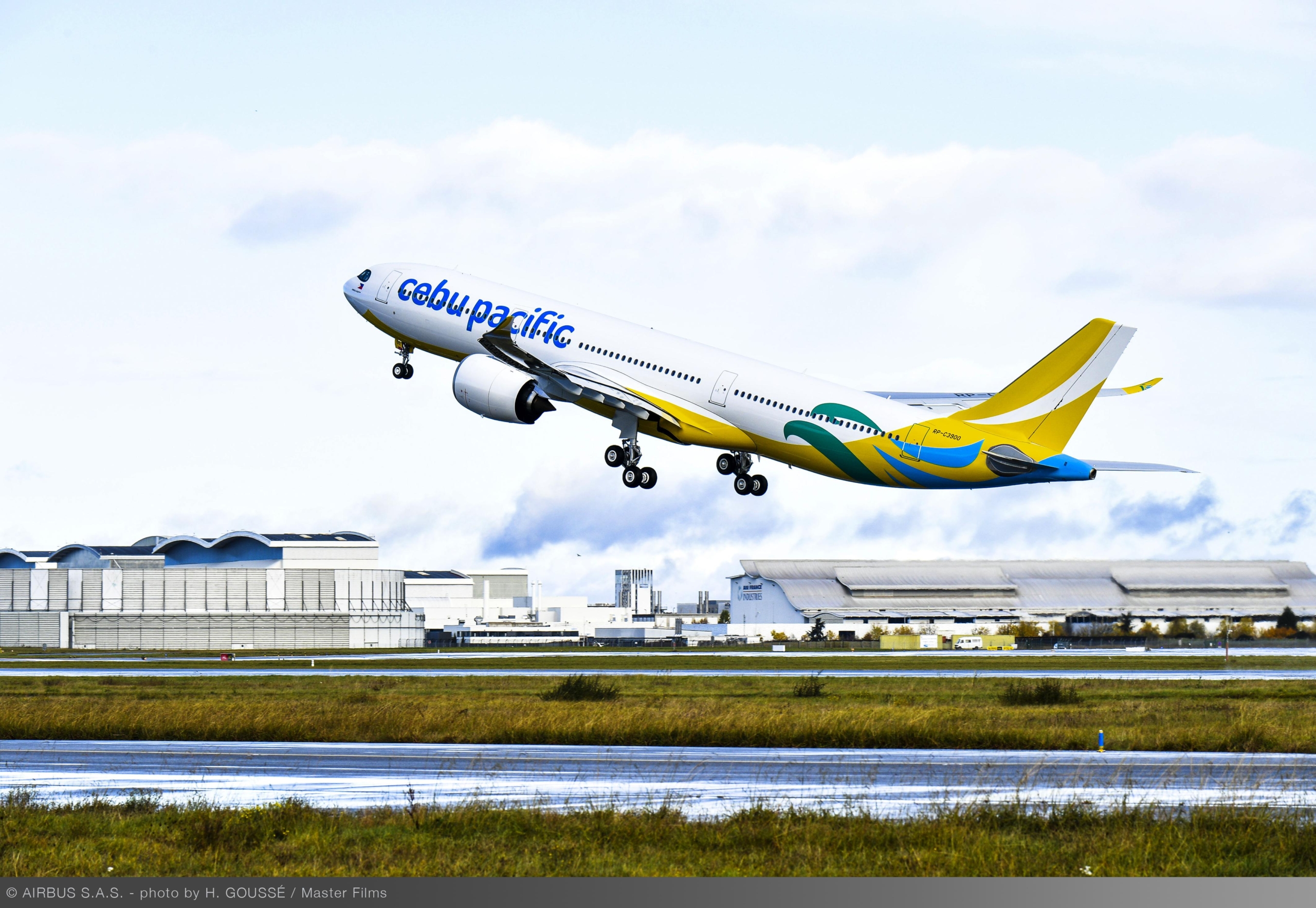
Across Asia-Pacific, carriers including Malaysia Airlines, Garuda Indonesia, Starlux Airlines and Cebu Pacific have adopted the type.
In the Middle East, Kuwait Airways and Saudi flag carrier Saudia operate or have A330neo fleet orders, while Air Mauritius and Uganda Airlines are African operators.
Featured image: Ian Gratton / Flickr